Fishing Development Institute (IFOP) launches a new website www.sembrandoelmar.cl aimed at disseminating our institution and other research centers carried out research, in its multiple dimensions involved for Small-Scale Aquaculture (APE) sustainable development. In this site you will find technical, economic and regulatory information to support current and future APE aquaculturists in Chile. Contained information is easily accessible, free and can be viewed, downloaded and shared via email or social networks. both from your PC as well as from mobile...
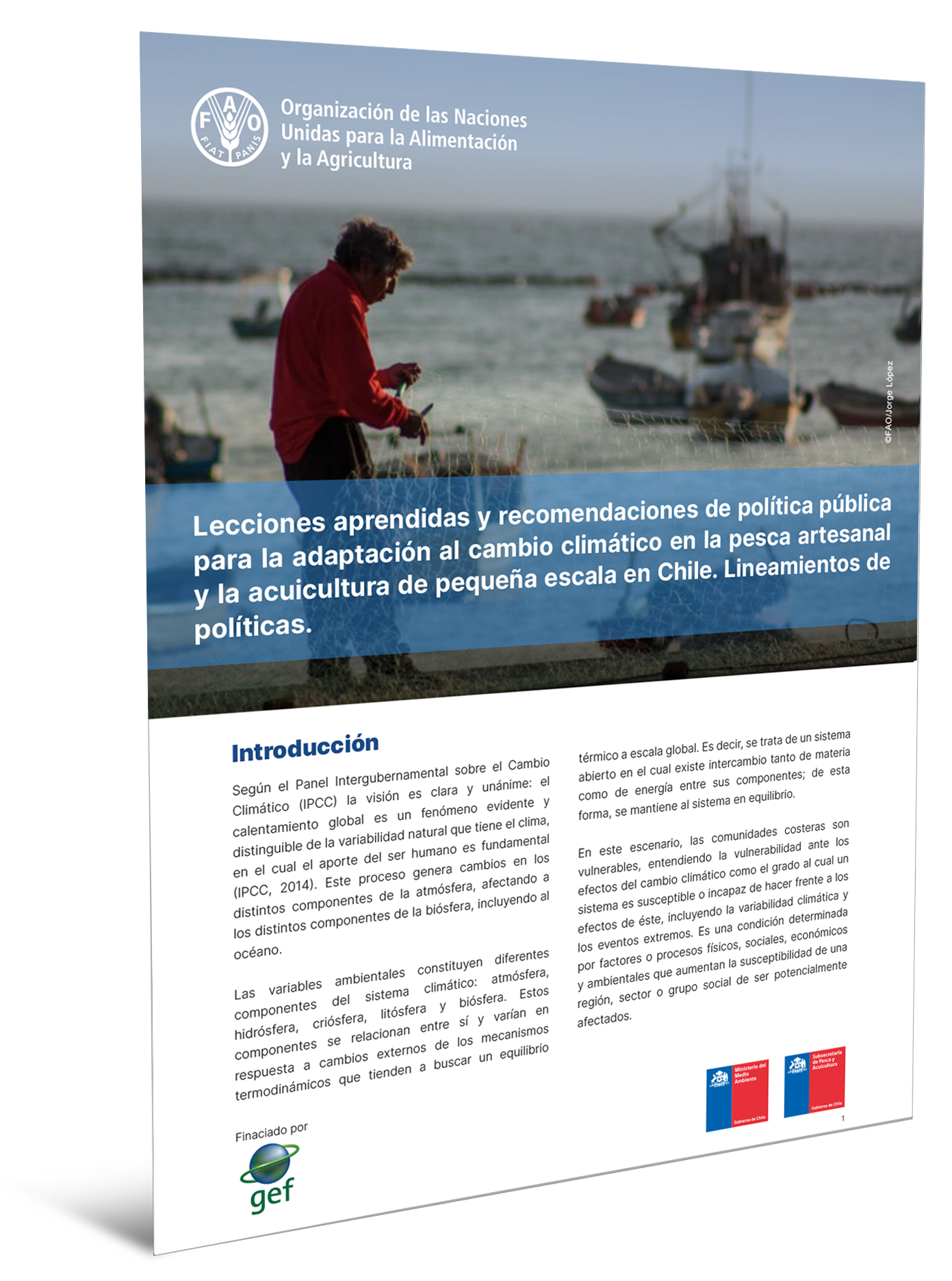
The institutions in charge of the initiative highlighted that a participatory environmental monitoring system is key in order to to strengthen artisanal fishermen and small-scale aquaculturists capacity to adapt to climatic change. Fisheries and Aquaculture Undersecretariat (SUBPESCA), Environment Ministry (MMA) and United Nations Food and Agriculture Organization (FAO) published the Manual for a participatory environmental monitoring system to improve adaptative capacity to climatic change in fishing and aquaculture communities in Chile. The document was prepared within the framework of...
On Thursday, June 24th, from 4:30 p.m. to 5:30 p.m., IFOP Management Areas researcher Catherine González from its Oceanography and Environment Department Section.Will offer Larval Connectivity between management areas talk, in order to participate you just click https://www.youtube.com/channel/UC88L4dKhVgvA4Z-MMtxbgwg Catherine referred to her talk “The species of invertebrates and benthic algae appear sessile or not very mobile, but in their early stages of life they have larvae or spores that inhabit water column, from a few hours to several months,...
With the slogan “Guarantee friendly fisheries for albatrosses“, ACAP and IFOP celebrate this second year “World Albatross Day“. The two critically endangered albatrosses, Tristan Albatross and Galapagos Albatross, have been chosen as “representative species” to draw attention to 22 species of albatrosses ongoing threats faced by them on the sea . (ACAP)Conservation of Albatrosses and Petrels Agreement, has established June 19th, as World Albatross Day to raise awareness about these birds around the world. The day also commemorates the...
This online event will convene representatives from Fisheries and Aquaculture Undersecretariat (SUBPESCA), Ministry of Environment and United Nations Food and Agriculture Organization (FAO) to discuss learning and opportunities for climatic change adaptation in artisanal fishing and small-scale aquaculture in Chile. Outstanding researchers and beneficiaries of an important adaptation initiative implemented in four coves of the country will also present in this seminar. Next Tuesday, June 15th, “Learning and opportunities for climatic change adaptation” virtual seminar, convened by FAO, will...
On June 3rd Fisheries Development Institute organized its Fisheries Management Strategies workshop with 50 attendees participation, among which we can mention IFOP, Fisheries Undersecretary and Sernapesca researchers. Dr. Juan Carlos Quiroz explained “Management strategies (SEM) are a tool that scientists use to simulate a fishing system operation and test whether potential harvest strategies can achieve previously agreed management objectives. EEM also helps to identify capture strategy that is likely to perform best, regardless of uncertainty, and balance trade-offs amid...
CHONOS (chonos.ifop.cl), Fishing Development Institute starting web page, since 2018 hostsoceanographic information system of Chilean Patagonia, publishes a new updated version of CLIC (http://chonos.ifop.cl/clic2/index/). CLIC is a Lagrangian connectivity web application that, through numerical modeling, quantifies particles transport in their drift with ocean currents between different areas. CLIC includes a variety of environmental dispersion scenarios and types of particles in order to cover main environmental and production issues in which it is relevant to quantify particles transport through marine...
Within the framework of “AQUACULTURAL FISHING STRATEGY CONSOLIDATION PROGRAM OF THE NORTH RIVER SHRIMP IN THE CHOAPA RIVER BASIN” project financed by Coquimbo Regional Government, Fisheries Development Institute and Universidad Catolica del Norte are jointly executing it with shrimp farmers organizations a second stocking of 12,000 specimens of juvenile shrimp in the Choapa River. This release constitutes the first event carried out on October 30th, 2020 continuation , in which 6000 specimens were sown and was attended by regional...
As part of Fisheries Development Institute (IFOP) Harmful Algae Research Center (CREAN) regular work, within ASIPA program framework; Comprehensive Advice on Fishing and Aquaculture. During Monday, May 31rst, morning a closure workshop seminar will be held on “Management and monitoring of harmful algal blooms and marine toxins in the Pacific Ocean of south central Chile (36 ° – 44 ° s) , stage III, 2020 – 2021 Program “ and “management and monitoring of red tides in the Chilean...
Fishing Development Institut , IFOP was created in 1964 by Production Promotion Corporation, CORFO, and National Fisheries Society, through an international technical assistance project in fisheries matters between Chilean Government, United Nations Program for Development, UNDP, and United Nations Organization for Agriculture, FAO. Fisheries Development Institute (IFOP) strategic role is based on the ability to generate, develop and transfer useful knowledge, which allows our country to position itself, competitively and sustainably, in the aquaculture and fishing sector, especially due...
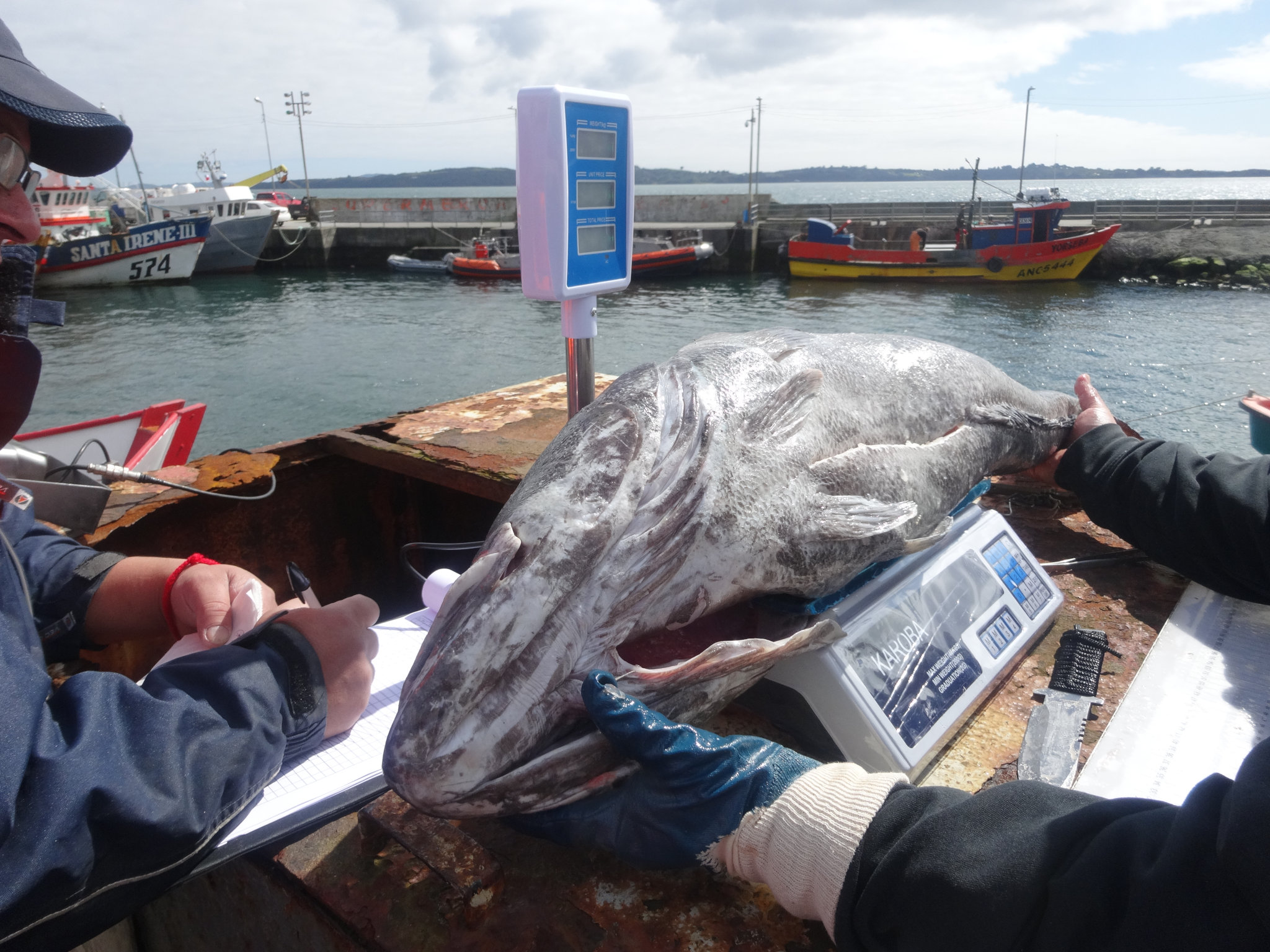
They are responsible for data collection through fishery resources sampling extracted throughout the country. In this way, necessary information is obtained to carry out actions that help protect sea resources. What data is obtained in the sampling? Species Type Size Weight Sex Place of extraction Where is the sampling performed? Artisanal and industrial fishing vessels Ports and landing points Processing plants The information is then collected in fishing logs and stored in databases.
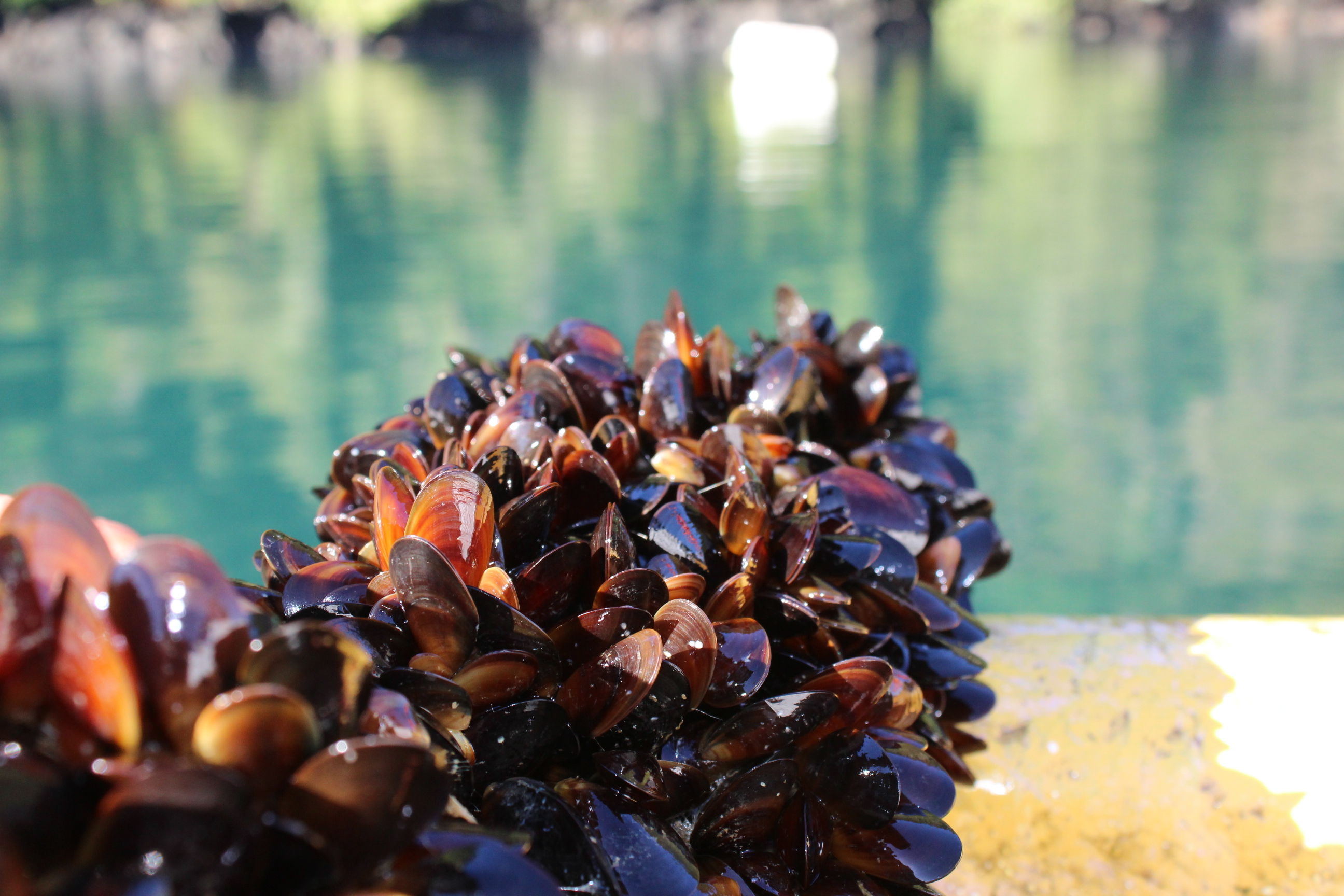
Seafood is a term used in gastronomy to refer to edible marine invertebrates, which are classified into four groups. What is discard? It is the action of returning to the sea species caught unintentionally in fishing operations. Why it happens? Sometimes nets catch, along with commercial interest species, others that cohabit with them, which are discarded since they have no economic value, or are species with a ban or fishing quotas, whose landing is sanctioned. How to reduce it?...
Climatic change is an ongoing process that is affecting our planet, in which marine ecosystems cover more than 70% of surface. Temperature’s increase, dissolved oxygen and seawater acidification decrease, as well as extreme events such as storm surges and El Niño intensification, are examples of threats to these ecosystems and services they generate. Among the latter, fishing and aquaculture stand out, which will have to face risks of lower landing, variables, new fishing resources appearance , geographical displacement or...
In the last 50 years, this phenomenon has been more frequent and intense throughout the world, encompassing broader geographic sectors. What are FANs? They are not tides, nor are they all red It is a natural phenomenon that occurs when the density of some harmful microalgae in aquatic environments increases excessively. This causes the death of organisms, the contamination of species and the alteration of ecosystems. Harmful microalgae are food for mollusks and crustaceans, which when consumed can cause...