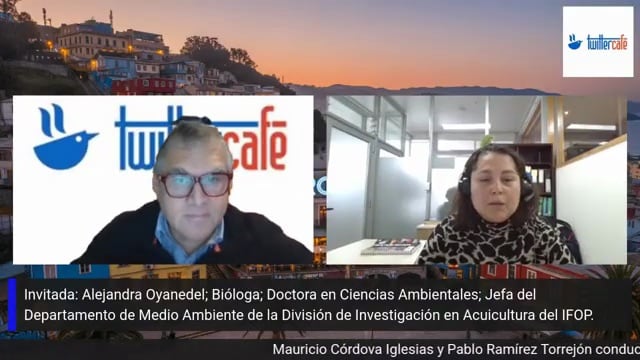
The interview with Alejandra Oyanedel (biologist, PhD in Environmental Sciences and head of the Environment Department of the Aquaculture Research Division of IFOP) focused on the research and monitoring of Didymus (Didymosphenia geminata), an exotic and invasive microalga that affects freshwater ecosystems in Chile.
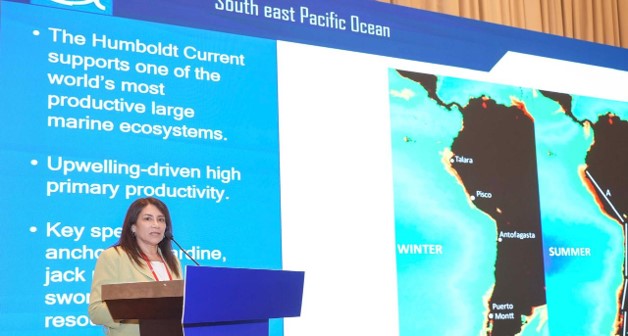
Dr. Patricia Zárate, head of the Fisheries Assessment Department at the Fisheries Development Institute (IFOP), is part of the research team behind the scientific article “Global tracking of marine megafauna space use reveals how to achieve conservation targets,” which was awarded National Champion Award for Australia in the fourth edition of the Frontiers Planet Prize, one of the most prestigious international awards for research with the potential to generate solutions to the planet’s environmental challenges. The researcher recently received...
On Friday, July 31, 2026, Dr. Oscar Espinoza and Dr. Jaime Letelier, from the Fisheries Development Institute (IFOP), gave key presentations with updates and forecasts on El Niño events and red tides in the South Pacific, specifically in the inland sea area of Chiloé, to the Inter-Institutional Committee on Environmental Contingencies (CICA). The committee is coordinated by Sernapesca (National Fisheries Service) and includes authorities and representatives from the Navy, the Ministry of Health, SUBPESCA (Undersecretariat of Fisheries and Aquaculture),...
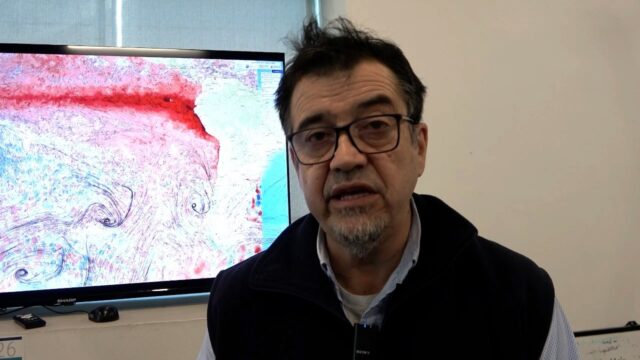
Interview with Dr. Jaime Letelier, head of the Oceanography Department at the Fisheries Development Institute (IFOP), about the early warnings issued by the institution and the impact of extreme thermal anomalies associated with the El Niño phenomenon on the Chilean coast. During the conversation, the specialist details how the alteration of coastal upwelling and high temperatures have caused the displacement of traditional fishery resources such as jack mackerel and anchovy to the south or to deeper waters, while also...
Specialists from IFOP and the Undersecretariat of Fisheries and Aquaculture presented advances in wild fish health, bacterial resistance to antimicrobials, and strengthening research for decision-making in aquaculture. The Hydrobiological Health Department (DSH) of the Fisheries Development Institute (IFOP) held the “Workshop for Disseminating Results of the ASIPA 2025 Permanent Research Programs,” an event where progress on various research projects aimed at strengthening decision-making in aquaculture and hydrobiological health was presented. The day began with a welcome address by Dennis...
The second iteration of the course “Application of the Ecosystem Approach to Fisheries Management in Area Management” successfully concluded in Concepción, as part of the 2026 Marine Sciences Congress. Students and professionals from various institutions, from Arica to Aysén, participated. The course was conducted interactively, integrating theoretical content and practical experiences, guided by professionals from the IFOP Management Areas Section: Pedro Romero, Bryan Bularz, and Catherine González. Through the review and analysis of two case studies, participants examined contrasting...
Invitation from the Semillita Sagrada Educational Foundation for Environmental Research, Sustainable, Social, and Cultural Development As part of its commitment to scientific outreach and community engagement, the Fisheries Development Institute (IFOP) participated in the third annual Family Environmental Festival of the Coastal Zone. This initiative aimed to strengthen environmental education among families, promote the protection of the marine environment, and highlight the natural and cultural heritage of our fishing coves. The event took place on July 18th on the...
On July 1, 8, and 15, 2026, the sixth edition of the “Image Analysis” course, using Image-Pro software, was held at IFOP-Valparaíso. This year, due to ongoing requests from staff who perform routine work in the plankton laboratory, personnel from the Department of Oceanography and Environment, the Department of Fisheries Assessment, and the Department of Resource Assessment were trained. With 14 participants, instructor Lizandro Muñoz, who has extensive international and national training in microscopy and image analysis, among other...
The initiative aims to strengthen the governance of small-scale fisheries with a focus on sustainability, inclusion, and adaptation to climate change, and is funded by the Chile-Mexico Fund. With the participation of 35 representatives from Benthic Fisheries Management Committees, artisanal fishers, industry professionals, and researchers, the second training session of the Chile-Mexico cooperation project, which seeks to strengthen the co-management of small-scale fisheries, concluded in Puerto Montt. The project, implemented by the Fisheries Development Institute (IFOP) and the Mexican...
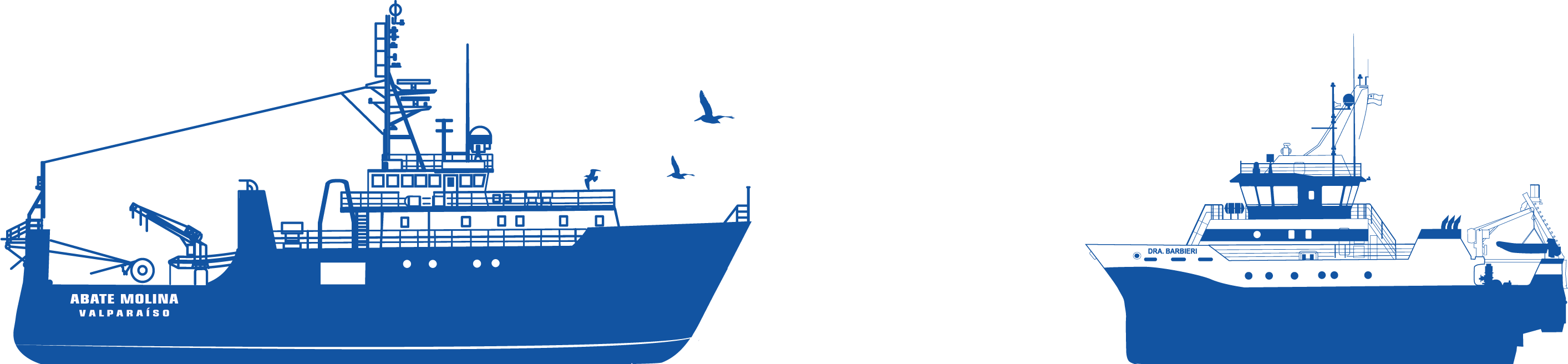
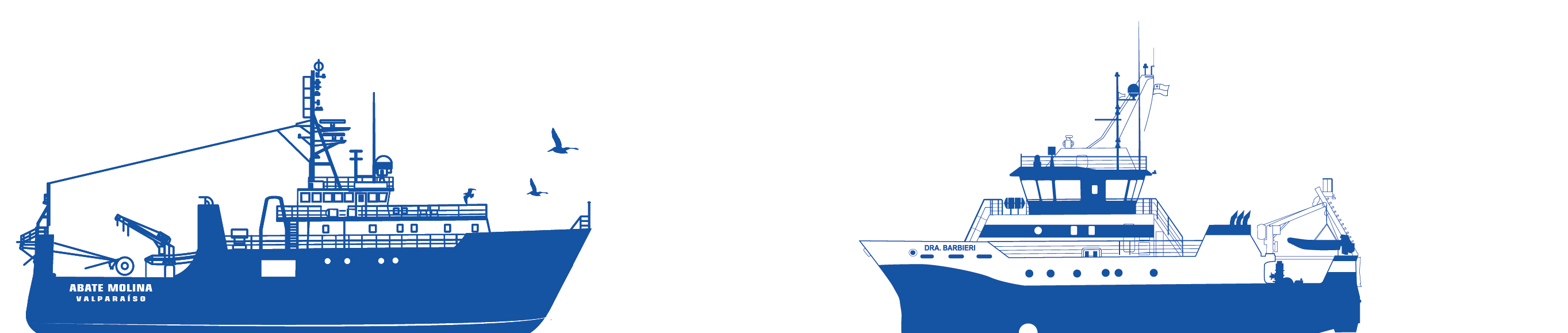
On July 10, at the invitation of Alejandro Dal Santo Cid, Regional Director of the Atacama-Coquimbo Fisheries Development Institute (IFOP), the Regional Secretary of Economy for the Coquimbo Region (IV Region), Martín Argaluza, Zonal Director of the Undersecretariat of Fisheries (Subpesca) for Regions III-IV, Franklin Zepeda, and Regional Director of the National Fisheries Service (Sernapesca) for Region IV, Cristian Gómez, visited the research vessel Dra. Barbieri. The visit took place during a port call by the Dra. Barbieri to...
On June 25, researchers from the Repopulation and Farming Department (RyC) of the Fisheries Development Institute (IFOP) conducted a farming experiment with students from the Juan Soler Manfredini Border School in Cochamó. In an activity that strengthens technical training and ties with the local production sector, on June 25, fourth-year high school students specializing in aquaculture at the Juan Soler Manfredini Border School in Cochamó participated in an important practical activity on the diversification of small-scale aquaculture (SSA). This...