
31 August 2026
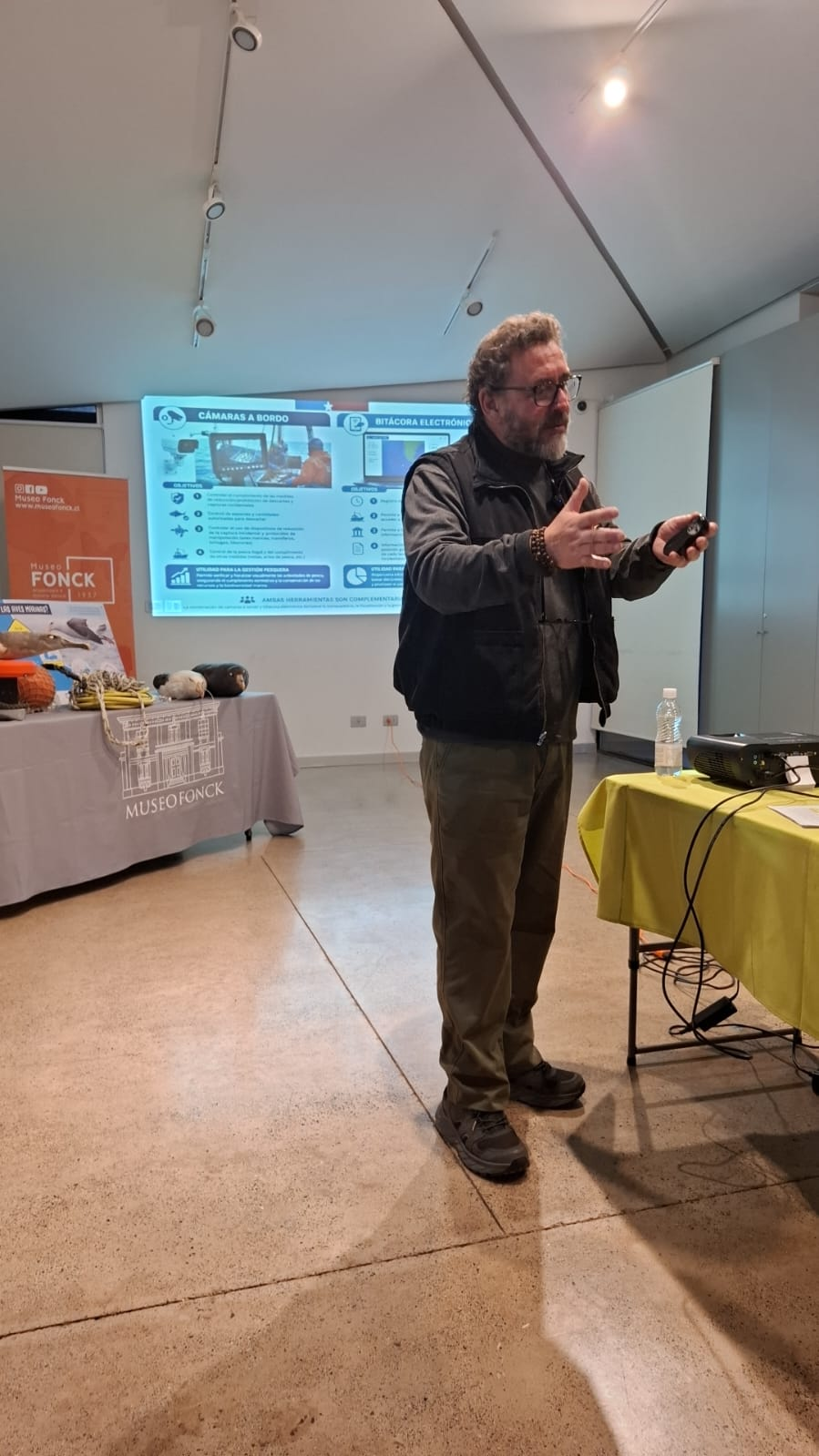 On Friday, August 28, at the Fonck Museum in Viña del Mar, the talk “Seabirds and Fishing: Progress and Challenges in Mitigating Bycatch” was held. It was presented by IFOP researcher Luis Adasme.
The talk was a complete sell-out, as in addition to the general public who attend the weekly science sessions every Friday, an entire class and their teachers were also present. A very interactive session was held with the attendees, and the IFOP professional answered all their questions in a very engaging and educational way after the event. This is part of IFOP’s commitment to sharing science with the community.
Topic of the Talk
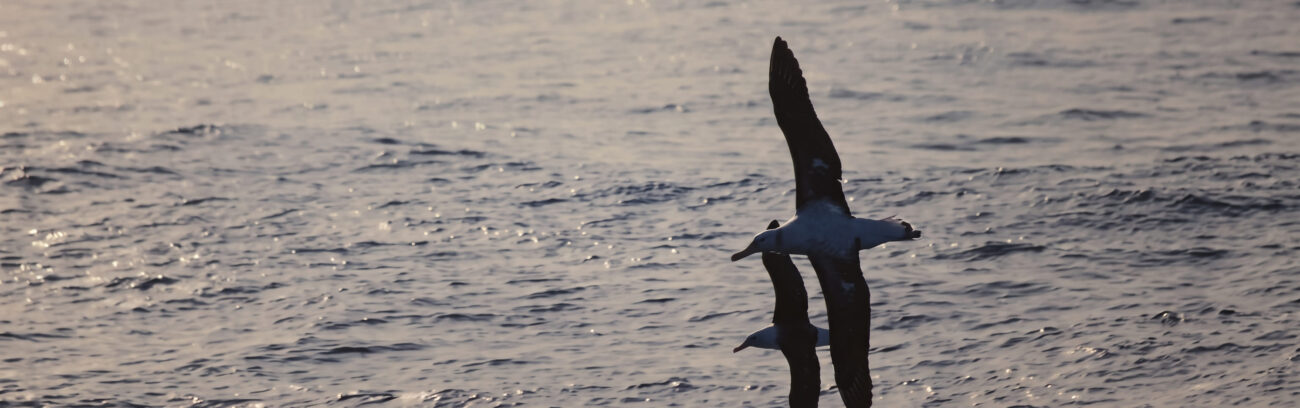
Globally, biodiversity is progressively declining due to unsustainable development that degrades natural habitats, drastically increasing the loss of species. Seabirds are no exception to this scenario, and in recent decades their populations have suffered a reduction, threatening several species with extinction.
Seabirds are considered important bioindicators of the health of our oceans (Sentinels of the Sea). They are key to maintaining the balance of the marine ecosystem, in addition to participating in all the biochemical processes of our oceans.
Chile is considered a center of seabird biodiversity. In this regard, approximately 109 species of seabirds have been reported. Furthermore, of the 22 albatross species protected by ACAP (Agreement on the Conservation of Albatrosses and Petrels), at least 12 regularly visit Chilean territorial waters during their migrations; only two species have established colonies on southern islands within the national territory. Various stages of the life cycle of these species overlap with fishing operations in various fisheries in national waters, resulting in mortalities.
The current General Law on Fisheries and Aquaculture incorporates new concepts and objectives in the area of marine resource sustainability, as well as conservation goals through an ecosystem approach to fisheries regulation. In Chile, significant efforts have been made to mitigate the interaction of fishing with seabirds, showing substantial decreases in the incidental catch of these species; however, major challenges remain.
Professional Profile: Luis Adasme
A marine science professional (PUC), with a diploma in fishing gear and equipment (PUCV) and a Master’s degree in Aquatic Resource Management (PUCV). A researcher at the Fisheries Development Institute, with extensive experience in research and data analysis of demersal fisheries in the southern region. She is currently part of the research teams for the projects “Research on Discards and Incidental Catch in Demersal Fisheries” and “Research on the Status of Demersal Fisheries in the Southern Zone: Monitoring Program for the Status of the Main National Fisheries.” Since 2010, her work has focused on research in fisheries biology and population dynamics of demersal fish, with an interest in issues related to the bycatch and incidental capture of seabirds within an ecosystem-based approach. In this context, she is a member of the Chilean Seabird Working Group (Biodiversity Scientific Committee) and is the official Chilean representative to the Seabird Bycatch Working Group of the Agreement on the Conservation of Albatrosses and Petrels (https://www.acap.aq/es/grupos-de-trabajo/seabird-bycatch-working-group).