14 October 2026
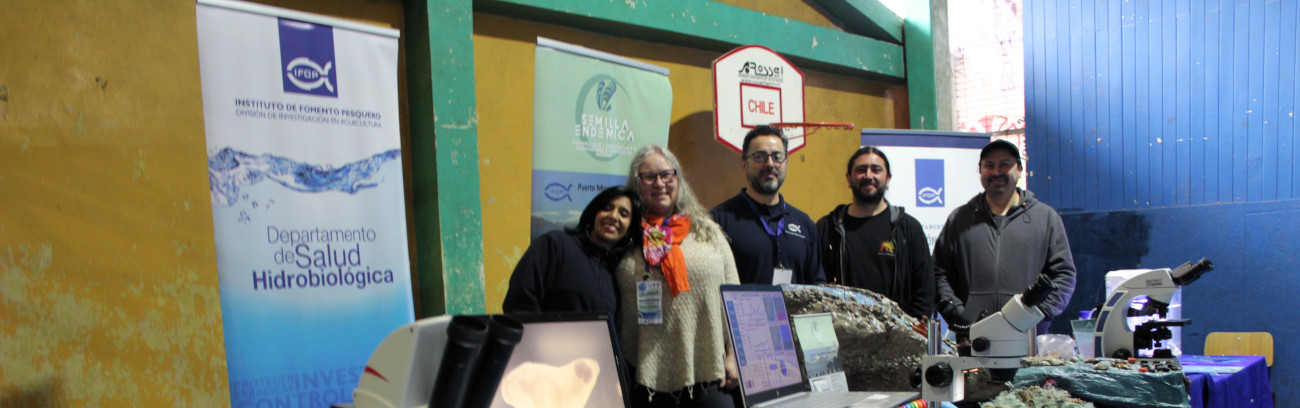
 IFOP’s participation in CienTeArt 2026 reflects its commitment to building long-term regional relationships. The event brought together scientific expertise from the three departments within the Aquaculture Research Division, providing the community with insights into aquatic ecosystems, biodiversity, and productive activities, while fostering an interest in science among the younger generation.
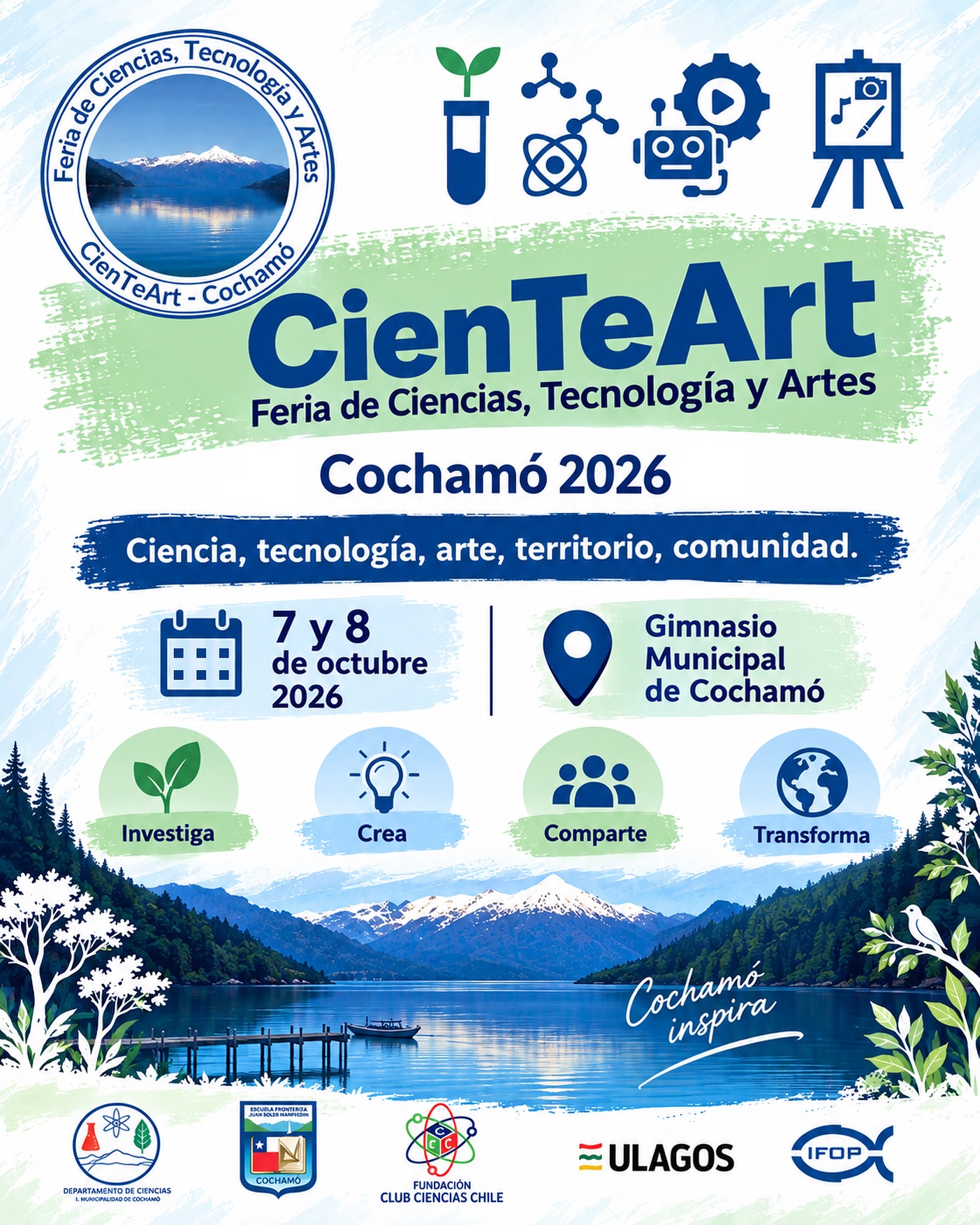
On October 7th and 8th, the Juan Soler Manfredini Border School in Cochamó became a hub for curiosity, creativity, and knowledge as it hosted the 4th CienTeArt 2026 Science Fair. Organized by the school and the Science Club of Chile—with sponsorship from the University of Los Lagos (ULA) and the Fisheries Development Institute (IFOP)—the event brought together students, parents, teachers, researchers, and visitors to explore, understand, and represent the world around us in various ways.
Through scientific projects, technological proposals, and artistic expressions, the fair once again demonstrated the potential of educational communities to drive learning and inspire new career paths. The event also featured musical performances and displays of folkloric talent, including *cueca* and *chamamé* dances, as well as a string ensemble that provided accompaniment throughout the proceedings. The program further included an exhibition of nanophotography presented by the Center for Nanoscience and Nanotechnology (CEDENNA), offering new ways to engage with science from diverse perspectives.
A partnership that grows alongside the community
 IFOP’s participation is part of an ongoing agreement with the Municipality of Cochamó—a collaboration that has strengthened the Institute’s presence in the region and facilitated scientific outreach activities in partnership with the local school community. For the third consecutive year, professionals from the institution participated in this initiative, helping to sustain a relationship that has grown stronger through collaborative work and a shared commitment to bringing science closer to new generations.
This partnership is led and coordinated by Francisco Cárcamo, Head of the Repopulation and Cultivation Department, and Sebastián Cook, a researcher in the same department. Both have been instrumental in fostering the collaboration between IFOP and the Juan Soler Manfredini Border School (Escuela Fronteriza Juan Soler Manfredini).
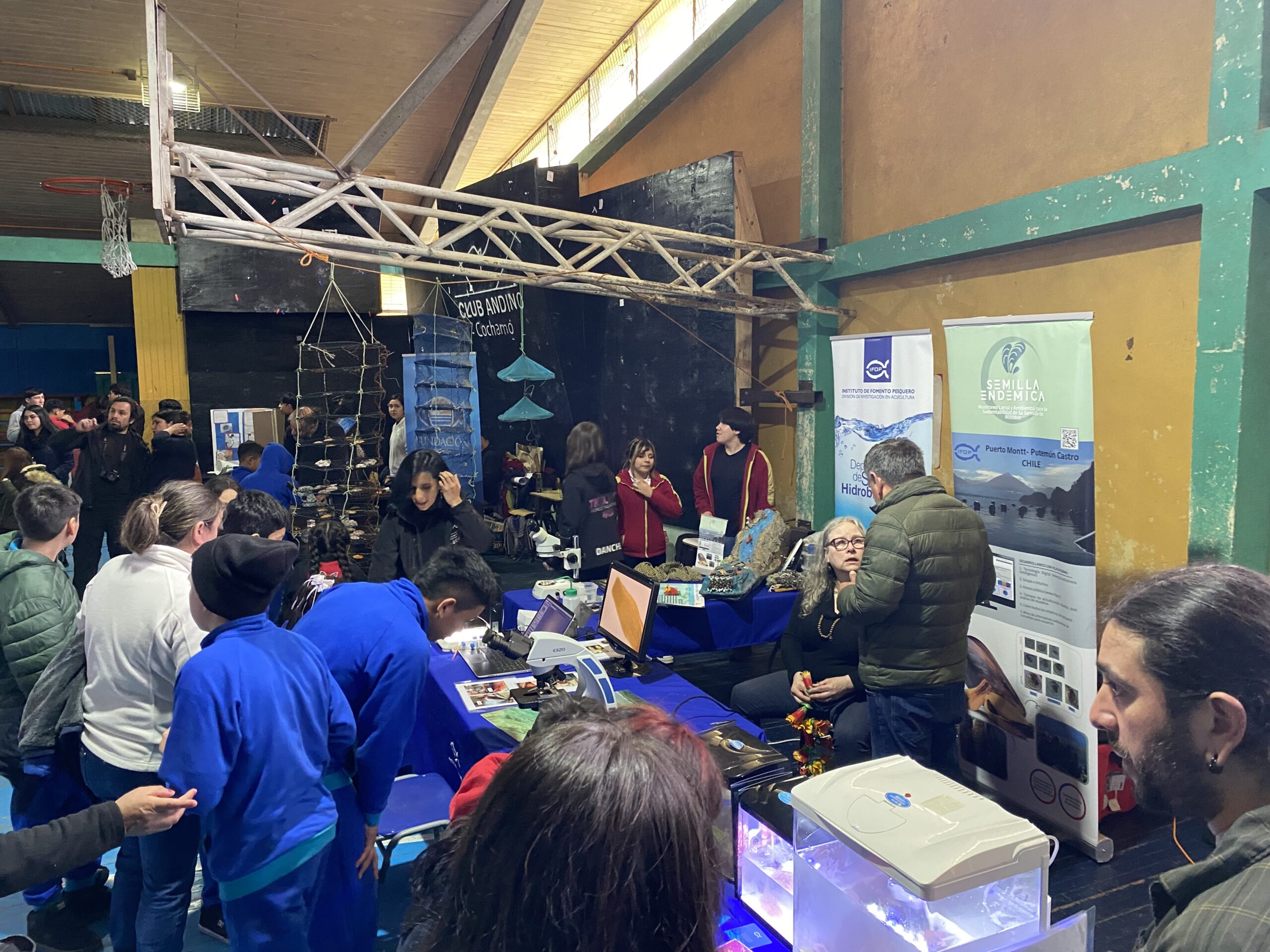
In this fourth edition, the Institute was represented by all three departments within the Aquaculture Research Division. Their booth showcased various research areas, illustrating how scientific knowledge helps us understand aquatic ecosystems and the resources that support key local economic activities.
Science: Shared, Explored, and Experienced
IFOP’s program featured outreach activities, interactive experiences, and opportunities for dialogue with students and visitors. Representing the Mussel Larval Monitoring Program, Macarena Herrera introduced the community to the work of tracking mollusk larvae—a process essential to understanding the natural cycles that underpin mussel farming. She also trained interested individuals and mussel farmers on how to use the “Semilla Endémica” (Endemic Seed) interactive platform, which provides data on the availability of *Mytilus chilensis* (Chilean mussel) larvae. This information is vital for industry decision-making, particularly in determining the optimal timing for deploying collectors to capture mussel spat (seed).
Meanwhile, researcher Rodrigo Jaramillo, from the *Didymosphenia geminata* (Didymo) Monitoring Program, shared insights into this microalga. He explained how to identify it, understand its presence in aquatic environments, and prevent its spread to other freshwater bodies. To round out the experience, the team set up aquariums containing *Didymo* samples prepared for microscopic observation, offering visitors a chance to examine this organism firsthand and discuss its environmental significance.
The exploration also extended to the natural environment of Cochamó; Sebastián Cook, from the Department of Repopulation and Cultivation, dove in the vicinity to collect various benthic organisms and resources. He displayed these in aquariums, inviting observers to discover the diversity of life beneath the surface and to recognize the value of local ecosystems.
Representing the Department of Hydrobiological Health, María Paz Navarrete presented an exploration of the parasitic diversity found in fish and other aquatic resources, demonstrating how the study of these organisms helps us understand the biological relationships and health-related challenges associated with hydrobiological resources.
These activities were complemented by interactive educational tools, including a memory-matching game (*Memorice*), scientific trivia, and various other games and exercises designed to stimulate cognitive coordination. Additionally, participants engaged in screen-printing workshops using algae, echinoderms, and mollusk shells—integrating elements from the marine environment into a creative experience that bridged the observation of nature with artistic expression.
These initiatives allowed children, youth, and adults to engage with knowledge in an active way—through play, experimentation, and direct dialogue with professionals from the Institute.
Sharing Knowledge and Learning to Communicate It
Beyond their presence at the exhibition booth, IFOP played a significant role in the fair’s scientific program. Dr. Francisco Cárcamo delivered the opening talk, titled “How Did We Learn to Cultivate the Sea?” In it, he traced the evolution of aquaculture and its regional significance, contextualizing the importance of this sector and its connection to both science and local development.
Furthermore, Francisco Cárcamo and researcher Macarena Herrera served on the evaluation committee, lending their expertise to the review of projects submitted by students. In total, 28 initiatives were registered across categories such as Science, Scientific Groups, Arts, and Technology—all of which showcased the creativity, curiosity, and keen observational skills of the school community.
For IFOP professionals, these encounters also serve as an opportunity to strengthen their own science communication skills. Explaining specialized concepts, answering questions, and sharing experiences with audiences of various ages requires translating technical knowledge into accessible, everyday language—thereby enriching the dialogue between the research community and society at large. A Space for Connection and Community Building
The growth of CienTeArt is reflected both in the diversity of its offerings and in the level of community participation; each year, new opportunities arise for sharing initiatives linked to science, technology, and the arts. By combining research, creativity, music, and exploration of the local environment, this fair becomes an educational experience that goes beyond the mere exhibition of projects, fostering connections across different generations and disciplines.
IFOP’s participation was highly valued by local authorities and the educational community. The mayor of Cochamó, Francisco Donoso, and the principal of the Cochamó School, Geisha Bonilla, expressed their gratitude to the Institute for its involvement and sponsorship.
This recognition highlights the value of maintaining a long-term relationship built on collaboration, trust, and a commitment to education. For IFOP, being part of CienTeArt is an opportunity to share its work, spark interest in research, and help new generations discover science as a tool for understanding the world around them.
In this way, Cochamó once again demonstrates that science is also built through community—by observing nature, asking questions, creating, sharing experiences, and finding new ways to learn together.