
14 October 2026
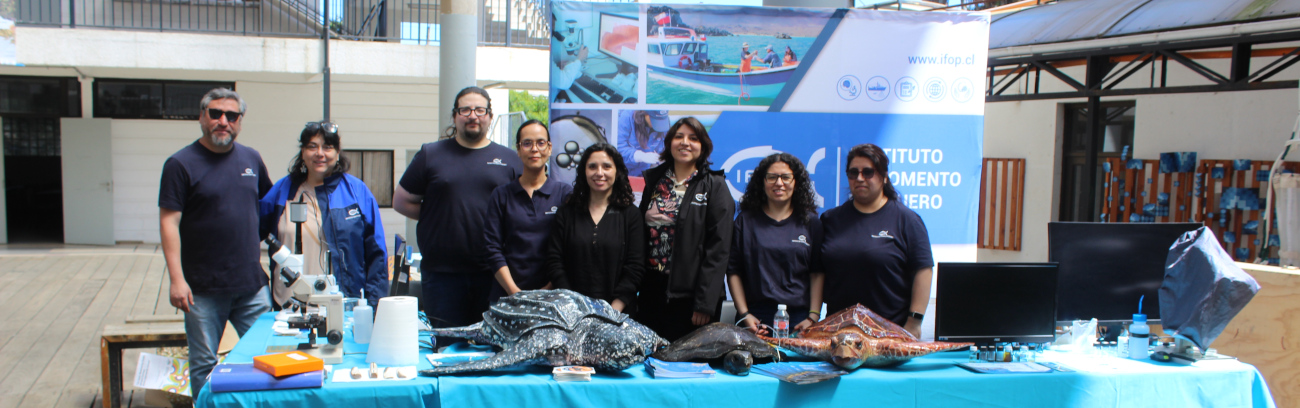
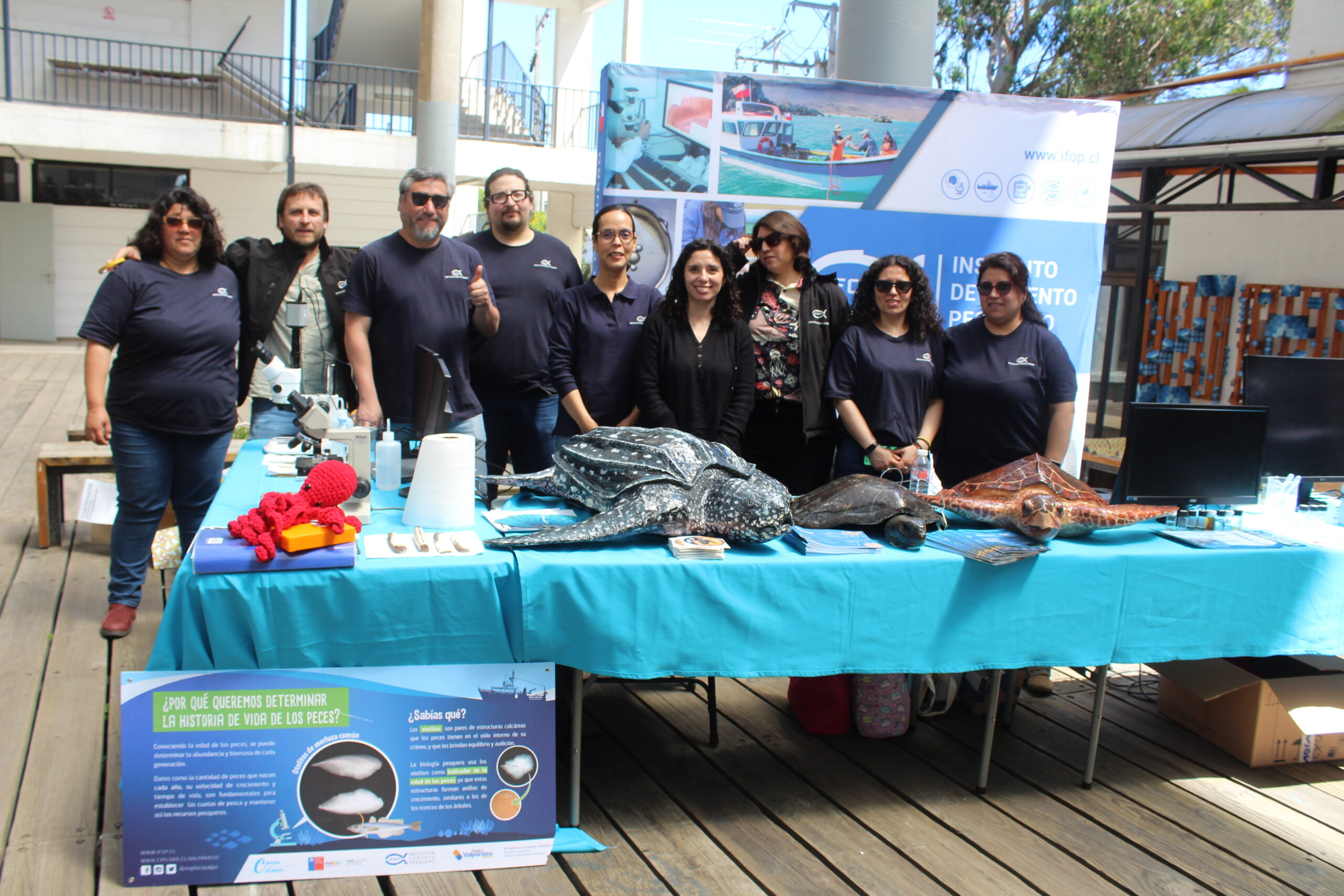
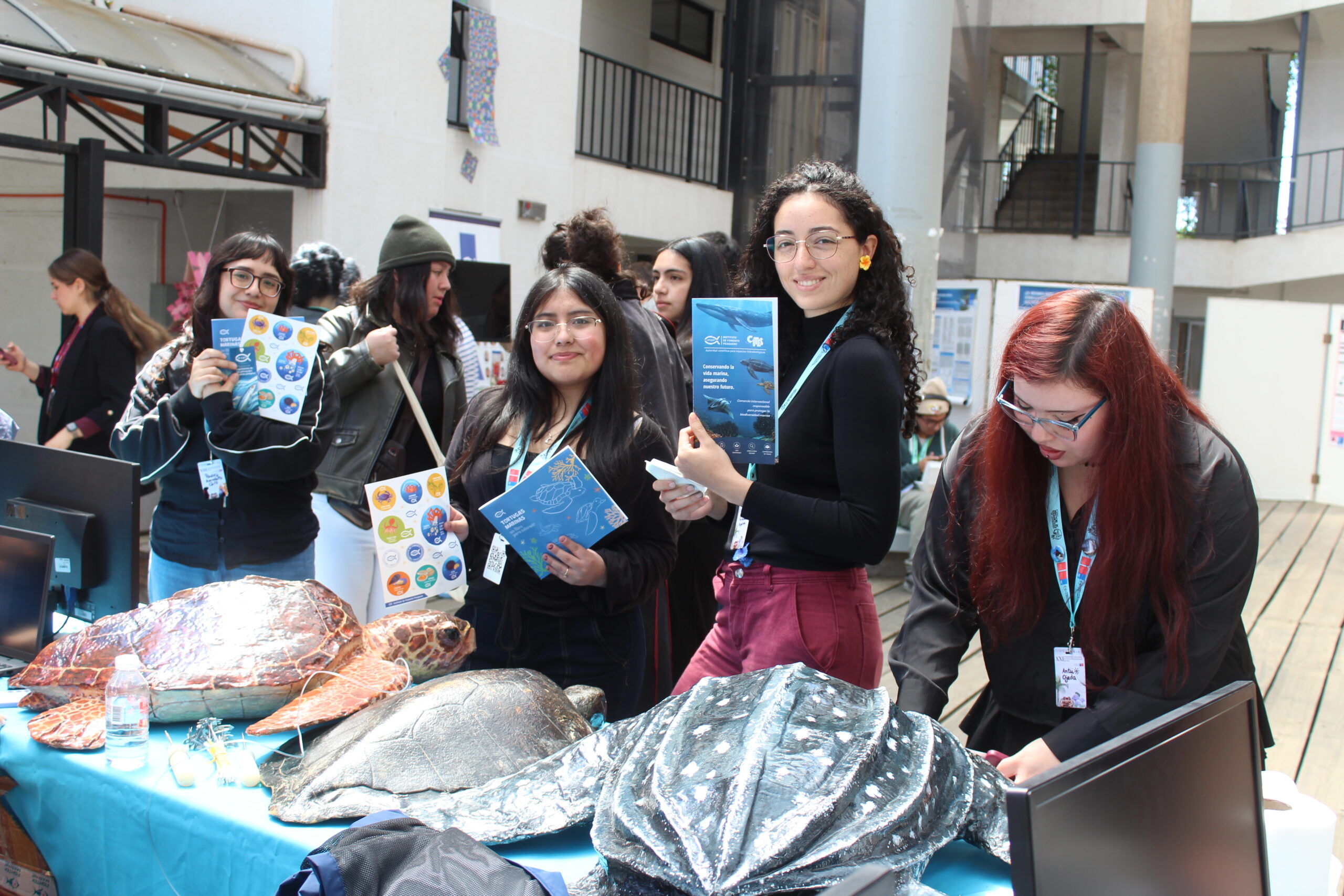 On Friday, October 9, a science exhibition organized by biology students from across Chile was held at the University of Valparaíso’s Faculty of Architecture. IFOP participated with a team of professionals who showcased the work carried out at our institute to the attendees.
Representing the Department of Oceanography, Andrés Varas presented and explained the operation of various oceanographic and meteorological instruments used by the Institute for its monitoring and research activities—including weather stations, plankton nets, Niskin bottles, and CTD probes. During the exhibition, he highlighted the importance of this equipment for measuring variables such as conductivity, temperature, dissolved oxygen, and chlorophyll, as well as for collecting water samples and planktonic organisms at various depths. Students were able to engage with the instruments in a hands-on, educational way, preparing and operating the equipment themselves. Furthermore, he conducted scientific outreach and provided guidance to students and representatives from academic institutions interested in establishing collaborative ties with IFOP for future research projects. He also served as a judge for the scientific posters presented during the Biology Students’ Congress.
 Dr. Katty Donoso, also from the Department of Oceanography, displayed anchoveta (Peruvian anchovy) eggs and larvae, sparking great curiosity among the attendees, who were able to observe the eggs under microscopes.
Guillermo Moyano, Angélica Villalon, and Ana María Galeano, from the Age and Growth Section, engaged with these future professionals, providing an overview of the section’s daily operations. They explained various sample preparation methods and the process of reading growth rings (micro-increments and macro-increments), while also sharing information on recent studies concerning octopus, jumbo flying squid (*jibia*), and the *huepo* (a type of razor clam). The students showed great interest and motivation—especially when viewing some of the specimens we brought through microscopes and magnifying glasses—and expressed a strong interest in the possibility of completing professional internships at the Institute. Ilia Cari and Mauro Zuccone, from the Highly Migratory Resources Monitoring Project, noted: “During the fair, we spoke with the public about fisheries targeting highly migratory resources, covering the operational dynamics of the swordfish driftnet fleet and the longline fleets that target pelagic sharks and dolphinfish (mahi-mahi). We also explained the concept of bycatch and how these fisheries interact with protected species, such as sea turtles—highlighting the importance of understanding their taxonomy, ecology, and distribution in order to grasp these occurrences and contribute to their conservation. Furthermore, we presented the work of the Highly Migratory Resources Monitoring Project at the Fisheries Development Institute (IFOP), which focuses on generating scientific data to support fisheries management and the conservation of these species and their ecosystems. In this context, we discussed IFOP’s role as the CITES Scientific Authority for aquatic species, explaining the scope of the Convention on International Trade in Endangered Species of Wild Fauna and Flora and its significance in regulating the international trade of specimens listed in its appendices. Finally, we showcased the project’s shark and sea turtle tagging and recapture initiatives, detailing the procedures and scientific objectives involved. We also displayed examples of the tags used, illustrating how these tools enable the study of the movements, survival, and connectivity of these species in the Southeastern Pacific.”
“Meanwhile, representing the Management Areas Section, Bryan Bularz and Catherine González engaged with participants through a game focused on responsible fishing and a discussion on the diverse life cycles of benthic species. They used information cards covering invertebrates—such as the Chilean abalone (*loco*), the *macha* clam, sea urchins, and limpets—as well as various types of macroalgae (*huiro negro*, *huiro palo*, *luga roja*, and *luga negra*). These are resources commonly harvested within Management and Exploitation Areas for Benthic Resources (AMERB), and the discussion provided an opportunity for participants to reflect on how management criteria evolve.” management based on the characteristics of each species.
It is worth noting that Dr. Bryan Bularz delivered a keynote lecture at the congress on Tuesday, October 6, titled “Towards an Ecosystem-Based Approach to Fisheries Management: Experiences with Brown Algae and the AMERB Regime.” The lecture was well-attended and provided an opportunity for participants to discuss these topics—both at the end of the presentation and during the outreach sessions held at the IFOP information booths on Friday, October 9.
Professionals Constanza Sandoval and Mabel Albornoz participated in a fair for biology students, where they shared insights into their work within the monitoring program for Chile’s primary pelagic fisheries. Through an audiovisual presentation featuring images of stomach contents from fish caught in the country’s northern and southern fisheries, they explained how the feeding habits of these species are studied. They showcased the various organisms that make up their diet, helping students gain a better understanding of marine ecosystems and the vital role of scientific research in comprehending them.
Press related links: