
15 October 2026
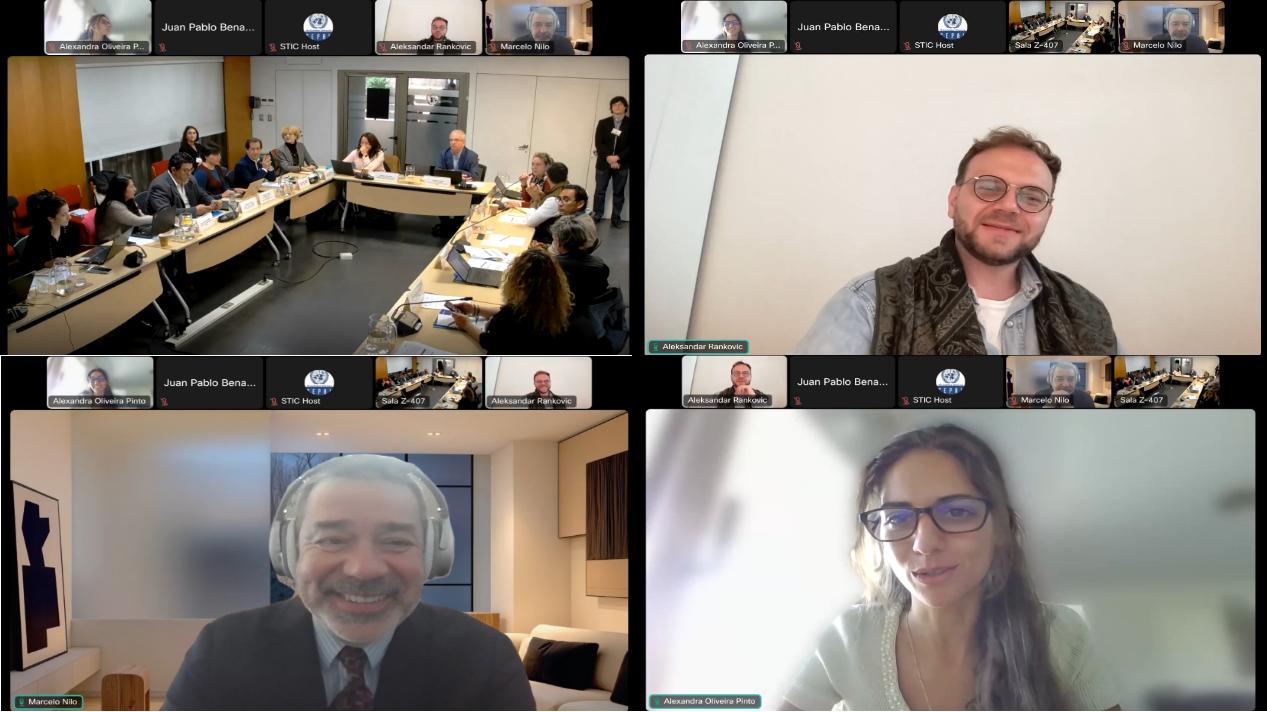 With the support of the French Embassy in Chile, ECLAC held a “Specialist Workshop on a Sustainable and Inclusive Blue Economy: Toward a Regional Transition for the Sustainability of Key Marine Ecosystems and Artisanal Fisheries” on September 23–24. The initiative brought together experts from the artisanal fishing sector, academia, international organizations, and government entities. The workshop fostered dialogue and knowledge exchange on how Latin America and the Caribbean can move toward a blue economy that integrates the functioning and resilience of marine ecosystems, respects the rights of artisanal fishers and local communities, and ensures territorial equity in development policies. It also explored ways to strengthen regional leadership—grounded in a perspective from the Global South and local realities—within the international ocean agenda.
This reflection is vital for the region, which holds some of the world’s greatest marine wealth, supports strategic economic activities, contributes to the food security of millions, and offers significant opportunities to advance more sustainable development models. This is particularly urgent given the current, status-quo-driven model, which is characterized by inequalities stemming from the use of marine resources, as well as extensive biodiversity loss and degradation.
At the opening of the event, Mauricio León, Officer-in-Charge of the Natural Resources Division at ECLAC, emphasized the importance of building a regional vision for the blue economy that addresses the specific characteristics and needs of Latin America and the Caribbean. “The discussion on the blue economy cannot be limited to the growth of ocean-related activities. It must incorporate ecosystem sustainability, social inclusion, climate resilience, and the effective participation of those who depend directly on marine resources for their livelihoods,” he noted. Furthermore, it was highlighted that the region has the opportunity to develop and lead its own perspective on a sustainable and inclusive blue economy.
For her part, Sylvia Fernández, Regional Cooperation Delegate at the French Embassy in Chile, welcomed the workshop as an opportunity to strengthen the exchange of knowledge and experience among specialists and to move toward a shared understanding of the blue economy. In her remarks, she underscored the significance this topic gained during the Third United Nations Ocean Conference (UNOC 3), held in Nice, France (June 2025). She also noted that advancing toward a sustainable and inclusive blue economy requires a comprehensive approach—one that integrates various disciplines, brings together diverse stakeholders involved in the protection and management of the oceans, and fosters partnerships that contribute to a more sustainable and inclusive management of marine resources.
Throughout the two-day event, discussions addressed issues related to the importance of linking the sustainable use and conservation of marine ecosystems with territorial equity, decent work, economic growth, conflicts over marine space, climate change adaptation, and the safeguarding of the livelihoods of coastal communities. Additionally, the workshop served to gather conceptual and methodological inputs that will be useful for countries in the region in the areas of ocean planning and governance.
One of the points of consensus that emerged from the dialogue was the importance of moving toward a broader, more integrated understanding of the blue economy—one that simultaneously recognizes all its economic, environmental, social, territorial, and institutional dimensions. This is particularly relevant given that the term “blue economy” carries various meanings, some of which fail to promote development that accounts for the rights and the effective, active participation of local communities, or for the ecological and functional dimensions of ecosystem services. For this reason, the specialists agreed on the urgent need to define the boundaries of what should be considered part of a “blue economy” (inclusive and sustainable), rather than adding a new definition.
Environmental sustainability, social equity, effective participation in decision-making, and resilience were identified as central, indispensable pillars that distinguish this approach from the conventional, “business-as-usual” model. The inclusion and active recognition of the rights of small-scale fisheries and local communities—along with the protection of their livelihoods—are essential conditions for ensuring a just transition. To solidify this vision, it is necessary to move beyond the ambiguity of the “blue economy” concept—into which almost any activity can be shoehorned—and elevate marine management to the status of an integrated, collaborative, and transparent state policy.
This implies that the blue economy should not focus solely on the growth or expansion of ocean-linked economic activities; rather, it requires a structural transformation of development within the planet’s ecological and biophysical limits. In this framework, the success of management would be measured by the preservation of ecosystem health and functions, as well as by improvements in the quality of life for coastal populations.
Experts also discussed opportunities for the region to strengthen its position and leadership within the international ocean agenda. In a shifting geopolitical landscape that presents complex challenges for multilateral cooperation, there was an emphasis on the need—and the opportunity—for Latin America and the Caribbean to articulate common positions. By leveraging their existing capabilities, strategic assets, and extensive experience, these nations can forge their own distinct vision for a blue economy. The region has the potential to become a global benchmark for best practices and local experiences in the management and integrated co-management of marine resources. Establishing a blue economy in Latin America and the Caribbean will not be achieved through a one-size-fits-all formula or imported solutions; instead, it will require recognizing and including the diversity of various territories, while transforming development models to operate within ecological and equitable boundaries. Among other key opportunities to strengthen the region’s presence in international decision-making arenas, the implementation of the Agreement on the Conservation and Sustainable Use of Marine Biological Diversity of Areas Beyond National Jurisdiction (BBNJ)—an area in which the region demonstrates strong leadership—was highlighted. A defining characteristic that the region can project to the world is a “blue economy” inextricably linked to human rights, social equity, and collaborative governance. This positioning must be anchored in greater coordination within individual countries, bringing together public institutions, academia, and local communities to collectively build a long-term regional agenda.
As part of its contribution to the region’s sustainable development, ECLAC will synthesize the key findings, proposals, and recommendations that emerged during the workshop into a document designed to foster a transition toward an inclusive, sustainable, resilient, and equitable blue economy—within the context of the evolving landscapes of Latin America and the Caribbean, and the world at large.
Source for photos and news: https://www.cepal.org/es/notas/la-cepal-impulsa-la-construccion-vision-regional-compartida-economia-azul-sostenible-inclusiva