
5 May 2026
 A binational workshop of the GEF Humboldt II project analyzed particle drift simulations and detected areas of high connectivity and retention along the coastal strip of southern Peru and northern Chile.
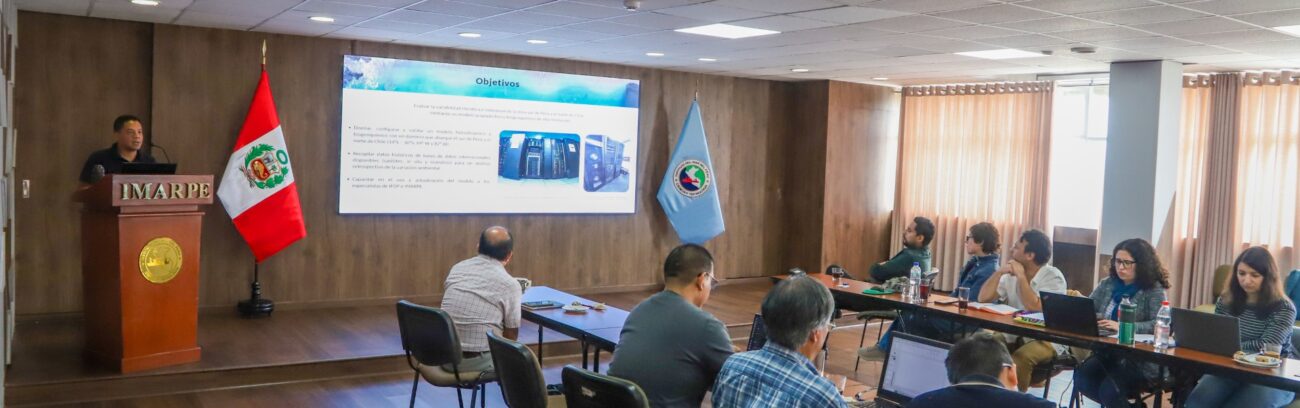
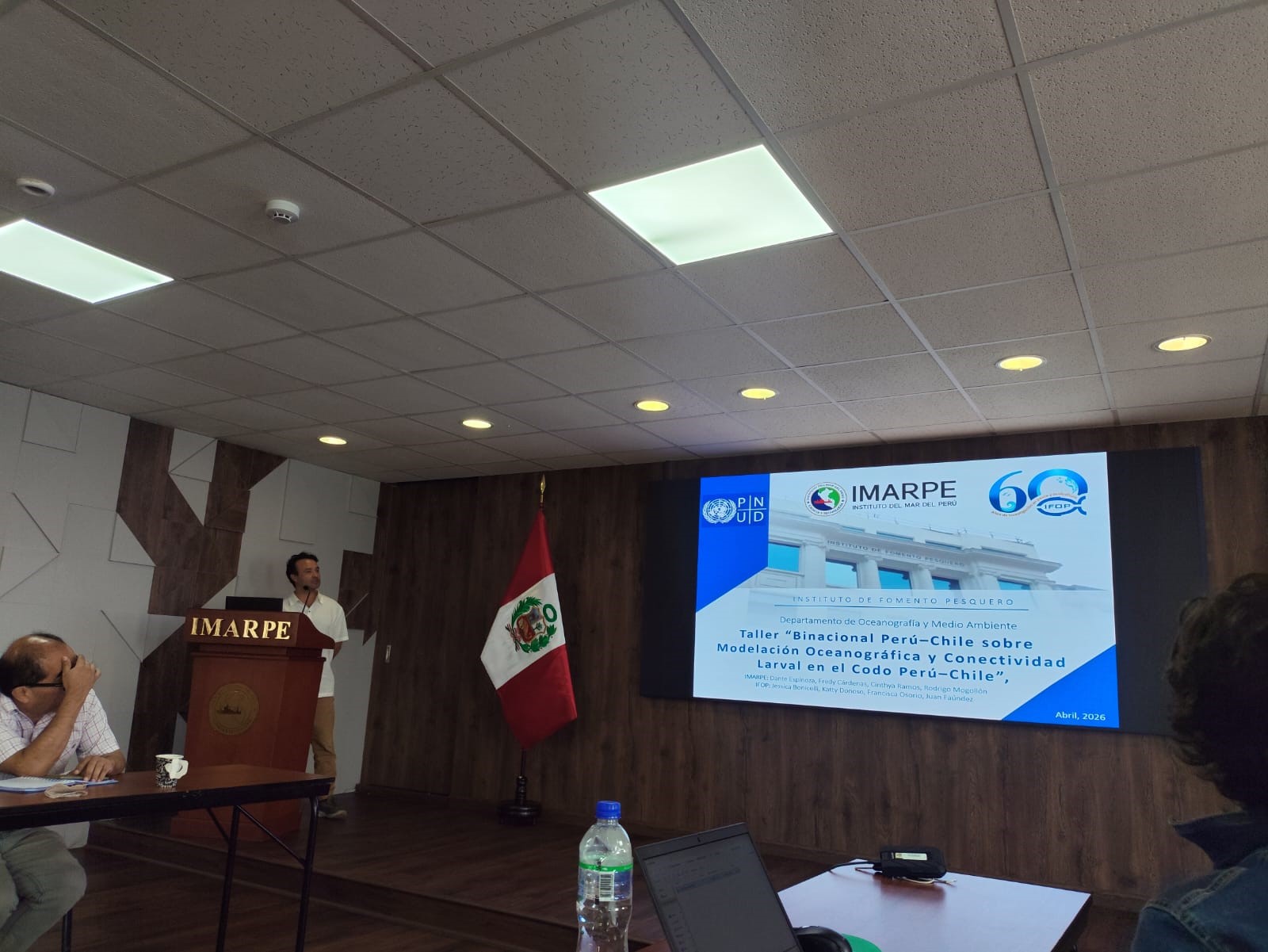
Lima hosted the workshop “Oceanographic Modeling and Larval Connectivity of Anchovy between Southern Peru and Northern Chile (16°–26°S)” from April 22 to 24, 2026. The activity, organized by the Binational Group on Fisheries Oceanography and Modeling of the GEF Humboldt II project, aims to provide scientific evidence for the joint management of the shared anchovy stock. Participants included researchers from IMARPE (Dr. Dante Espinoza, Cinthya Ramos, and Fredy Cárdenas) and IFOP (Dr. Katty Donoso, Dr. Jessica Bonicelli, Dr. Juan Faúndez, and Francisca Osorio).
During the meeting, trajectories of particles representing eggs and larvae were evaluated. These trajectories were simulated using OpenDrift and forced by daily currents from the CROCO-PISCES biogeochemical model. Preliminary results indicate that the greatest connectivity is concentrated in the coastal zone (0–50 km), from Punta Bombón (17.17°S) to Caleta Camarones (19.23°S). Additionally, areas of high local retention were identified at the Arica Elbow and in the bay north of Ilo (Peru). The predominant transport pattern was from Chile to Peru; under El Niño-related conditions, the flow increased slightly in the opposite direction (from Peru to Chile).
These findings help delineate potentially critical areas for anchovy reproduction and recruitment, key information for coordinating management measures between the two countries. The working group will continue refining the simulations and integrating new oceanographic scenarios to strengthen connectivity estimates along the Humboldt Current System.
Press related links: