


6 November 2026
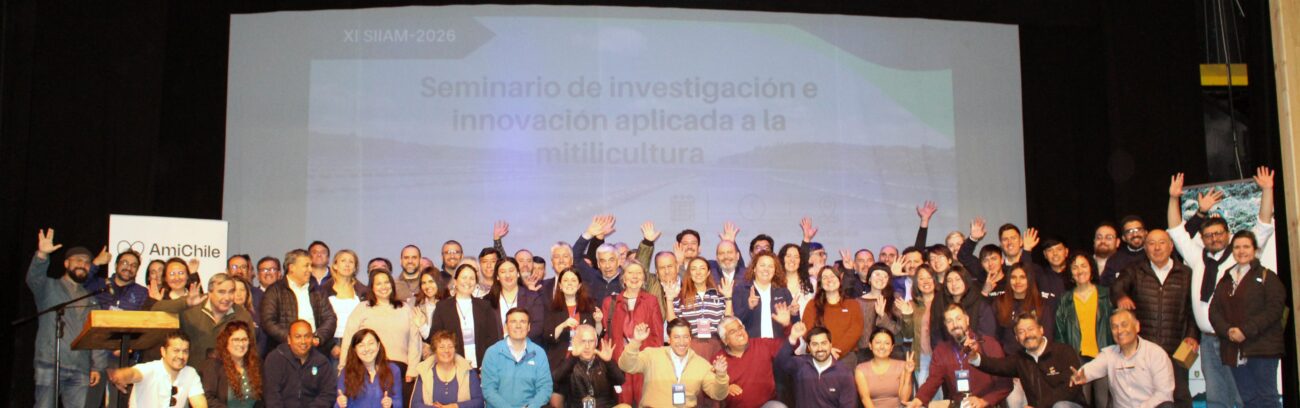
 With the goal of strengthening the link between scientific research and the productive sector, professionals from the Fisheries Development Institute (IFOP) participated in the 11th Seminar on Research and Innovation Applied to Mussel Farming (SIIAM 2026). The event, held on October 30th at the Castro Cultural Center, was organized by AmiChile A.G. and the Technological Institute for Mussel Farming (INTEMIT). It brought together researchers, companies, and stakeholders from across the mussel-farming supply chain to discuss scientific advancements and innovations aimed at the sustainable strengthening of the industry.
Representing IFOP were researchers Oscar Ramírez and Cristian Segura—members of the Mussel Larval Monitoring Program within the Environment Department—along with Luis Henríquez from the Repopulation and Cultivation Department. All are part of IFOP’s Aquaculture Research Division.
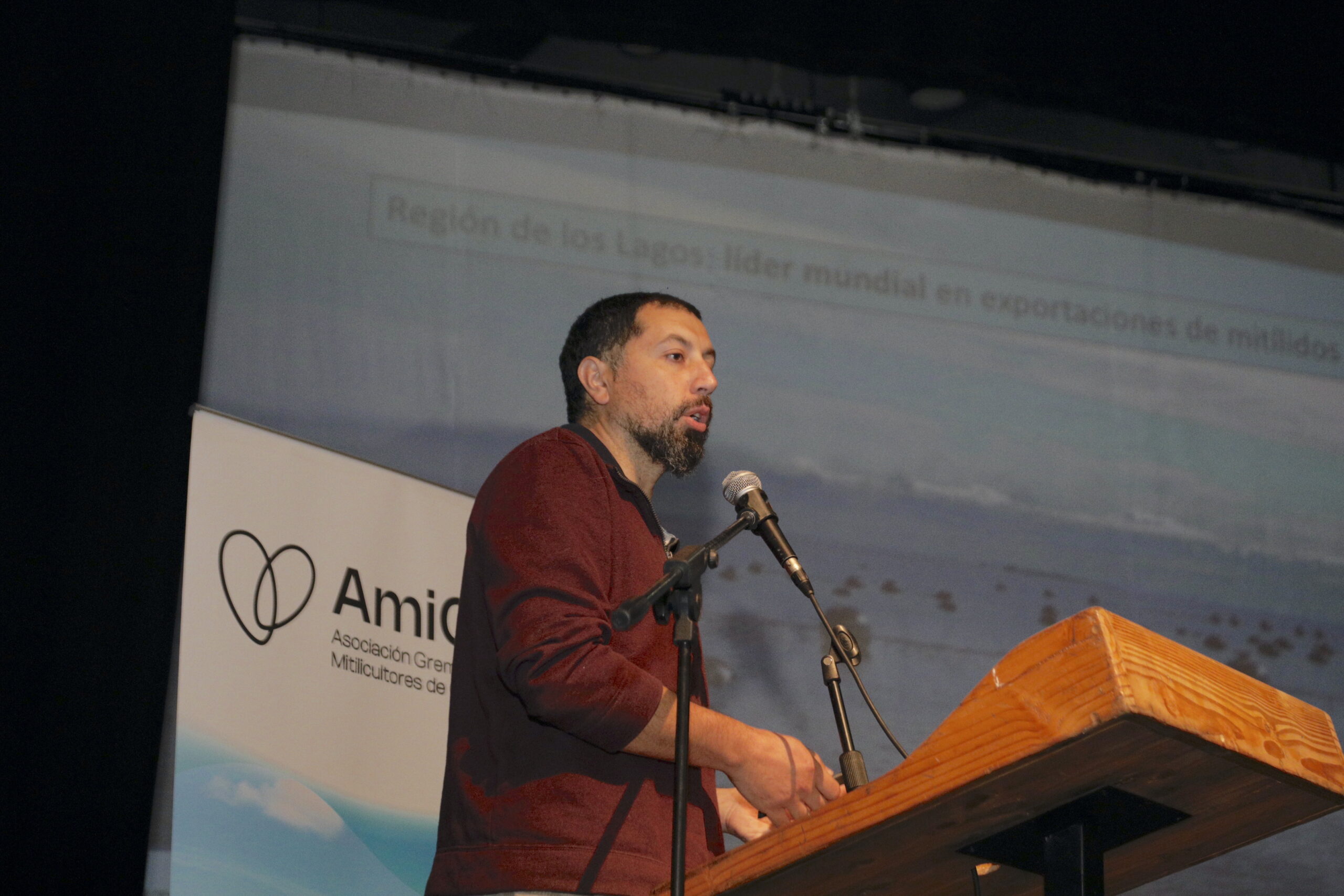
During the scientific session, Oscar Ramírez delivered a presentation titled “Variability in the Density of D-stage Mussel Larvae and Associated Environmental Signals in the Inner Sea of Chiloé and the Fjords of Southern Chile.” He shared findings from the spatio-temporal monitoring of the early larval stages of mussels and their relationship with environmental variables—information that is essential for understanding recruitment processes and the availability of seed (spat) for the national mussel-farming industry. In this regard, Oscar Ramírez noted: “Our participation in the 11th SIIAM 2026 provided an opportunity to share some of the work carried out by the Mytilid Larval Monitoring Program with producers, authorities, academics, and the general public. This forum allowed for the exchange of experiences and the identification of collaborative opportunities to address gaps related to larval capture and the collection of mussel seed in the Los Lagos Region. Furthermore, the information generated by the Program—concerning the availability of larvae and seed—serves as a valuable resource for planning future research and driving innovation within the mussel farming sector.”
IFOP’s participation in this seminar helped disseminate knowledge gained from long-term monitoring programs, reinforcing the institution’s contribution to the sustainable development of the Chilean mussel industry. Additionally, the information presented aids in the creation of tools to tackle both current and future challenges facing the Chilean mussel sector.
SIIAM 2026 Highlights the Larval Monitoring Program Led by IFOP
IFOP’s Mytilid Larval Monitoring Program—which has conducted continuous monitoring for over 10 years across 16 sampling stations located in the Los Lagos (12), Aysén (3), and Magallanes (1) regions—stands as one of the most extensive environmental and biological tracking initiatives developed for the national mussel farming industry. By consistently generating standardized, validated data on larval abundance and distribution—as well as the oceanographic factors influencing these processes—this monitoring platform has served as a foundation and support for numerous scientific studies, technical assessments, and innovations presented at various editions of SIIAM and other specialized forums. Its long-term database is widely recognized by both the industry and the scientific community as a fundamental reference for addressing questions regarding seed availability, recruitment processes, environmental variability, and the future challenges facing mussel farming. Through this participation, IFOP reaffirms its institutional commitment to generating high-quality scientific knowledge and transferring it to the productive sector. This contributes to strengthening a sustainable mussel-farming industry—one grounded in evidence and the continuous monitoring of the ecosystems that support this vital economic activity in southern Chile.
Watch the broadcast of the XI SIIAM 2026 here.