
15 May 2026
A collaborative effort between 16 Chilean salmon farming companies, Intesal, and IFOP to assess the risk of wild salmon re-establishment revealed a low presence of Coho salmon and an absence of Atlantic salmon.
The Chilean salmon farming industry has made significant progress toward international certification with a scientific study developed jointly by 16 companies in the sector, with technical management by the Salmon Technological Institute (Intesal) and execution by the Department of Hydrobiological Health (DSH) of the Fisheries Development Institute (IFOP). This study was developed within the framework of requirement 3.2.2 of the ASC standard, which addresses the need for scientific evidence to assess the environmental risk associated with the potential establishment of farmed salmon in natural ecosystems.
ASC is an independent, non-profit organization that sets the global standard for aquaculture products. To obtain and maintain ASC certification, certified sites must meet rigorous standards for biodiversity protection, water and energy use, fish welfare, and working and community conditions.
One of these requirements (identified as 3.2.2) relates to the potential impacts of salmon that may escape from fish farms and their ability to survive and reproduce in the wild, eventually forming permanent populations—a phenomenon known as feralization.
Until now, Chile operated under a mechanism known as a “Variance Request” (VR 271), which is essentially a temporary exception granted by ASC while sufficient scientific evidence on this specific issue is being gathered. The recent study provided concrete evidence supporting the low prevalence of Coho salmon and the absence of Atlantic salmon in the evaluated areas. Furthermore, genetic analyses were conducted to determine whether the specimens found originated from recent escapes or introductions made decades ago.
Unprecedented Collaborative Work
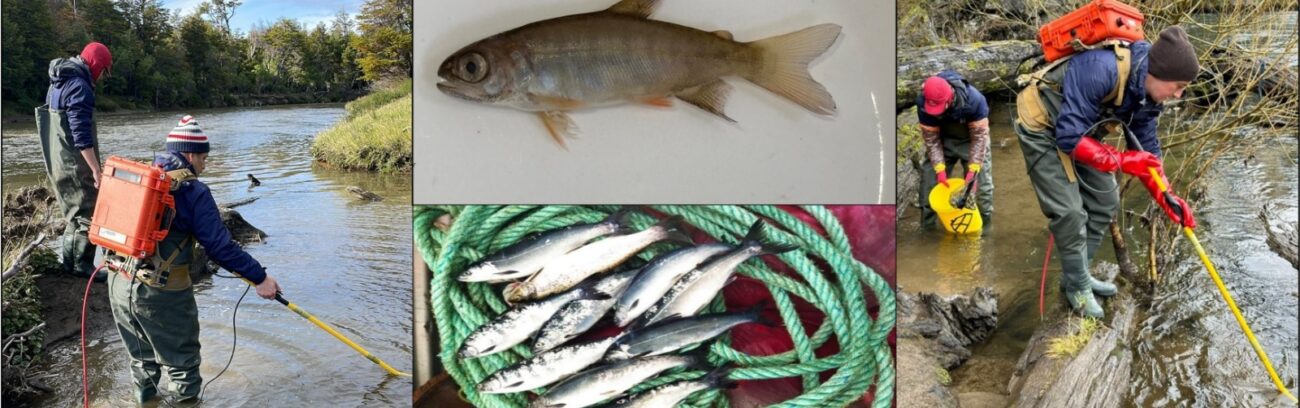
This achievement is the result of a unique collaborative effort in the sector. Following preliminary research between 2017 and 2022, a more comprehensive study was launched in 2023 for the period up to 2025. This research focused specifically on Atlantic and Coho salmon in southern Chile.
The study also identified, using a robust scientific methodology based on previous publications, critical areas where escaped specimens of both Coho and Atlantic salmon could establish themselves. However, during the study, only Coho salmon were captured in the wild, while no Atlantic salmon were found.
Furthermore, the reproductive capacity of these free-ranging populations was evaluated, revealing that a significant proportion of the Coho salmon exhibited reproductive abnormalities. This suggests that the risk of feralization depends not only on the presence of escaped fish but also on the existence of the necessary environmental conditions for successful reproduction. Furthermore, genetic analysis indicates that most of the captured Coho salmon are not recent escapees from fish farms, but rather populations that have existed in the wild for several generations.
“The approval of VR 271 demonstrates that when the industry works collaboratively and with evidence based on science, the most complex technical challenges can be addressed more effectively. This collective effort between 16 companies, Intesal, and IFOP not only allows us to technically fulfill a certification requirement, but also establishes a new standard of collaboration that is fundamental for future challenges,” stated Alexander Jaramillo, Health and Safety Coordinator at Intesal.
“Undoubtedly, this collaboration not only contributes to maintaining this important international certification for Chilean salmon farming, but also allowed us to provide a scientifically based response regarding the potential risk of these species becoming feral in the areas where they are farmed. This is mainly supported by the absence of Atlantic salmon catches in the studied regions and the small number of Coho salmon specimens caught, which exhibited low reproductive activity. Maintaining this type of collaborative work, with its high technical and scientific level, will allow us to continue reducing the existing knowledge gaps regarding escapes of farmed salmonids in southern Chile,” stated Juan Carlos Quintanilla, researcher at the IFOP’s Department of Fish and Wildlife Research (DSH).
“At ASC, we value this study as a significant contribution to meeting requirement 3.2.2 of the standard, as it provides robust scientific evidence for assessing the risk of establishing farmed salmon in natural ecosystems. This type of research, developed with technical rigor and collaboratively between the industry and independent scientific entities, is fundamental to ensuring that certification decisions are based on verifiable and up-to-date data. At the same time, ASC will continue to promote continuous improvement, ongoing monitoring, and a proactive, science-based approach as key pillars for aquaculture, with farmed seafood certified according to the ASC Environmental and Social Standard,” said Javier Unibazo, ASC Standards Team Leader.
Press related links: