




26 June 2026
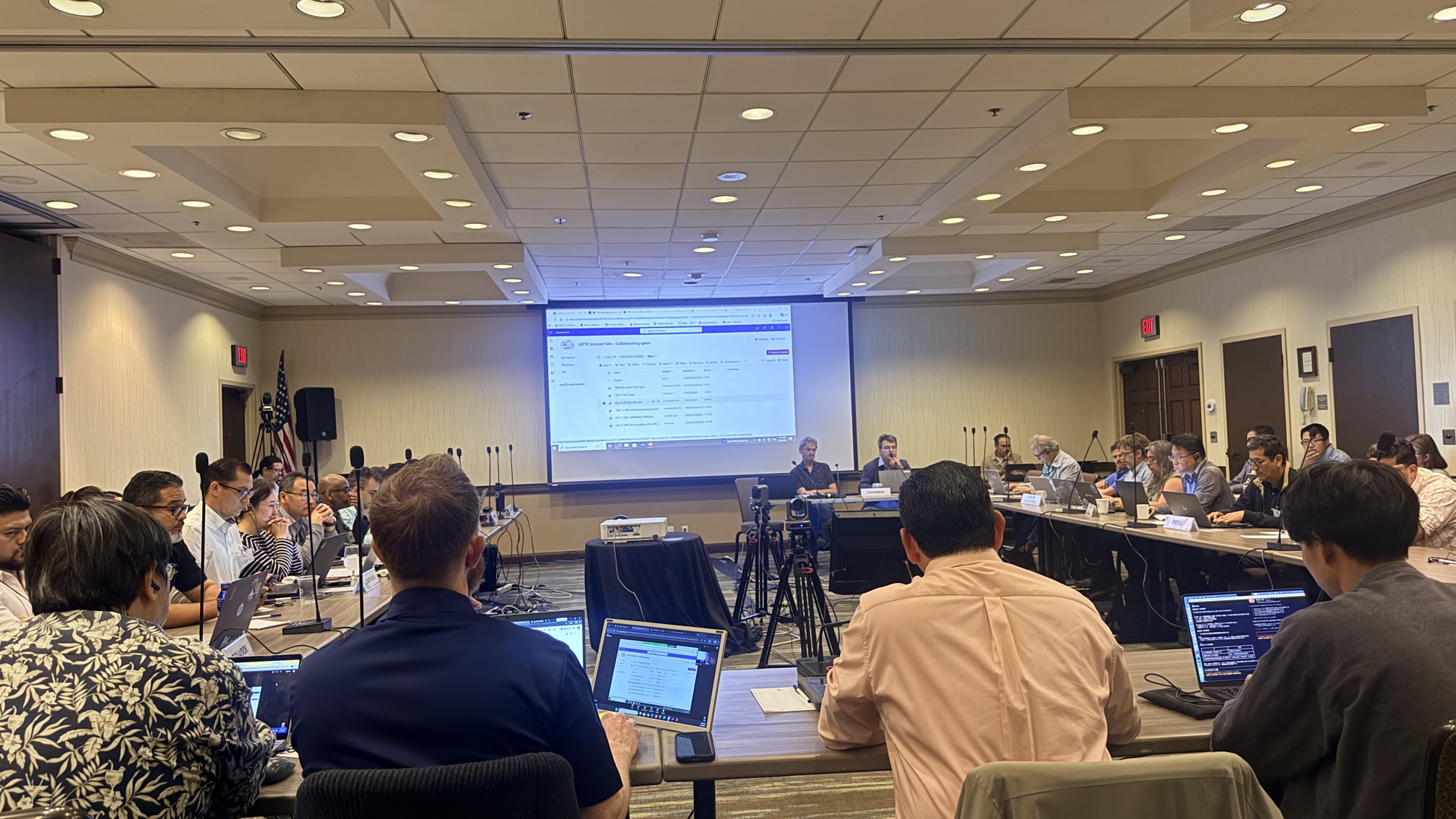 The XVII Annual Meeting of the Scientific Advisory Committee of the Inter-American Tropical Tuna Commission was held in La Jolla, California, from June 8 to 12, 2016. A delegation representing Chile attended the meeting, headed by Lezlie Camila Bustos, Sector Specialist from the Undersecretariat of Fisheries and Aquaculture, and researcher Patricio Barría Martínez from the Fisheries Development Institute.
During the meeting, the status of tuna fisheries in the Eastern Pacific Ocean (EPO) was analyzed. In addition, population health indicators and stock assessments of tropical tuna were examined, particularly for bigeye tuna (Thunnus obesus), yellowfin tuna (Thunnus albacares), and skipjack tuna (Katsuwonus pelamis).
In general, it was indicated that the three populations are healthy and that during 2024 and 2025 they experienced extraordinary catches exceeding 1 million tons. The tuna fishery has been affected by changes in its spatial distribution, with its operating area being more geographically limited, a condition attributed to the climatic and oceanographic conditions in the Western Hemisphere (WH).
From the perspective of tuna fisheries management, progress in the evaluation of management strategies (ESS) was presented. The meeting analyzed and discussed the evaluation of bigeye tuna management strategies and the proposed management procedures for tropical tunas in the WH. Additionally, another investigation by IATTC staff addressed the evaluation of the interim multispecies and multipopulation exploitation strategy for tropical tunas, the results of which were similar to those obtained from the analyses of individual populations.
 Other topics discussed at the meeting included the ecosystem approach and bycatch in tuna fisheries. The IATTC’s shark sampling program and the proposed best practices for shark handling were also reviewed.
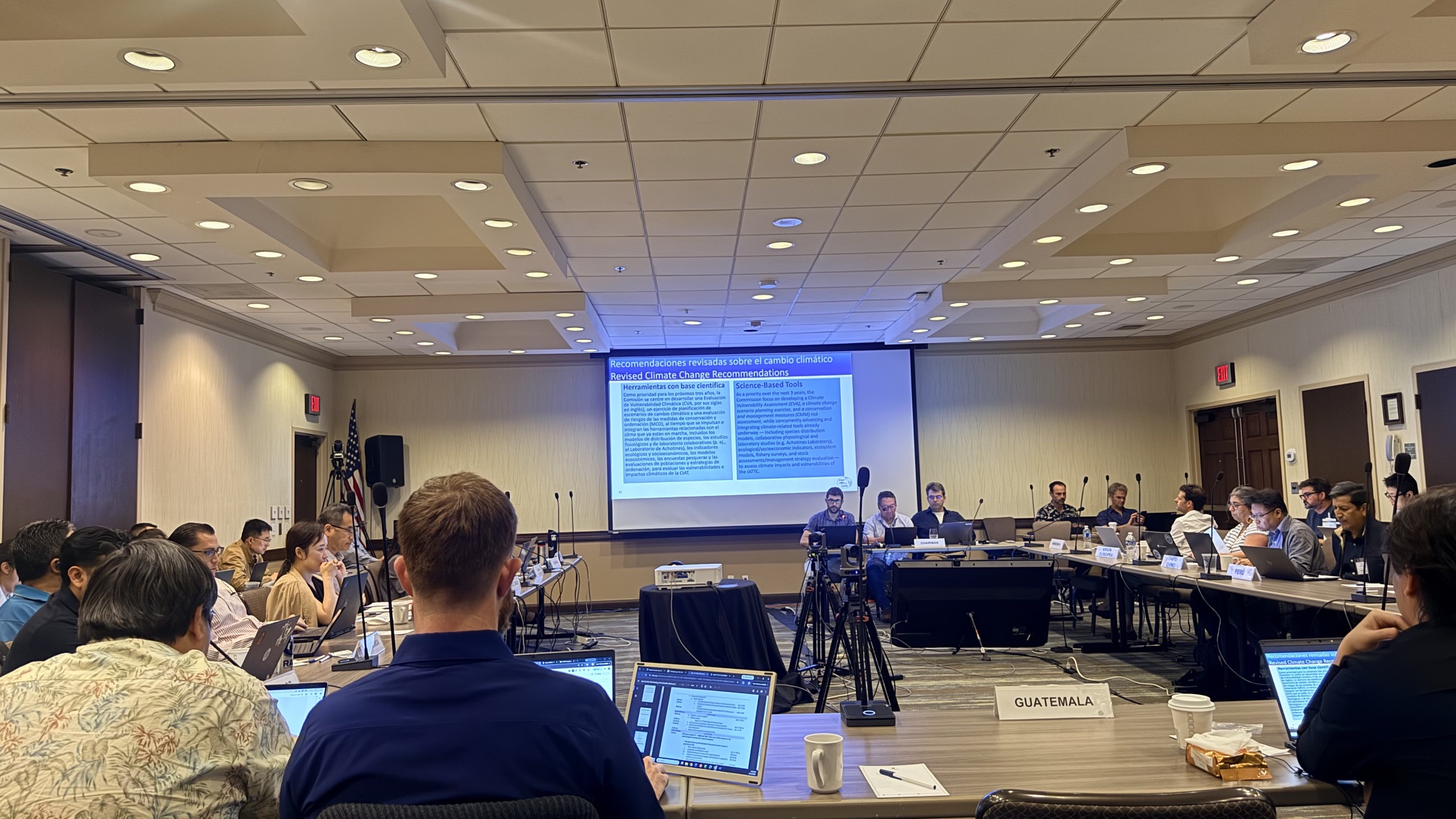
Regarding climate change, a work plan for IATTC tuna fisheries was presented. Finally, the Commission’s staff recommendations and prioritized tools for the next three years were shared. In particular, the development of a Climate Vulnerability Assessment (CVA) program for tuna fisheries was highlighted. This program will consist of a climate change scenario planning exercise and a risk assessment of conservation and management measures (CMMs).
Regarding temperate tunas and other species, stock assessments of Pacific bluefin tuna (Thunnus thynnus), a fishery not currently overfished, were presented, along with management strategies for albacore tuna (Thunnus alalunga) in the North and South Pacific. Staff recommendations for the conservation and management of temperate tunas and related species were also discussed, with special mention of swordfish (Xiphias gladius).
Regarding the swordfish fishery, a new stock assessment in the Eastern Pacific Ocean (EPO) was recommended. A collaborative network of researchers from six countries is currently in place, and scientific research priorities for swordfish were established for the period 2026-2030. This research program aims to generate new scientific knowledge to strengthen the macro-scale assessment of swordfish populations in the EPO. The program comprises three strategic lines: data and monitoring, stock assessment, and management.
Regarding fisheries monitoring, the program aims to harmonize data collection and databases among the various countries that fish for this species, increase observer coverage, and advance electronic monitoring. It also seeks to standardize biological sampling protocols and develop new biological and fisheries indicators. Furthermore, it will estimate large-scale biological parameters of population processes such as growth, reproduction, and sexual maturity. With respect to stock assessment, the conceptual model will be updated with new scientific information generated in the coming years. Oceanographic variables will be integrated into the population model to assess their effects on recruitment and spawning stock. Additionally, genetic/genomic information will be used to establish the spatial structure of the population, and the results of tagging and migration studies will provide information on the geographic distribution ranges of this species in the Eastern Pacific Ocean (EPO). In addition, CIAT staff will explore the use of a new demographic and genetic model (CKMR) for abundance estimation. Finally