

7 July 2026
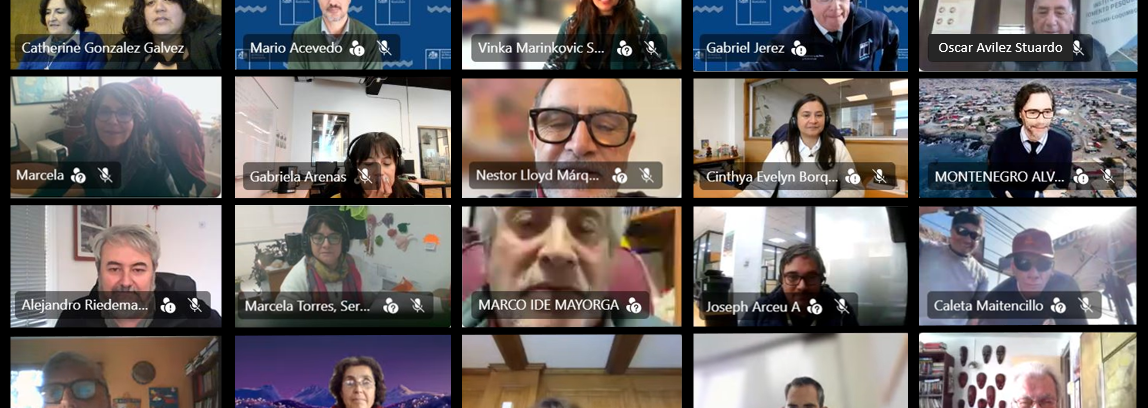
The video of the webinar “30 Years After the AMERB Regime: Where Are We Headed?” is now available. Organized by the Chilean Association of Fishing Professionals (APROPECH) and the Fisheries Development Institute (IFOP), the event brought together artisanal fishing leaders, researchers, technical consultants, public officials from the Undersecretariat of Fisheries, SERNAPESCA (National Fisheries Service), and INDESPA (National Institute for the Development of Fisheries), and local stakeholders from various regions.
Luis Ariz Abarca, head of the Management Areas section at IFOP, presented an overview of the system from its inception to the present, explaining IFOP’s role, from implementing Marine Protected Areas (AMPEs) in the regions to advising the Undersecretariat of Fisheries. He noted IFOP’s current involvement in standardizing and organizing data for AMEBs throughout Chile, evaluating their performance over time, and generating supplementary information to understand the current challenges facing the AMEB system.
Oscar Avilez Stuardo was the first exponent of artisanal fishing. “In the Coquimbo region, management areas constitute one of the most important pillars of artisanal fishing. These areas represent not only an administrative mechanism but also an economic livelihood for hundreds of families linked to the sea. The management areas were created by law but also implemented by people who have practically taken this activity to levels we never imagined possible. Direct landings from the management areas have generated direct employment for fishermen, shellfish divers, fishermen’s assistants, shore gatherers, and shore workers associated with processing and transportation, in addition to the direct economic effects on local services, commerce, and logistical activities in the fishing coves.”
Mario Acevedo Gyllen, representing the Undersecretariat of Fisheries, spoke about the complexity of coordinating multiple relevant institutions along the coast, where diverse interests now converge—a scenario quite different from that which existed when the first areas were established in 1996. He specifically addressed the legal and regulatory changes that have occurred regarding Marine Protected Areas (MPAs), from the introduction of the MPA concept in the 1991 Fisheries and Aquaculture Law to 2024, when several milestones were introduced with the Benthic Law. The regulations for management areas are currently under review and are expected to be published in 2027. Along with the regulations, he highlighted the following upcoming challenges: the implementation of the Benthic Law, the sampling manual for consultants—aimed at standardizing sampling procedures in MPAs—the electronic processing system, the use of the BuscAMERB mobile application, and the accreditation of sampling activities by SERNAPESCA (National Fisheries Service).
From the Los Ríos Region, Marco Ide Mayorga explained, “The management area system was born as a powerful promise based on granting resource rights to artisanal fishers, subject to resource management plans. This promise had four pillars: conservation, territorial rights, organization, and development, which transformed organizations from mere users of the resource to having direct responsibility for its administration. This allowed for the recovery of a resource as precious as the Chilean abalone (loco), but an idea falls short if it is not updated. Responsibility increased, but support for all this added complexity was not always available. Today, we must move from an administration that simply processes a resource to one that considers the territory as a whole.”
On behalf of SERNAPESCA, Vinka Marincovic Ibarra presented the current status of Marine Protected Areas (AMERB) in Chile, with 888 AMERBs established by decree of the Ministry of Economy. Of these, 781 have current maritime designations, and 662 have usage agreements between SERNAPESCA and the organizations of the designated fishers. The remote monitoring plan, which is being used to monitor baseline studies, AMERB follow-up studies, aquaculture reports, INFA (National Environmental Impact Assessment), bivalve mollusc sanitation programs, PSMB (Plan for the Management of Biological Resources), and research fisheries, was presented. This remote monitoring requires the submission of navigation coordinates that allow for the reconstruction of navigation during the studies and verification that they were conducted within the AMERB area. As of October 1, 2025, these files are required from technical entities to validate the studies.
Cinthya Bórquez Badillo, from the National Institute for the Development of Artisanal Fisheries (INDESPA), presented the AMERB Sustainable Development Program, which aims to strengthen productive and organizational capacities through comprehensive, territorially focused support. An initial assessment conducted across 16 AMERBs in 10 regions revealed significant territorial diversity, management and marketing gaps, and a strong interest in diversification and value-added activities. This led to the development of the AMERB program, which is based on five pillars: sustainability, productive development, organizational strengthening, a territorial approach to ensure the relevance of actions, and institutional strengthening and resource protection. Implementation is expected to take place in four stages, from the initial assessment and gap analysis, through strategic plan design and technical assistance, to investment in infrastructure and productive equipment. “The challenge is not only to manage benthic resources, but also to strengthen organizations, productive capacities, and coastal territories capable of sustaining their development in the long term,” Bórquez Badillo stated.
The webinar continued with a discussion moderated by María Isabel Toledo of APROPECH and Catherine González of IFOP. Throughout the webinar, several academics and professionals who promoted the establishment of AMERB were mentioned, including Carlos Moreno, Juan Carlos Castilla, Gabriel Jerez, Wolfgang Stotz, and Hernán Miranda, among others. The entire webinar can be viewed on IFOP’s YouTube channel: https://www.youtube.com/watch?v=U7h4tECDsFE
Press related links: