

4 November 2026
The event brought together 60 professionals from the Undersecretariat for Fisheries and Aquaculture—from Arica to Magallanes—with the goal of promoting the use of territorial development indicators and strengthening evidence-based decision-making for the management of the country’s coastal communities.
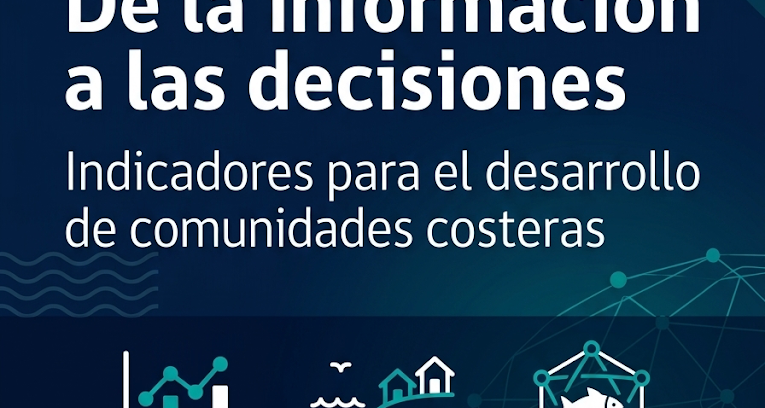
On Friday, November 30, as part of Collective Goal DDP-N°3, the Undersecretariat for Fisheries and Aquaculture (SUBPESCA) held a training workshop titled “Let’s Talk About Data? From Information to Decisions: Indicators for the Development of Coastal Communities.” The session brought together 60 of the institution’s professionals from various regions across the country, spanning from Arica to Magallanes.
The activity aimed to introduce and explore methodologies for analyzing territorial development indicators, designed to improve the monitoring, evaluation, and decision-making processes related to management and development instruments for the fisheries and aquaculture sector. These include the “Caletas” (Small-Scale Fishing Landing Sites) Law, Small-Scale Aquaculture (APE), and the Management and Exploitation Areas for Benthic Resources (AMERB) regime.
The workshop approached these topics through the lens of the Sustainable Livelihoods and Site Assessment (SL-SA) framework—a perspective that allows for an understanding of coastal community development by taking a holistic view of their capacities, resources, opportunities, and territorial conditions, moving beyond analyses focused solely on productive dimensions.
The event featured a presentation by Dr. Pedro Romero Maltrana, a researcher at the Fisheries Development Institute (IFOP), titled “Creating a Common Knowledge Base: Indicators, Concepts, Utility, and Development.” During his presentation, he addressed the methodological foundations for constructing and interpreting territorial indicators, as well as their practical application through a case study. He highlighted their utility in identifying gaps, characterizing development conditions, and generating relevant information for public management.
For his part, Gonzalo Garrido, head of the Productive Development Department (DDP) at SUBPESCA, spoke on “Challenges associated with the implementation of the *Ley de Caletas* (Small-Scale Fishing Cove Law) and experiences in territorial management.” He also presented progress on the implementation of a Decision Support System designed for the development and promotion of coastal communities.
In this context, Garrido emphasized the importance of creating spaces for learning and technical exchange, allowing for the sharing of methodologies currently used to analyze territorial development.
“These forums aim to disseminate territorial analysis methodologies, move toward a common language, and strengthen institutional coordination, ensuring that public decisions are based on objective and comparable information. This is essential for identifying gaps, prioritizing needs, and better directing public investment toward the small-scale fishing coves and coastal communities in our country,” noted Garrido.
A key focus of the meeting was the need to develop a shared knowledge base that facilitates the interpretation and use of indicators by the technical and professional teams responsible for implementing development and promotion instruments. In this regard, the systematic use of indicators serves as a tool to transform available data into actionable information for management—enabling the identification of differences between territories, the assessment of development conditions, and the definition of priorities for public intervention.
This activity is part of an institutional capacity-building process that seeks to promote shared methodological criteria and facilitate coordination among the various stakeholders involved in the development of coastal communities. As part of the ongoing implementation of this initiative, new workshops will be held over the coming weeks for institutions involved in coastal territorial development, with the aim of broadening knowledge exchange, strengthening interinstitutional coordination, and moving toward public management that is increasingly integrated and evidence-based.