
23 October 2026
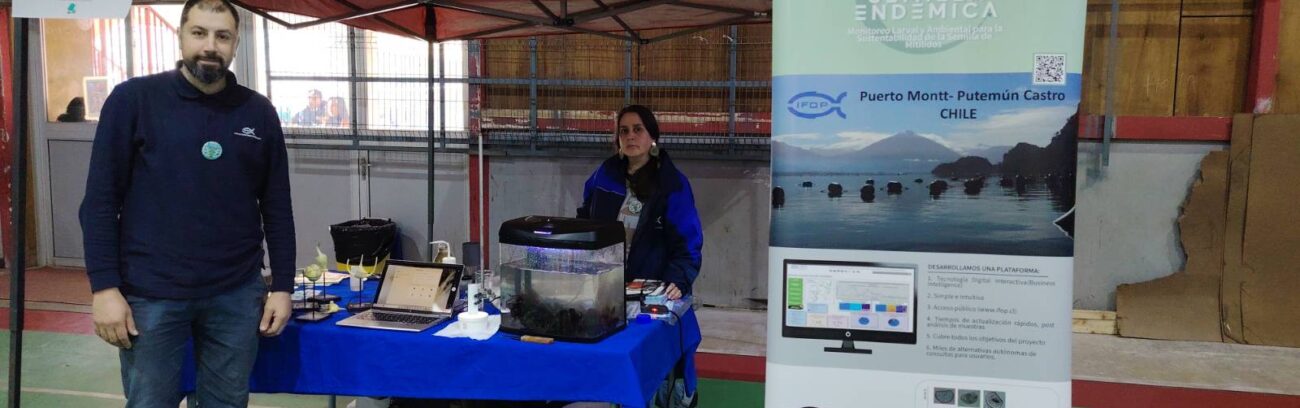
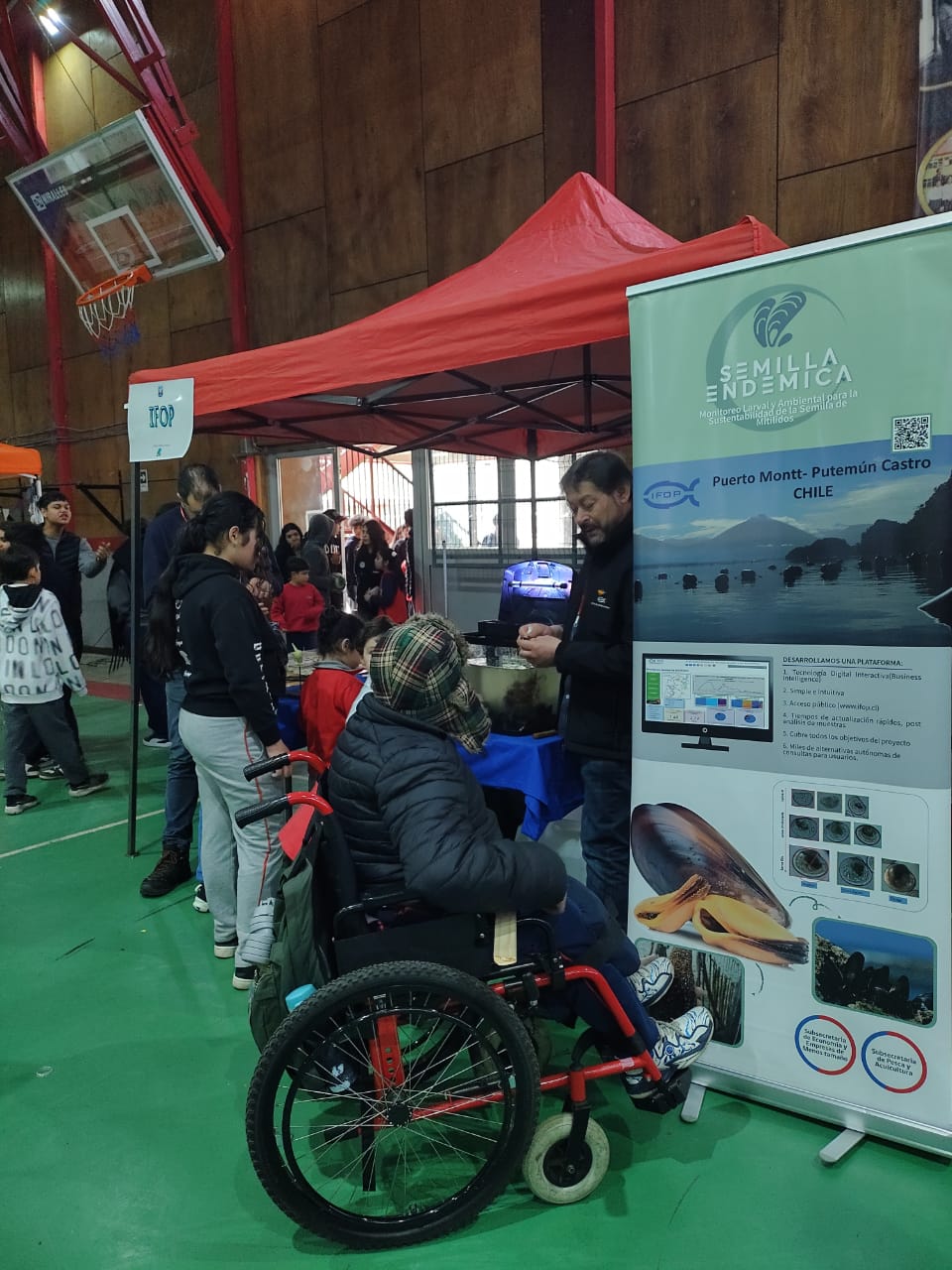 On the morning of October 7, 2026, professionals from the Fisheries Development Institute (IFOP)—Cristian Segura, Óscar Ramírez, and Angélica Alarcón—participated in the 2nd Science, Technology, and Environmental Fair, held at Liceo Aytué in Castro, in the Los Lagos Region.
The event, organized by Liceo Aytué, the Interdisciplinary Center for Aquaculture Research (INCAR), and the Chiloé Local Public Education Service (SLEP), brought together students, teachers, and representatives from various institutions linked to science, technology, education, and the environment, fostering the exchange of knowledge and the dissemination of scientific information.
Representing IFOP, Cristian Segura and Óscar Ramírez—from the Mytilid Larval Monitoring Program—and Angélica Alarcón—from the study on the Environmental Performance of Aquaculture in Chile (both projects under the Environment Department of IFOP’s Aquaculture Division)—presented the key areas of work carried out by the institute to support the sustainability of regional aquaculture.
During the event, the scope and findings of the Mytilid Larval Monitoring Program were shared; this initiative systematically tracks the abundance and distribution of mytilid (mussel) larvae in the primary seed-collection areas of the Los Lagos Region. Additionally, the interactive platform “Endemic Mytilid Seed” (*Semilla Endémica de Mitílidos*) was showcased—a tool that integrates biological, oceanographic, and environmental data to facilitate access to and visualization of information relevant to the mussel-farming sector. Through an interactive booth, professionals shared information with students, teachers, and visitors regarding the availability of mussel seed, the importance of environmental conditions for aquaculture operations, and the implications of harmful algal blooms (HABs). They highlighted how scientific research and environmental monitoring contribute to better decision-making and the sustainability of mussel farming in the Los Lagos Region.
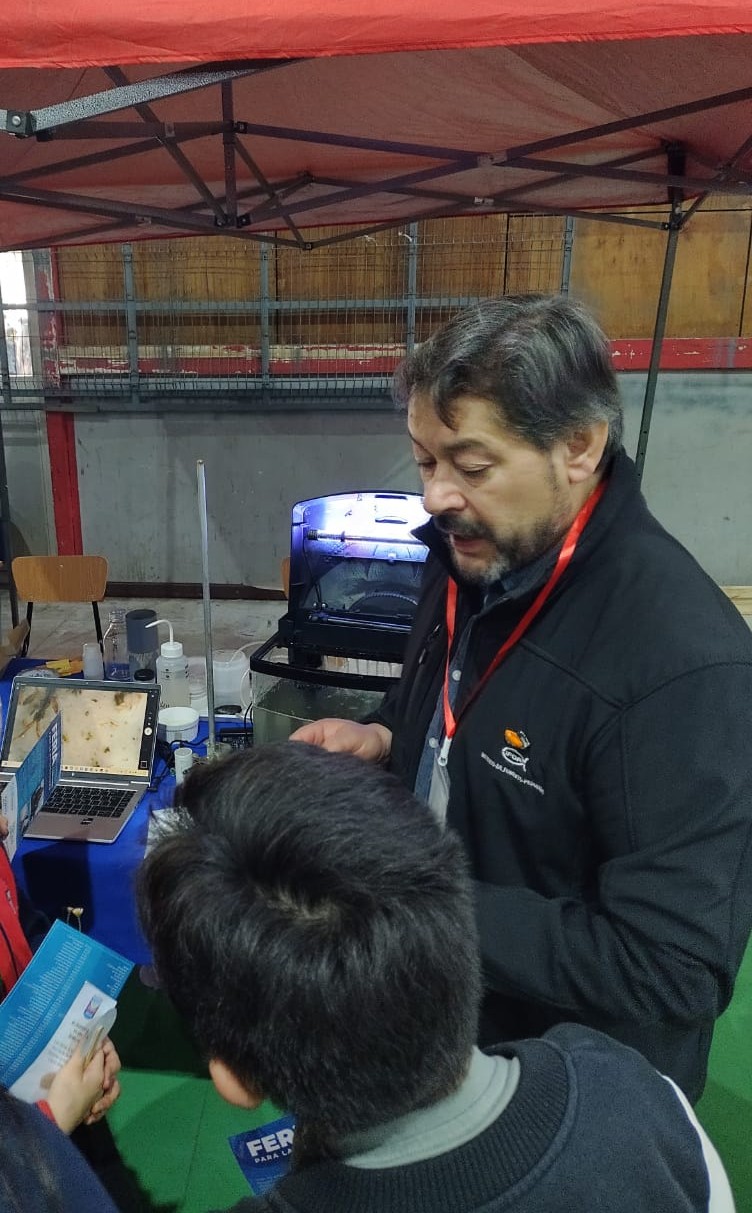 This outreach effort also serves as an opportunity to introduce the educational community to the value of Chiloé’s marine ecosystems, using the Putemún Marine Reserve as a key example. Located in the commune of Castro, this protected area aims to conserve the natural bed of the giant mussel (*Choromytilus chorus*) and help safeguard its genetic heritage. Its biodiversity provides an educational lens through which to explore the importance of benthic resources, ecological relationships, and the conservation of coastal environments.
IFOP’s participation in this fair reaffirms its commitment to scientific outreach, regional engagement, and the transfer of knowledge to the educational community—fostering an interest in marine sciences and the sustainable development of aquatic ecosystems.