

29 October 2026
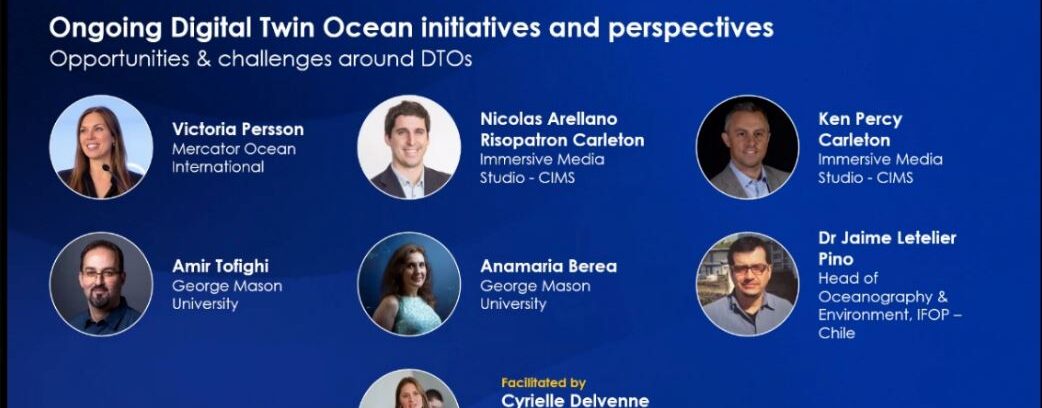
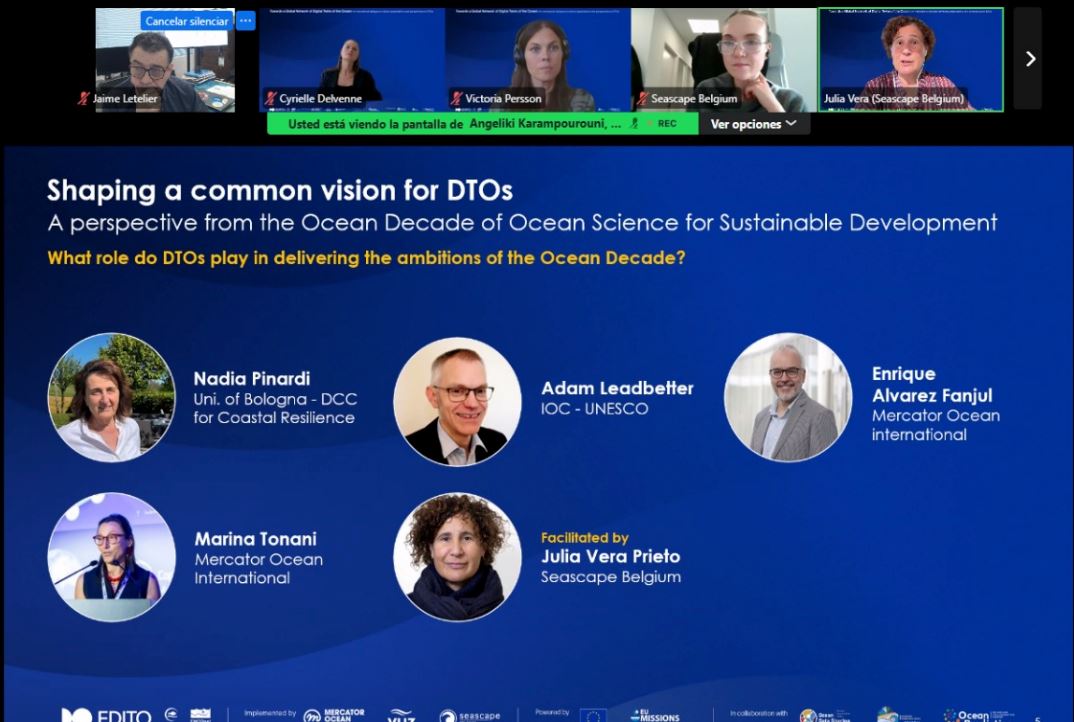
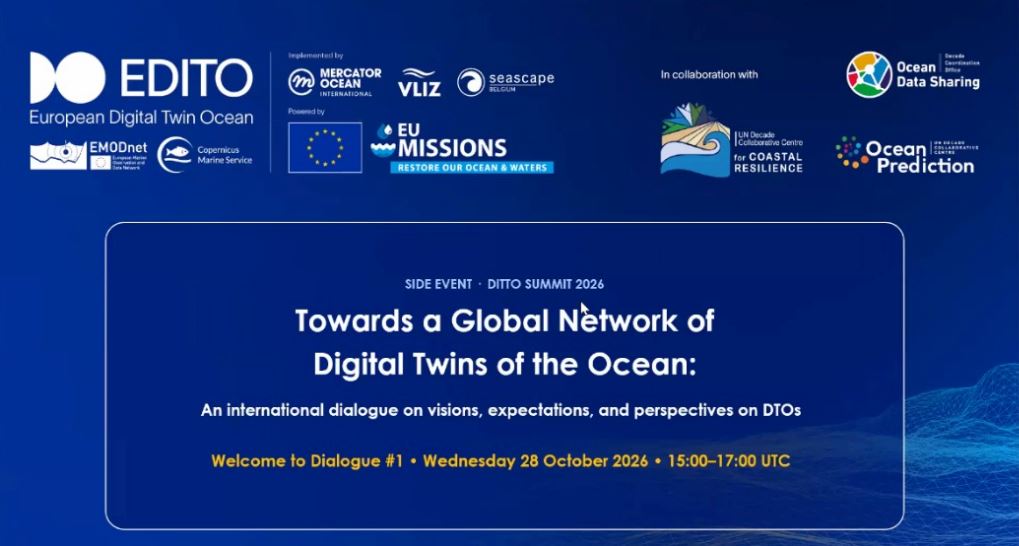 A significant milestone for IFOP was the participation of Dr. Jaime Letelier Pino—senior researcher and head of the Department of Oceanography and Environment (DOMA)—as the only South American invitee to the event “International Dialogues on Visions, Expectations, and Perspectives for Digital Ocean Models” held as part of the global consultation for the DITTO International Summit 2026 (Digital Twins of the Ocean).
Dr. Jaime Letelier Pino highlighted IFOP’s (ifop.cl) role in designing and implementing a comprehensive monitoring system for ENSO (El Niño-Southern Oscillation) events and climate change, aimed at fostering the resilience of fisheries in the Southeast Pacific (SIMO; simo.ifop.cl). He also showcased a circulation modeling system for the inland seas of the Los Lagos, Aysén, and Magallanes regions, which supports the sustainable development of the national aquaculture industry (CHONOS; chonos.ifop.cl).
 In this way, SIOM has established itself as a foundational element in the development of a “Digital Twin of the Ocean” (DTO) in Chile. While it currently functions as a robust platform for observation, data integration, and monitoring, its capabilities position it as a key starting point for the future development of advanced predictive models.
The factors that make SIOM an essential platform include:
- Integration of real-world data: It aggregates oceanographic, meteorological, and satellite information, as well as data from research cruises, in real-time or on a continuous basis. This enables detailed tracking of biotic variables, the El Niño phenomenon, and sea-surface temperature anomalies.
- Foundation for numerical modeling: Data collected by the SIOM and other associated IFOP systems will feed into mathematical and physical models that simulate the dynamics of the southeastern Pacific Ocean.
- Regional interoperability: This has facilitated the coordination of efforts with other regional entities—such as IMARPE (Peru), IPIAP (Ecuador), and the CPPS—as well as national organizations, including SERVIMET, REDMETEO, SERNAPESCA, and soon the SHOA. This collaboration aims to enable comprehensive, ecosystem-scale monitoring of the Humboldt Current.
Currently, the team led by Dr. Letelier and senior researcher Andrés García is working on the implementation of environmental forecasting systems. These technological innovations not only strengthen the resilience of the fishing sector in the face of climate change but also position Chile at the forefront of marine observation, with the goal of fully integrating local initiatives into global “Digital Twin of the Ocean” networks.
Press related links: