


4 November 2026
 Strengthening Mussel Farming Management in the Los Lagos Region
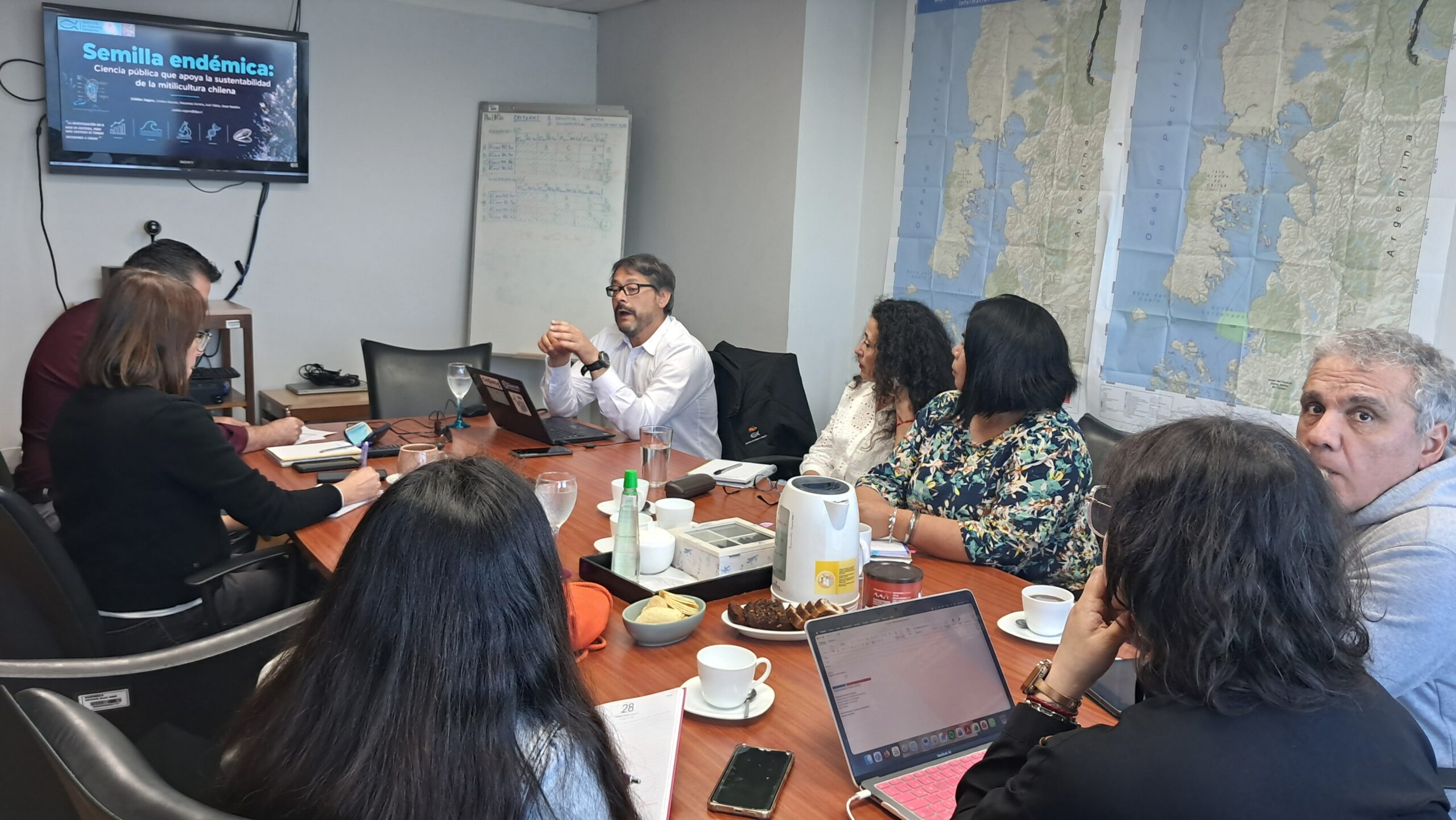
With the goal of disseminating and promoting the use of the “Semilla Endémica de Mitílidos” (Endemic Mussel Seed) platform among sectoral authorities, researchers from the Mussel Larval Monitoring Program—part of the Environment Department within the Aquaculture Division of the Fisheries Development Institute (IFOP)—held a workshop on October 28th for professionals from the Undersecretariat for Fisheries and Aquaculture (SUBPESCA) and the National Fisheries and Aquaculture Service (SERNAPESCA). The session demonstrated how the platform’s dashboards can directly help address many of the questions faced by authorities in the management of the mussel farming industry.
“Semilla Endémica” provides access to data gathered over more than a decade of scientific monitoring in the country’s primary mussel-farming zones. In the mussel industry—one of the most significant productive sectors in southern Chile—understanding the natural processes of seed settlement (larval recruitment) is essential for supporting decision-making by producers, public agencies, and other sector stakeholders.
The workshop took place at the offices of the Zonal Directorate for Fisheries and Aquaculture in the Los Lagos Region. Representing the Larval Monitoring Program, researcher Cristian Segura and researcher Macarena Herrera presented the platform’s scientific and operational scope, highlighting its potential for public management and territorial analysis.
In the first part of the session, the core objectives of the Program were outlined. The Program generates data on the abundance and spatio-temporal distribution of mussel larvae in southern Chile. This information provides insight into recruitment processes and the availability of natural seed—both of which are critical components for the sustainability of the industry. Subsequently, in a practical session designed to help the authority’s teams integrate *Semilla Endémica* (Endemic Seed) into their routine work, participants explored its tools for data consultation, visualization, and analysis through a hands-on, participatory approach.
Among other topics, the professionals examined the historical significance of various sectors in terms of larval abundance and potential seed supply, while simultaneously comparing trends across different territories. They also identified instances where spawning occurred earlier or later than usual in various “seed-source” areas—phenomena that can diminish collection efficiency if collectors are not deployed in a timely manner. Furthermore, they analyzed historical patterns of seed settlement and detachment in highly contrasting environments, such as the Reloncaví Fjord and the inland sea of Chiloé.
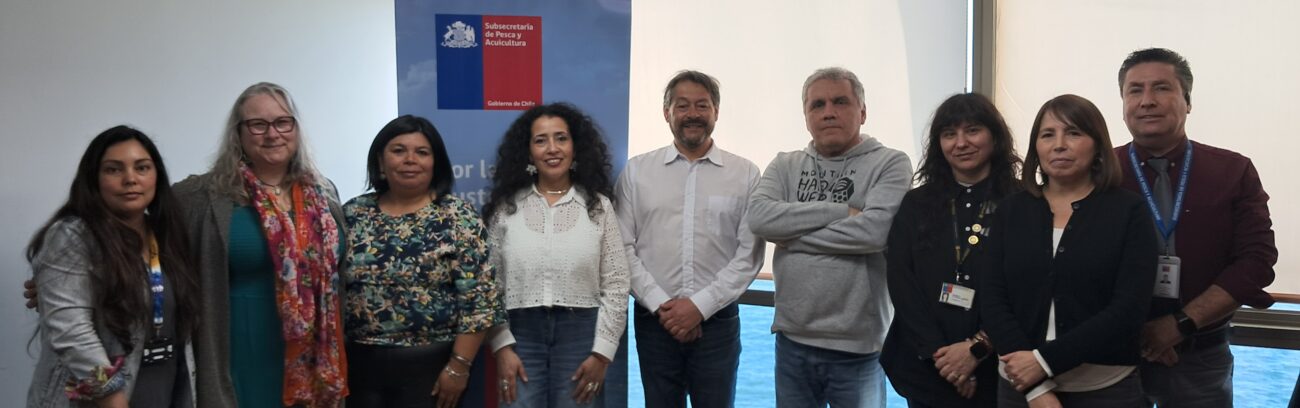
The dissemination session was attended by Gustavo Castro Alcaíno, the Zonal Director of Fisheries and Aquaculture for the Los Lagos Region, accompanied by staff from the Zonal Directorate: Mariela Guzmán Vilches (Aquaculture), Martina Delgado (Benthic Affairs and Artisanal Fisheries), and Alejandra Paineo (Indigenous and Territorial Affairs). Representing SERNAPESCA were Marisela Altamirano Ocampo (Aquaculture Support and Analysis Unit), Anabel Soto (Mussel Farming/Mytiliculture), and Nelson Pino (Territorial Management Unit).
Value for Public Management and the Territory
More than just a digital repository, *Semilla Endémica* serves as a platform for technological dissemination, making complex scientific information accessible to users with varying levels of expertise. It is underpinned by the database of the IFOP (Institute for Fisheries Development) Mytilid Larval Monitoring Program—one of the most well-established biological monitoring initiatives within the national mussel-farming industry.
Thanks to the continuity and robustness of its records, this data has served as a foundation for numerous scientific studies, technological developments, and applied research projects aimed at understanding the dynamics of seed settlement and the environmental factors that influence it. For this reason, it is recognized within the sector as a key reference for addressing questions regarding larval availability, recruitment, and operational planning.
Furthermore, the platform strengthens coordination among the institutions that manage, regulate, and oversee aquaculture by providing them with a shared foundation of scientific information for evidence-based decision-making.
Participant Perspectives
Gustavo Castro Alcaíno, Zonal Director of Fisheries and Aquaculture for the Los Lagos region, noted:
“We deeply value the work carried out by IFOP and their efforts to transfer this knowledge to public agencies. The ‘Semilla Endémica’ (Endemic Seed) platform serves as a strategic tool for the management of mussel farming, as it provides access to reliable, long-term scientific data that supports both the work of state services and the decision-making processes of producers and other stakeholders. Initiatives like this strengthen inter-institutional collaboration and help align scientific efforts with the specific needs of the region.”
Meanwhile, Mariela Guzmán Vilches, the aquaculture lead at the Zonal Directorate of Fisheries and Aquaculture, stated:
“I would like to highlight the training provided by IFOP at our Zonal Directorate regarding the ‘Semilla Endémica de Mitílidos’ (Mussel Seed) platform—a session that also included professionals from SERNAPESCA. During the training, we explored the tool’s functionalities in detail, along with the various options available for accessing and analyzing data relevant to monitoring this productive sector. As a Zonal Directorate, we highly value these opportunities for training and inter-institutional coordination; they enhance our technical capabilities and provide us with better tools to support management and decision-making within the mussel farming industry. Furthermore, the platform enables us to provide better guidance to stakeholders by offering them information that facilitates more informed planning for their seed-collection activities.” For her part, Marisela Altamirano Ocampo, from the Aquaculture Support and Analysis Unit at SERNAPESCA, highlighted:
“The session was extremely enriching. It allowed us to see how the integration of data and technology translates into concrete tools, such as the ‘Semilla Endémica’ (Endemic Seed) platform. This platform directly empowers seed collectors by providing technical certainty for decision-making each season. I believe that the continuous monitoring of biological and environmental variables is the key to ensuring the sustainability of this activity; it enables us to move toward management that is more proactive, precise, and grounded in technical evidence. Learning in detail about the studies and methodologies conducted by IFOP reaffirms the value of their research—research that has now taken the form of a platform accessible to both mussel farmers and technical/regulatory bodies. It incorporates a historical database that serves as a strategic management tool.”
Finally, Cristian Segura, head of the Mussel Larval Monitoring Program at IFOP, noted:
“The most valuable aspect of this session was realizing—together with the teams from SUBPESCA and SERNAPESCA—that many of the questions posed by the authorities can be answered directly through the ‘Semilla Endémica’ dashboards. We are talking about more than a decade of larval monitoring, now transformed into a tool used daily for public management and by the mussel farmers themselves.”
Looking Ahead
This outreach session helped identify new opportunities for collaboration between IFOP, SUBPESCA, and SERNAPESCA. It underscored the importance of bringing public research closer to technical agencies and industry stakeholders, fostering more informed and sustainable management of the mussel farming sector. In this regard, IFOP remains committed to further enhancing the capabilities of ‘Semilla Endémica’ to better serve its public and private-sector users.
To learn more about the Semilla Endémica platform, visit: https://www.ifop.cl/monitoreo-larvas-de-mitilidos/