
24 September 2026
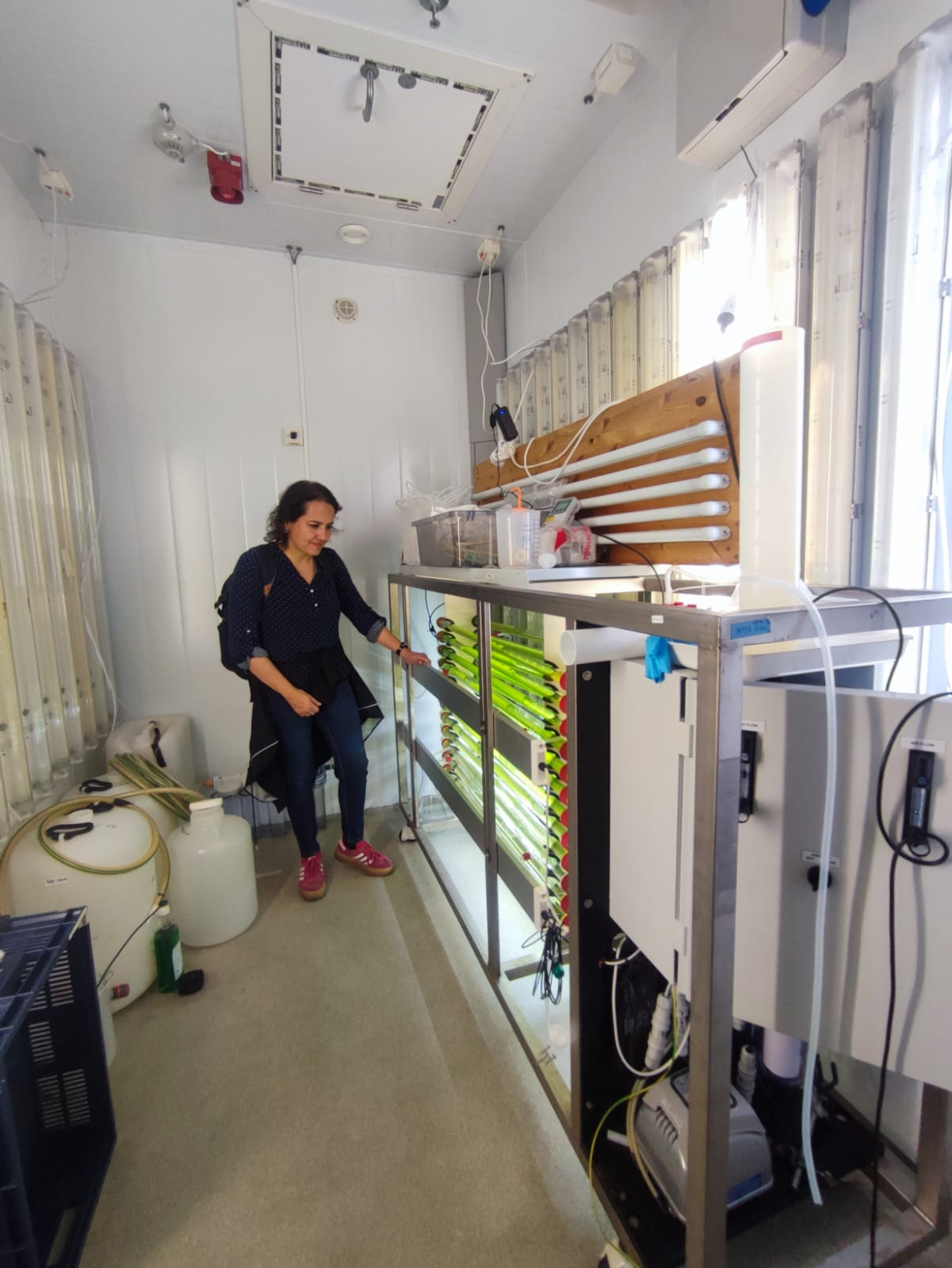 Puerto Montt, September 2026 – The Fisheries Development Institute (IFOP), through its Environment Department (Aquaculture Research Division), helped organize the second international webinar titled “Algae-based innovation for next combined aquaculture production II” in collaboration with the European Aquaculture Society (EAS). This activity is part of the INNOAQUA project—funded by the European Union via the Horizon Europe program (https://innoaquaproject.eu/about/)—which seeks to contribute to the development of a sustainable and diversified aquaculture industry through the large-scale demonstration and implementation of innovative algae-based feeds and solutions, guided by principles of ecology, circularity, and digitalization.
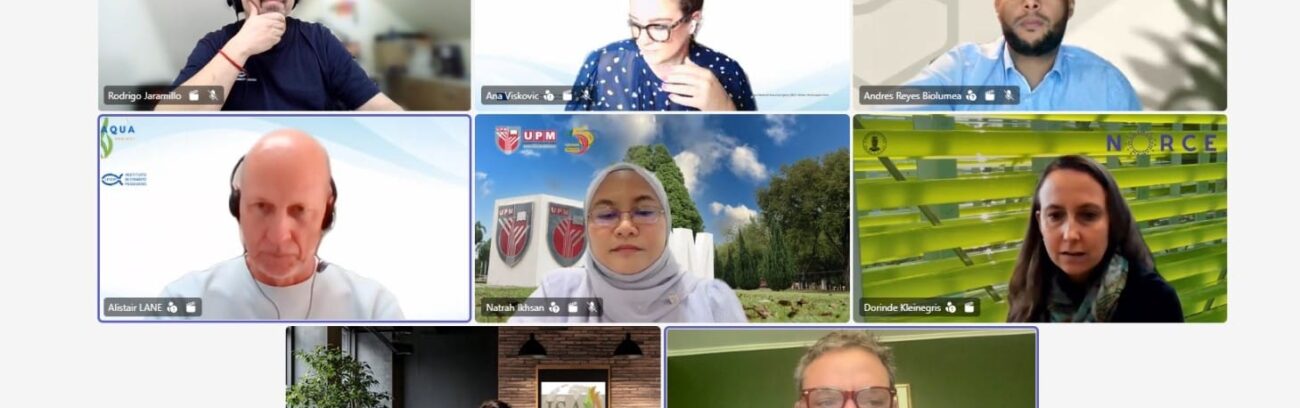
The event took place online on Friday, September 11, 2026. IFOP researchers Johana Ojeda Palma and Rodrigo Jaramillo Teufert participated in organizing the event; together with the European Aquaculture Society (EAS), they coordinated the logistics and content for this second session of the INNOAQUA webinar series.
The session was moderated by Rodrigo Jaramillo Teufert (IFOP) and Dr. Dorinde Kleinegris of NORCE Research (Norway), the INNOAQUA project director. The presentations were followed by a panel discussion moderated by Dr. Alistair Lane (Executive Director, European Aquaculture Society). The full program and speaker biographies can be viewed at the following link: https://lnkd.in/eAFMWrxR
Holding this event reaffirms the Institute’s commitment to international cooperation in research applied to sustainable aquaculture. Interview with Dr. Alistair Lane, Executive Director, European Aquaculture Society.
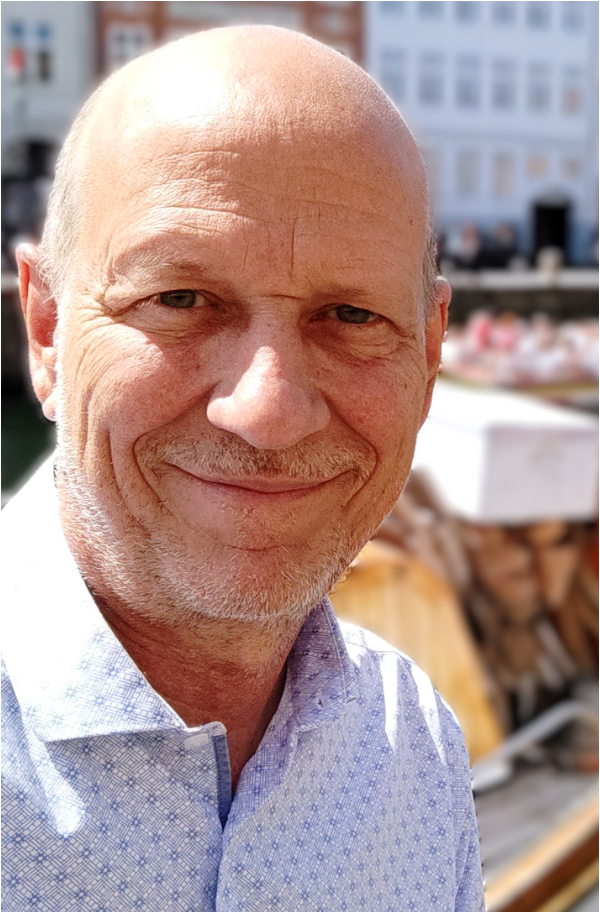 Biography of Alistair Lane
Alistair Lane has served as Executive Director of the European Aquaculture Society (EAS) since 2000, managing this international non-profit association, which has over 1,000 members across more than 60 countries. After obtaining a Master’s degree in Marine Biology, he worked for over a decade in the aquaculture sector in the UK, France, and Spain, holding positions in distribution, marketing, and general management.
He has a particular interest in aquaculture communication and has participated in various European initiatives related to the sustainable development of the sector. He currently contributes his expertise to the European Commission’s Aquaculture Assistance Mechanism, supporting the Strategic Guidelines for EU aquaculture. He regularly presents aquaculture-related issues to European policymakers and acts as an expert for the European Commission and the Research Council of Norway in the evaluation of research and innovation projects.
What was the main motivation for organizing this second INNOAQUA webinar on seaweed extracts?
Within INNOAQUA, the EAS leads international cooperation tasks aimed at fostering networking and international collaboration in aquaculture (and seaweed) research with entities outside Europe. To this end, the EAS—in collaboration with the other partners—has spearheaded the organization of these two webinars to disseminate project results and promote knowledge exchange and the replication of developed solutions, focusing on Southeast Asia for the first webinar and South America for this second one.
How do you view South America’s position in the current global aquaculture landscape? The development of aquaculture in South America has been characterized by the production of salmon, trout, and mussels in Chile; shrimp in Ecuador and Venezuela; and freshwater fish (especially tilapia) in Brazil. However, the region possesses the necessary resources and expertise to further develop the production of algae (macroalgae and microalgae) for both food and non-food applications; this is one of the reasons why we have decided to focus this second webinar on this subject and its potential.
We are pleased to welcome Leila Hayashi as the webinar’s first speaker; as the current president of the International Seaweed Association, she will provide an overview of the current situation and future trends in the region.
How important are regulatory development and biosecurity for the sector’s long-term sustainability?
The regulatory framework for seaweed production is fragmented and requires further development, not only in South America but also in Europe. This process is currently underway, and European platforms such as EU4Algae are assisting policymakers in creating appropriate regulations that enable the sector’s growth.
Biosecurity is also fundamental to the production sector—not only to protect native and non-native species but also to ensure the safety of operators and value-chain partners, given that secondary processing and value-added activities require seaweed products that meet high standards of quality and purity.
Europe and South America have much to learn from each other in these areas.
Where do you see the most promising research opportunities in the seaweed sector—both in South America and globally—over the next five to ten years?
The research and innovation agenda for seaweed production is currently being defined across all regions of the world. In Europe, this agenda focuses on several key pillars; the EU Algae Awareness Summit, recently held in Berlin in October 2025, outlined the actions needed to unlock the full potential of seaweed in sectors such as human and animal nutrition, biomaterials, biostimulants, cosmetics, and pharmaceuticals, by achieving critical mass, further industry consolidation, and increased investment. It was agreed that Europe must move beyond simple collaboration and advance toward consolidation, following models that foster vertical integration and strategic alliances. Undoubtedly, this situation applies equally to your region and other parts of the world.
What role can international collaboration—such as the INNOAQUA initiative—play in accelerating this research?
All the regions that make up the “algae world” face unique challenges, yet they also share many common issues regarding production technologies, extraction, purification, and value-added generation. The work carried out by INNOAQUA is part of this journey; through effective communication of its results, it can contribute to the body of knowledge needed to drive our sector forward.
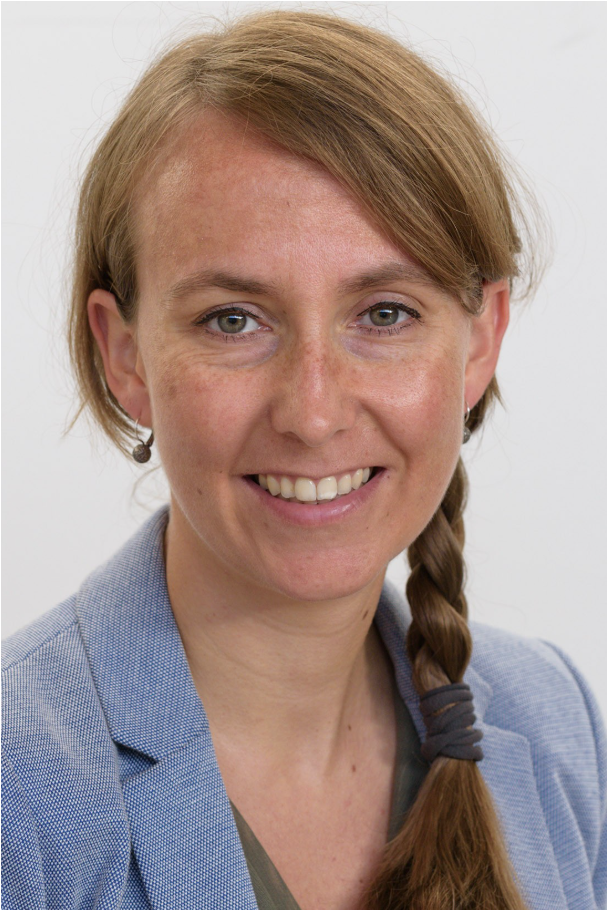 Biography of Dorinde Kleinegris
Dorinde Kleinegris is a Principal Researcher in the field of microalgae at NORCE (Norway) and holds a part-time position as an Associate Professor of Marine Biotechnology at the University of Bergen. She holds a background in bioprocess engineering from Wageningen University. Dr. Kleinegris’s research focuses on microalgae strain selection and improvement, cultivation and process design, as well as techno-economic and life-cycle assessments of the microalgae production chain. In addition to her scientific involvement and project supervision, she possesses extensive experience in project management at European and national levels, as well as in bilateral projects with industry.
From a bioprocess perspective, what are the main technical bottlenecks in scaling up microalgae cultivation sustainably?
It all begins with the microalgae strains we use. Most of them have not yet been truly domesticated—that is, transformed from wild strains into genuine “crops”—by improving their initial traits of interest while simultaneously ensuring good growth and robustness during large-scale production. If we look at traditional agriculture, domestication and genetic improvement have been taking place for tens of thousands of years; although we possess far more knowledge and techniques today than in the past, there is still a long way to go in improving microalgae strains. Furthermore, in my view, automation and process control are fundamental. The productivity levels achieved in the laboratory under strictly controlled conditions are not yet matched outdoors, where fluctuating weather conditions and other challenges inherent to large-scale cultivation come into play. It is key to understand how to balance achieving optimal growth conditions with minimizing energy consumption and associated costs. Likewise, it is crucial to move beyond merely producing biomass to creating a final product; rather than limiting ourselves to whole, dried cells, we should adopt a biorefinery approach where all valuable algal components are extracted and utilized in products, ensuring that every fraction is fully exploited and yields the highest possible value. Finally, it is about all those small contributions that, combined, generate a major impact—such as reducing nutrient costs, for instance, by using waste streams as fertilizers.
How important are techno-economic and life-cycle assessments in determining whether a microalgae-derived product is truly sustainable, rather than merely technically viable? In my opinion, this is incredibly important, because ultimately, no one will commercialize the production of these microalgae-based products if the economics—in particular—are not sustainable. Our goal is to employ life cycle assessment (LCA) and techno-economic analysis (TEA) from a very early stage—using data from our pilot plant—to identify the key parameters and bottlenecks influencing environmental and economic impacts. This will guide us in determining where to focus our research: eliminating or at least mitigating these bottlenecks should have the greatest impact on making the process more environmentally and economically viable. Naturally, scaling up and obtaining more realistic data—comparable to commercial operations—will improve the accuracy of the results. At the same time, I believe it is important to bear in mind that many microalgae-derived products could be compared to existing products made via production processes that have been operating and undergoing optimization for decades. Therefore, while understanding current performance is important, it is equally crucial to forecast future performance and the associated environmental and economic impacts.
What role do you think AI and process optimization will play in the future of algae-based aquaculture?
Building on my earlier comment regarding the vital importance of automation and process control, I believe that AI—along with smart sensors and monitoring systems—can help us much more quickly identify the optimal production targets we should aim for, in both the biomass production and processing phases. Furthermore, I believe that AI and tools like digital twins can guide us in understanding consumer behavior and determining which products will be in highest demand.
Given Norway’s strong tradition in aquaculture research and leveraging the link INNOAQUA has already established between NORCE and IFOP, do you see potential for greater strategic collaboration between the two institutions in the future?
I observe many shared strengths and complementary profiles—both when comparing Norway and Chile and when analyzing NORCE and IFOP—that lay a very solid foundation for collaboration. Both Norway and Chile possess beautiful, rich coastal environments ideal for macroalgae production and are home to abundant microalgae species of great interest; furthermore, both countries are exploring the use of algae as a cornerstone of sustainable aquaculture and the blue economy. Likewise, both are leading salmon-producing nations facing similar challenges regarding production sustainability, novel feed ingredients, and environmental footprints. At an institutional level, NORCE boasts robust capabilities in algae biotechnology, ranging from strain improvement to process design and optimization—including circular economy approaches such as land-based integrated multi-trophic aquaculture. For its part, IFOP possesses deep, detailed knowledge of Chile’s coastal ecosystems and local species—including the study of invasive species and pests—as well as the relationship between algae and salmon production and sustainability; it also maintains close ties with the industry and regional policymakers. I believe this combination enables a highly compelling interhemispheric collaboration; one could start by focusing on algae within sustainable aquaculture—for instance, jointly addressing the role they can play in removing nutrients derived from salmon production—or by testing algae-based value chains through parallel pilot projects in Norway and Chile to understand similarities and differences regarding markets, regulations, and logistics.
Press relate links: