
13 October 2026
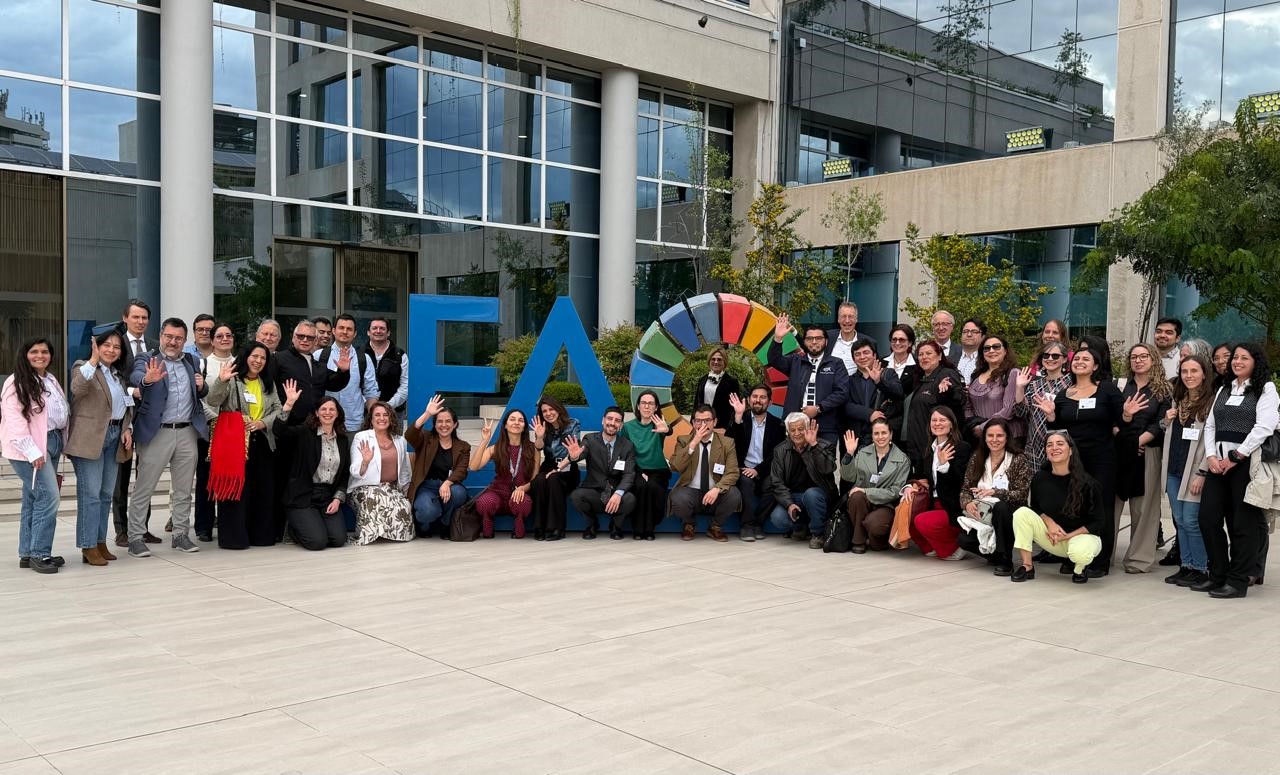 With the aim of promoting the exchange of experiences and strengthening collaborative efforts to prevent and reduce food loss and waste, the meeting “From Public Policy to Collective Action: International Cooperation to Prevent and Reduce Food Loss and Waste” was held on Thursday, October 1, at the FAO Regional Office for Latin America and the Caribbean in Santiago. The event was organized by the Office of Agricultural Studies and Policies (ODEPA), the Food and Agriculture Organization of the United Nations (FAO), and the Embassy of the Kingdom of the Netherlands, bringing together representatives from the public and private sectors, academia, international organizations, and civil society.
The meeting was opened by Maya Takagi, FAO Chile Representative (a.i.); Claudio Farías, Acting Director of ODEPA; and Elke Merks-Schaapveld, Ambassador of the Kingdom of the Netherlands to Chile. Throughout the day, participants discussed national and international experiences regarding the measurement and prevention of food loss, clean production agreements, innovation, value recovery, and actions across various productive sectors.
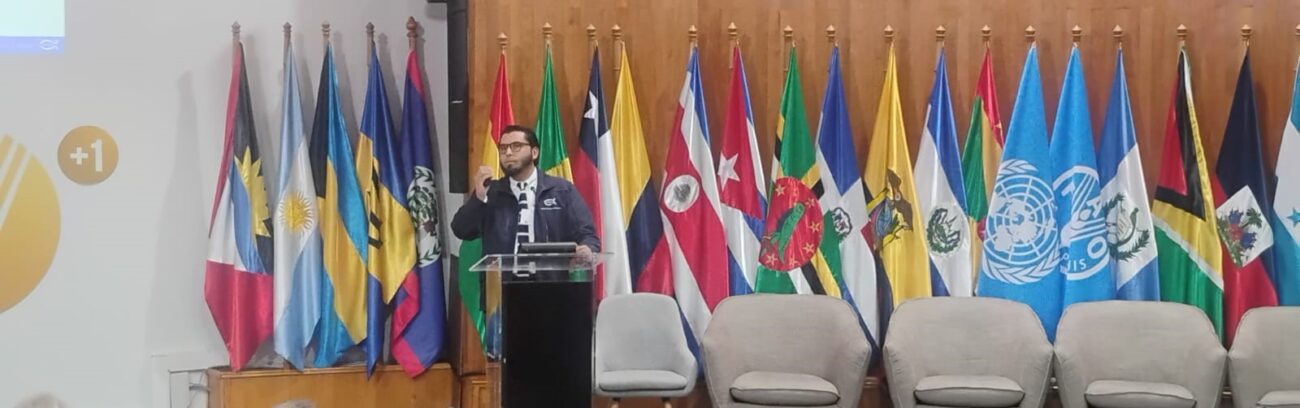
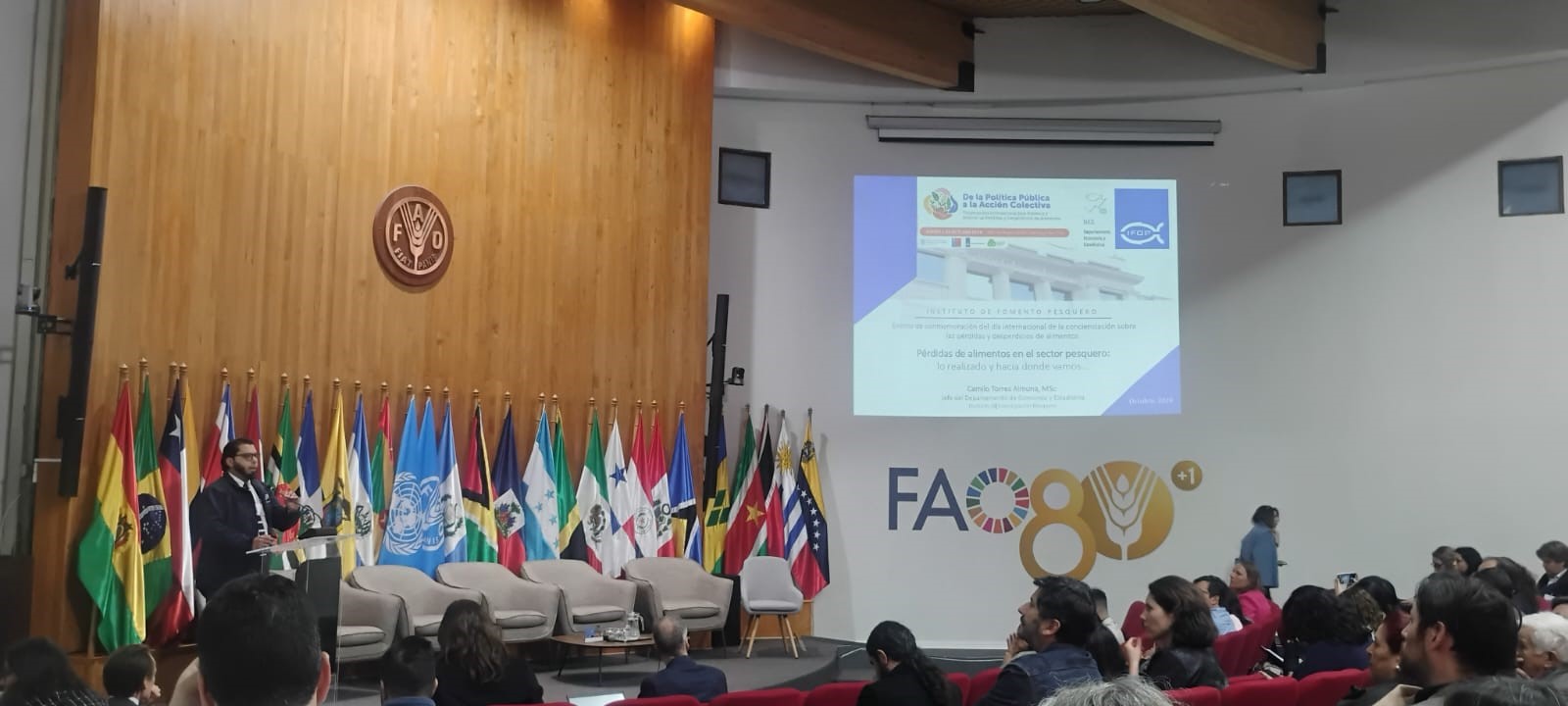 In this context, through its “Economic Monitoring of the National Fishing and Aquaculture Industry” project, IFOP has spent recent years quantifying food loss in the artisanal fishing sector—work led by Elizabeth Palta, Senior Researcher at the Department of Economics and Statistics (DEE). The volume of food initially intended for human consumption—but which, for various reasons, is not fully consumed and thus fails to optimally contribute to human nutrition—highlights the existence of inefficient value chains and represents a loss of economic value. Camilo Torres, Head of the Department of Economics and Statistics (DEE) at IFOP, was invited to the meeting to present the work the Fisheries Development Institute (IFOP) has carried out in this field, as well as future prospects for this line of research. It was also highlighted that this is another area where IFOP advises the Undersecretariat of Fisheries and Aquaculture (SUBPESCA) and generates key data supporting public policy and management decisions within the national fisheries and aquaculture sector. Finally, the DEE leadership placed particular emphasis on the collaborative work carried out throughout the year among the FAO, SUBPESCA, and IFOP. This initiative aims to update the methodological approach for estimating food losses (FL) in the artisanal fisheries sector—including loss factors by resource and stage of the production chain—and to analyze results regarding the primary factors explaining and determining FL, thereby identifying critical points of origin to enable the efficient targeting of public policies.
Press related links: