
28 September 2026
 Serving as the Chilean State’s principal scientific advisor on fisheries and aquaculture
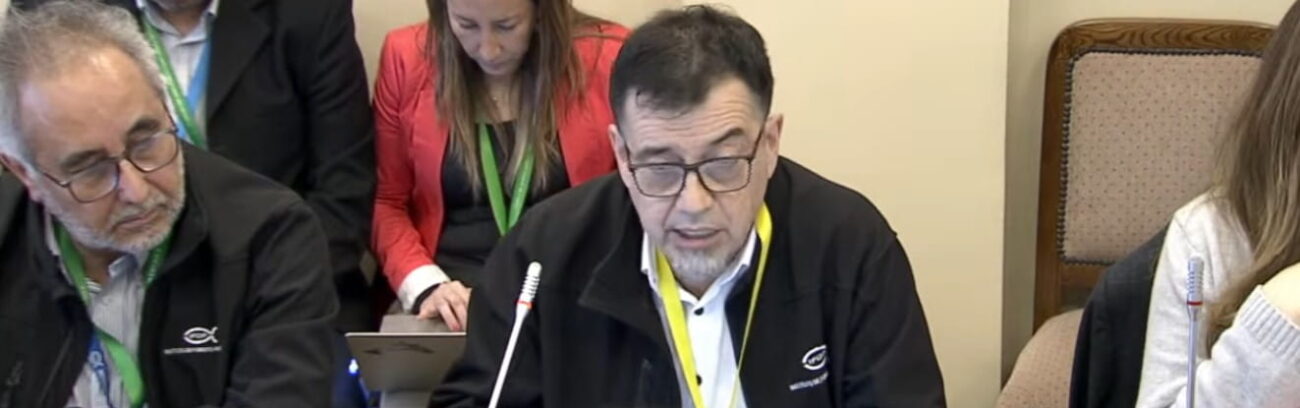
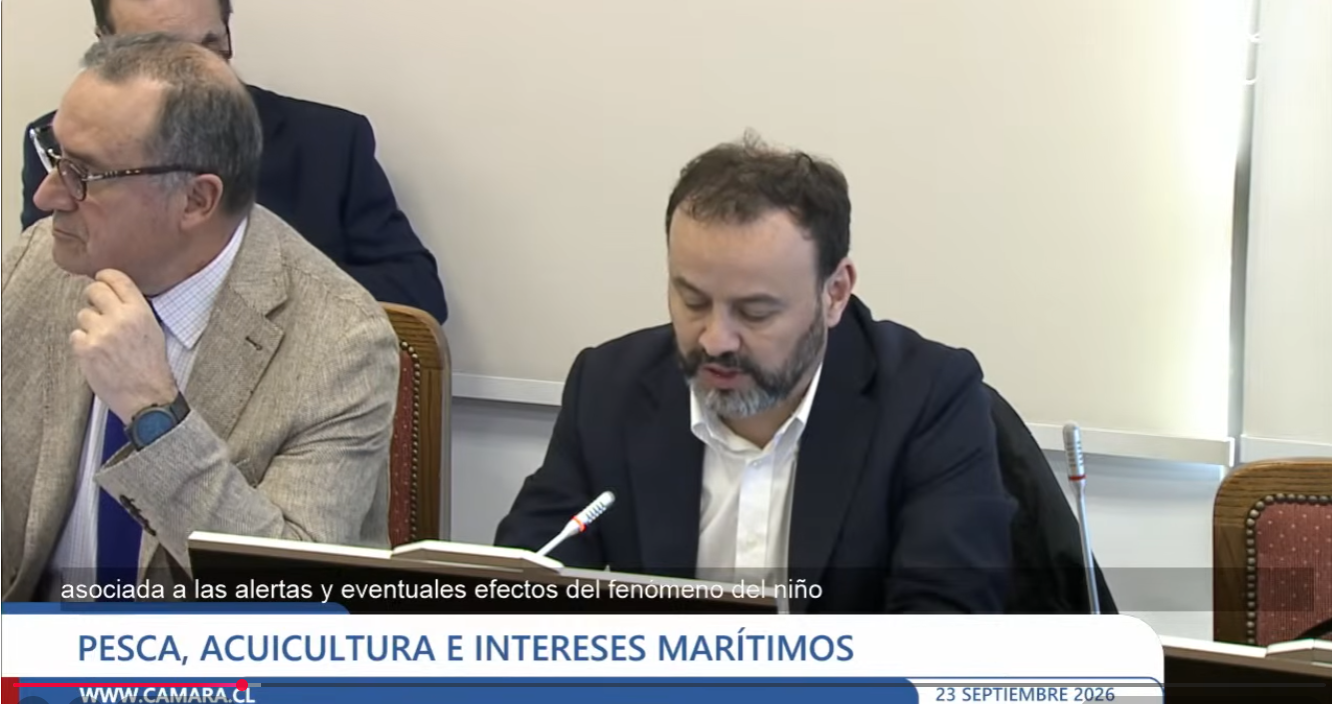
On Wednesday, September 23, a delegation from the Fisheries Development Institute (IFOP)—led by the Head of the Fisheries Research Division, Fisheries Engineer Jorge Castillo; the Head of the Economics Department, Dr. Camilo Torres; and the Head of the Oceanography and Environment Department, Dr. Jaime Letelier Pino—presented findings to the Chamber of Deputies’ Commission on Fisheries, Aquaculture, and Maritime Interests. They detailed the Institute’s ongoing monitoring of environmental conditions and extreme climate events—such as El Niño—that affect fisheries, as well as the associated economic impacts.
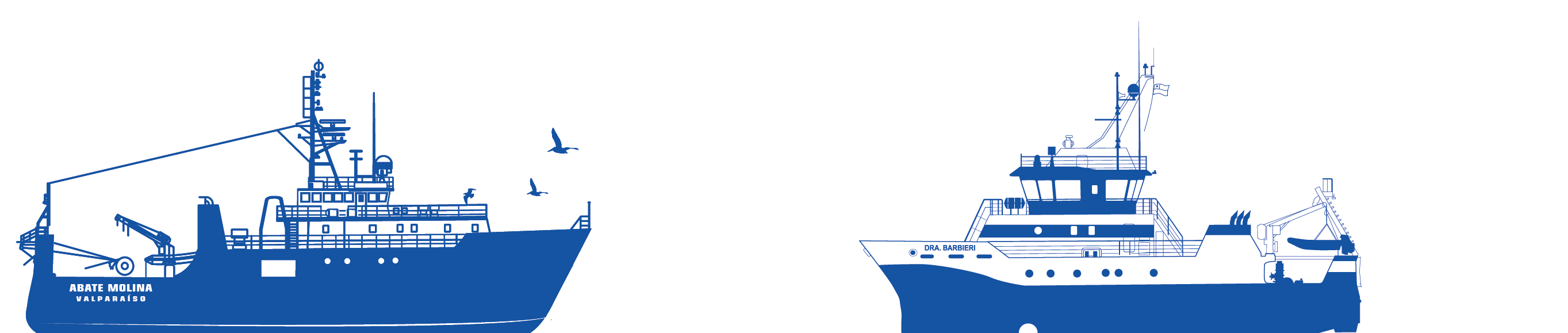
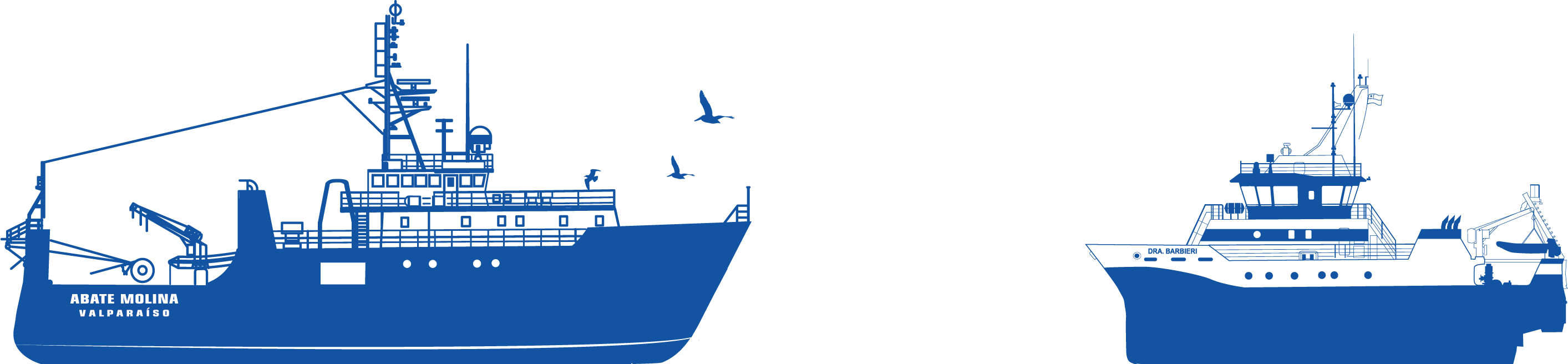
Additionally, they highlighted the importance of strengthening the ASIPA research program to ensure it encompasses sufficient studies to accurately assess the status of fishery resources and guarantee their long-term viability. They also emphasized the need to replace IFOP’s primary research vessel, the *Abate Molina*—which has been in continuous operation for 36 years—with a modern fisheries and oceanographic research vessel. The IFOP presentation was very well received.
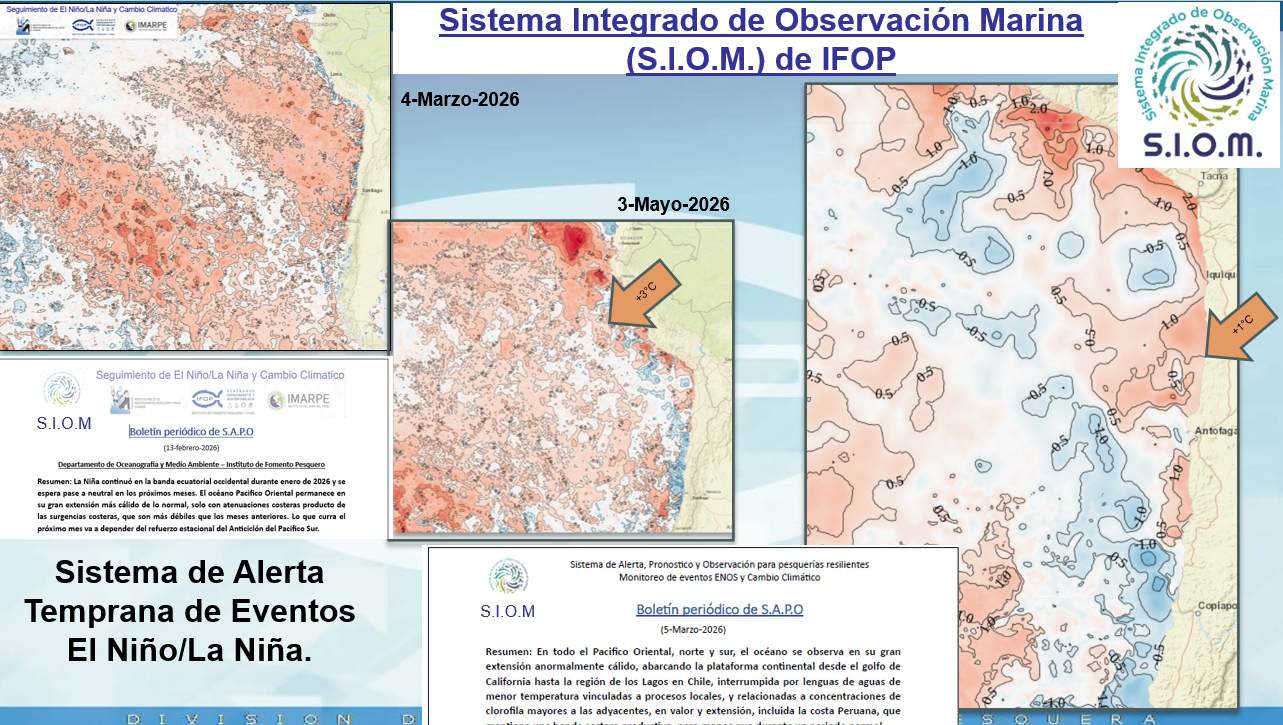 Dr. Letelier demonstrated the evolution of the 2026 El Niño event along the South American and Chilean coasts, its effects on resource availability and reproductive cycles, and forecasts for the coming months. This analysis was made possible by an advanced tool developed by IFOP: the Integrated Ocean Monitoring System (S.I.O.M., https://siom.ifop.cl/). Regarding the information provided by IFOP, Dr. Letelier explained how the “Coastal El Niño” event was detected by IFOP—in collaboration with IMARPE and IPIAP—off the coasts of Ecuador, Peru, and Chile. The event emerged and intensified starting in February 2026, whereas NOAA did not officially classify it until June.
Forecasts indicate that the event is becoming intense to strong and is projected to last at least until the autumn of 2027.
In this context, Dr. Camilo Torres outlined the potential consequences for artisanal fishing and the industrial sector, citing economic variables such as landing values, employment (both direct and indirect), and exports, among other relevant socioeconomic and production-related aspects in northern Chile.
Finally, Jorge Castillo described IFOP’s work on developing an Integrated Ocean Monitoring and Modeling System (SIMMO).
This system will integrate environmental information, fisheries and aquaculture data, and short-, medium-, and long-term models into a single digital platform. Simultaneously, the SIOM and CHONOS systems continue to be enhanced, alongside integration efforts with strategic partners such as the National Fisheries Service (SERNAPESCA), the Navy Meteorological Service (SERVIMET), and the Navy Hydrographic and Oceanographic Service (SHOA).
The event highlighted the importance of the monitoring and strategic information IFOP provides regarding events of this nature and the management of national fisheries. Furthermore, IFOP’s key role in the Inter-institutional Committees for National and Regional Environmental Contingencies was underscored, as was its participation in the “El Niño and Climate Change” roundtable for northern Chile, coordinated by SUBPESCA’s Zonal Director, Marcos Soto Díaz.
For IFOP TV and the link to the news story:
Press related links: