

8 July 2026
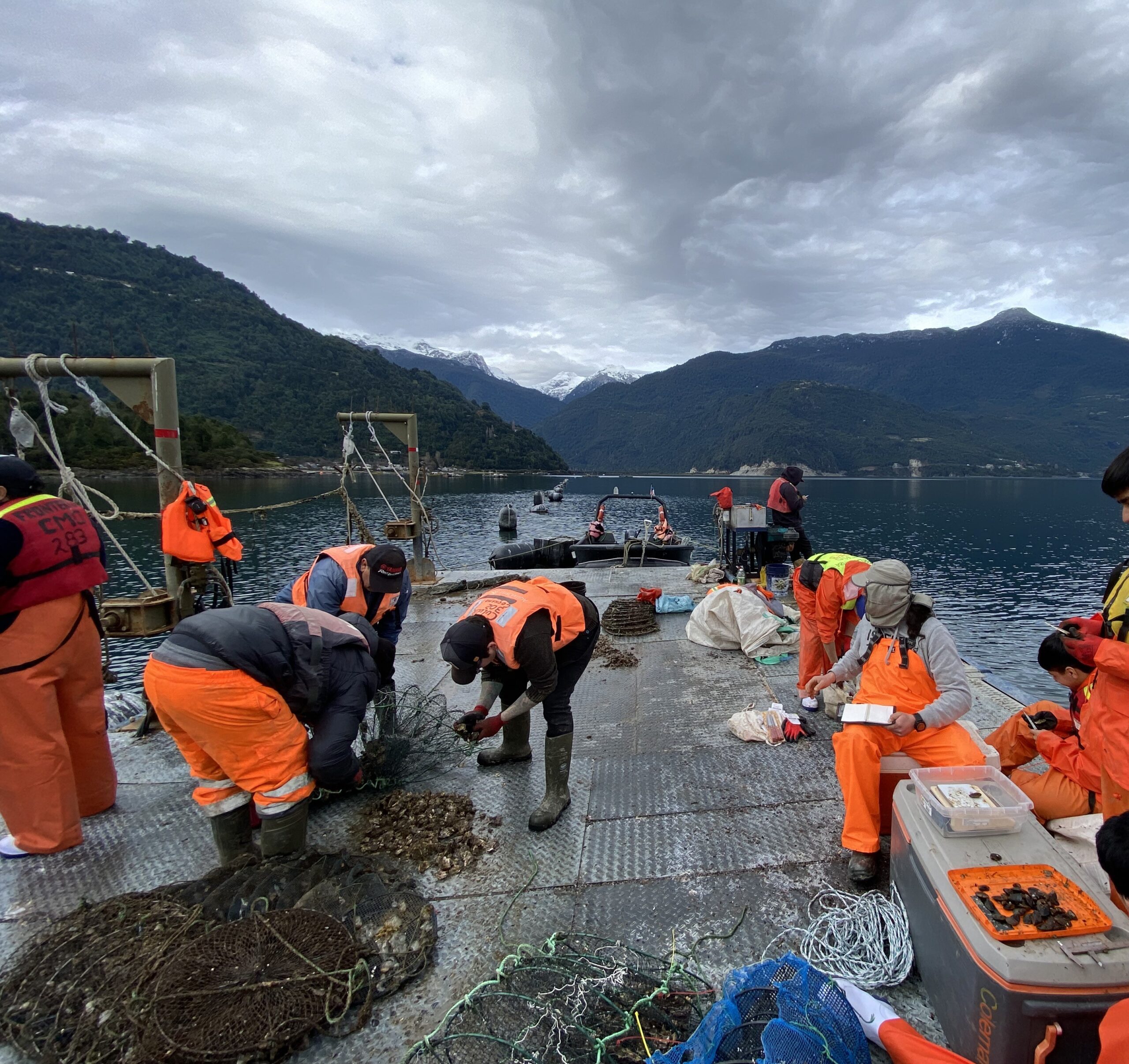 On June 25, researchers from the Repopulation and Farming Department (RyC) of the Fisheries Development Institute (IFOP) conducted a farming experiment with students from the Juan Soler Manfredini Border School in Cochamó.
In an activity that strengthens technical training and ties with the local production sector, on June 25, fourth-year high school students specializing in aquaculture at the Juan Soler Manfredini Border School in Cochamó participated in an important practical activity on the diversification of small-scale aquaculture (SSA). This activity took place within the framework of the “Comprehensive Aquaculture Development Program for Artisanal Fishers and Aquaculture Producers (SSA),” implemented by IFOP under an agreement with the Undersecretariat of Economy and, as the technical counterpart, the Undersecretariat of Fisheries and Aquaculture. This line of work focuses on training, education, and knowledge transfer to educational institutions that incorporate Aquaculture and Production (APP) into their curricula and/or training programs. Specifically, it supports the educational and practical development of students in technical-vocational high schools specializing in aquaculture with an emphasis on APP. Currently, we are working with two high schools in the Los Lagos Region, co-designing a work plan that includes the development of three modules:
1) Support in aquaculture training content,
2) Practical implementation of APP initiatives,
3) Technical-pedagogical visit.
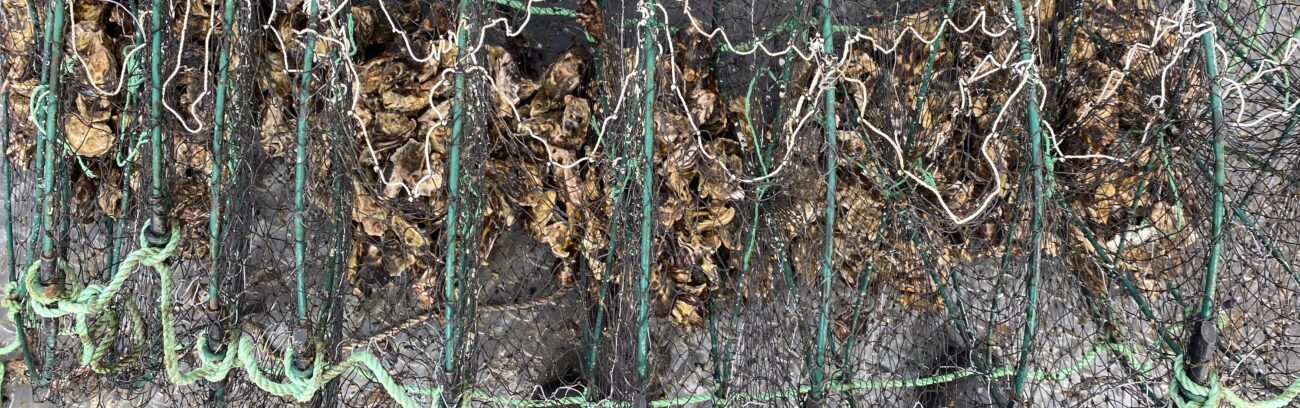
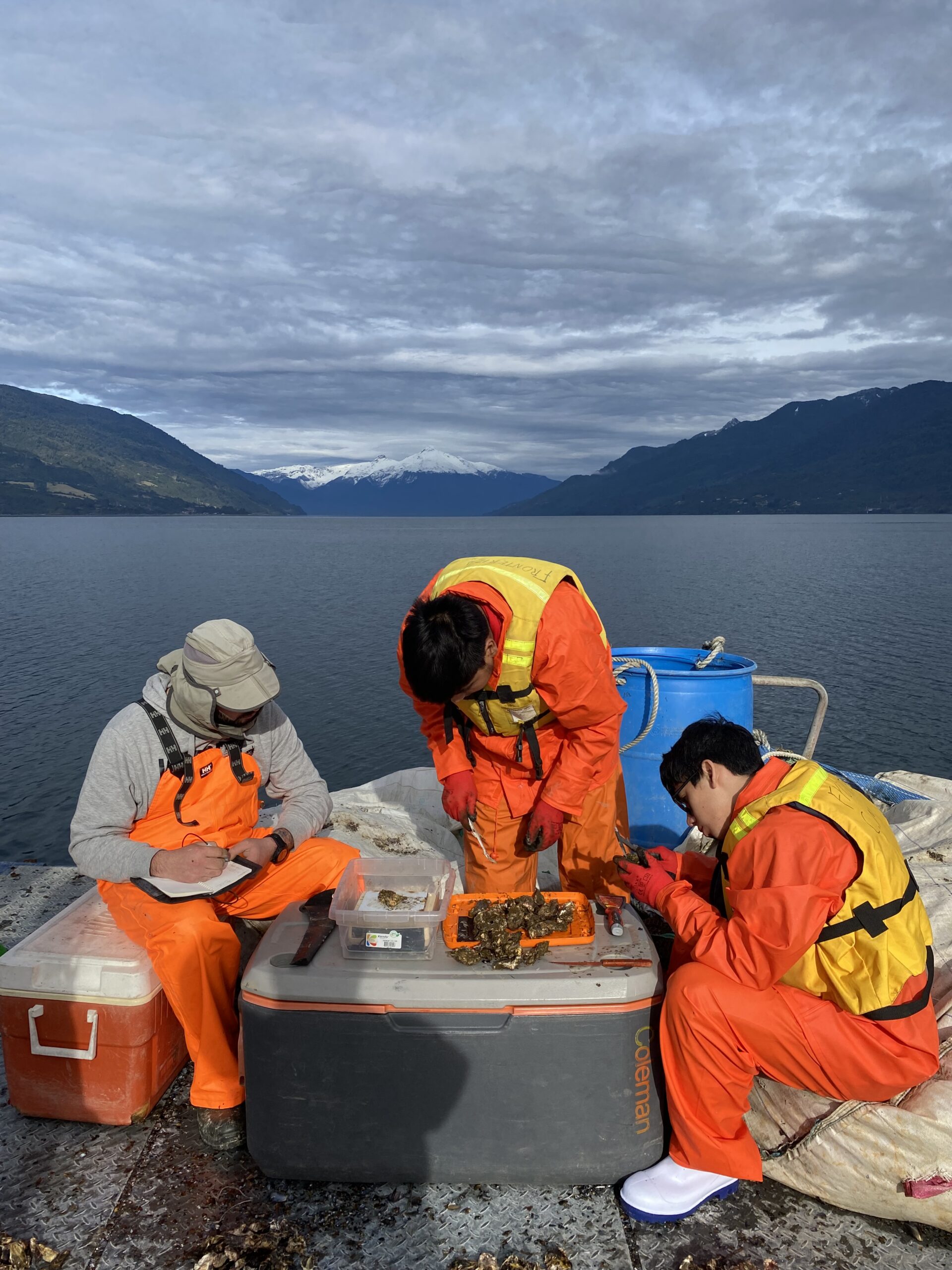 During the day, as part of module 2, the students carried out a partial harvest of the Chilean oyster (Ostrea chilensis) and Japanese oyster (Crassostrea gigas) culture implemented last year. They also performed cleaning and maintenance work on the cultivation lines located in the concession managed by the Cochamó Municipal Corporation. Additionally, as part of the 2026 work plan, two experiments were implemented to generate productive and scientific data applicable to local aquaculture:
Japanese Oyster Density Experiment: Aimed at observing the productive growth behavior of the resource under two different densities.
Mussel and Sea Urchin Co-culture Experiment: Designed to evaluate the effect of sea urchins on cleaning the lanterns and the mussels themselves, in order to reduce the fouling load (biological encrustation) that affects the efficiency of the cultivation.
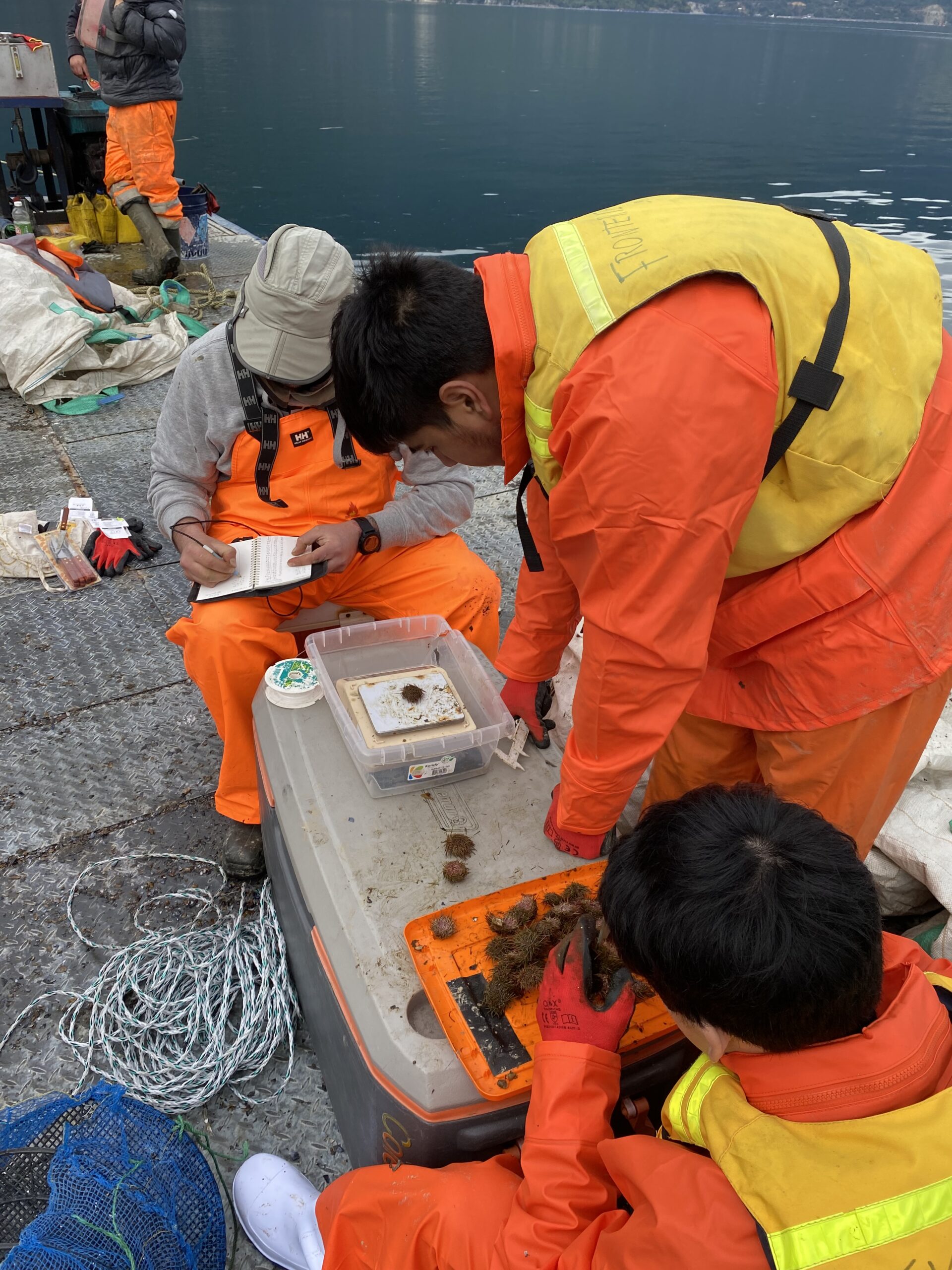 Sebastián Cook, IFOP researcher in charge of the guidance and technical support, notes that the students actively participated in all phases of the day, from measuring and cleaning to preparing the lanterns for cultivating the resources. From now on, the students themselves will be responsible for the monthly monitoring of the data, which will allow them to carry out a comprehensive technical evaluation of the experiments by the end of the year.
Francisco Cárcamo, head of the Program, indicates that this activity and line of work aim to help future technicians understand that aquaculture is a broad and diverse field, extending far beyond the traditional production of salmonids. Within the framework of the APE Program, this support and strengthening of educational and training processes can be projected into the medium term, with high schools serving as complementary APE demonstration and/or transfer units for other students, fishers, and aquaculturists. He also emphasizes that on this occasion, they had the support not only of the Municipality of Cochamó, but also of local mussel farmers.
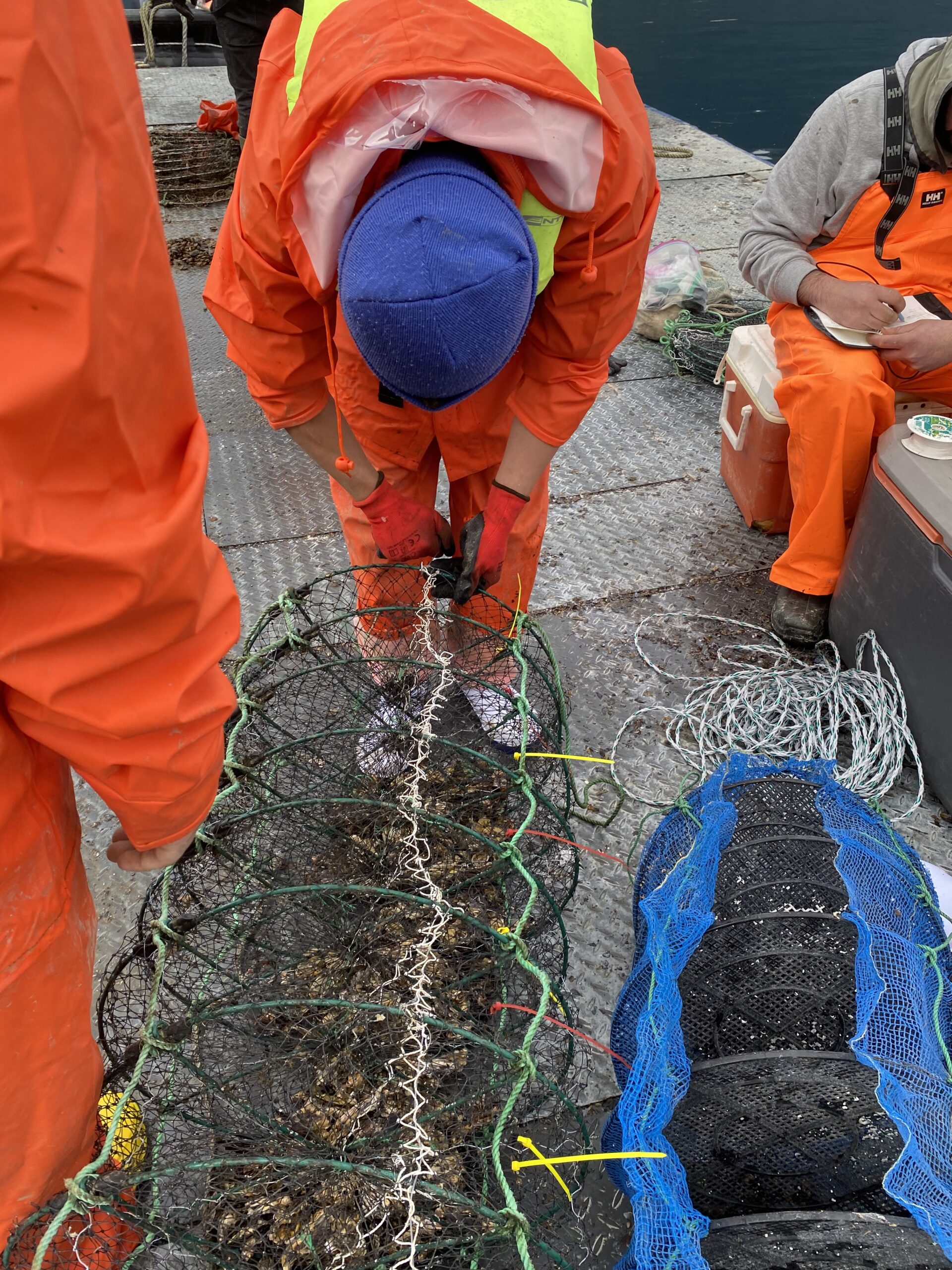 Andrés Álvarez, a teacher specializing in aquaculture at the educational institution, indicates that this collaborative work between the school, the Municipality, IFOP (the Fisheries Development Institute), and the students of our institution represents a great opportunity for them. The activities carried out are related to some of the subjects taught, such as seed collection, underwater work, information management and safety, risk prevention, and environmental care in the aquaculture industry. All the actions we have undertaken together have had a significant impact on the range of knowledge our students have acquired, especially those carried out in the field. They have always demonstrated a positive attitude toward the expected learning outcomes and respect for their peers and teachers. With that said, we hope to continue counting on the support of IFOP and the professionals who collaborate with us, as their contributions are invaluable.
Rodrigo Macalusso, head of aquaculture for the Municipality of Cochamó, emphasizes the importance of this collaborative work, as it directly connects technical and vocational education with the real and sustainable development of our community. Instilling the value of aquaculture in young people not only opens up concrete career opportunities with a local identity, but also injects renewed energy and qualified human capital into an activity that drives our region. This effort would not be possible in isolation; the constant inter-institutional support between IFOP and the Municipality, along with the pedagogical and practical contributions of the teachers, is the bridge that ensures students receive a top-tier scientific and technical foundation. Furthermore, the commitment and support of the Cochamó and Bosquemar unions demonstrate that the local mussel farming community is fully integrated into this process, guaranteeing that traditional knowledge merges with innovation for the benefit of our community.
Press related links: