



31 July 2026
Specialists from IFOP and the Undersecretariat of Fisheries and Aquaculture presented advances in wild fish health, bacterial resistance to antimicrobials, and strengthening research for decision-making in aquaculture.
The Hydrobiological Health Department (DSH) of the Fisheries Development Institute (IFOP) held the “Workshop for Disseminating Results of the ASIPA 2025 Permanent Research Programs,” an event where progress on various research projects aimed at strengthening decision-making in aquaculture and hydrobiological health was presented.
The day began with a welcome address by Dennis Cisterna, an analyst from IFOP’s Hydrobiological Health Department. Subsequently, Tamara Palma, a veterinarian from the Health and Pest Management Unit of the Undersecretariat of Fisheries and Aquaculture, presented the institution’s ongoing research program designed to support decision-making in aquaculture matters.
“Within the framework of the implementation of the Escazú Agreement, the Aquaculture Division promotes the incorporation of these principles to strengthen informed, participatory public management oriented towards sustainable development,” commented Tamara Palma.
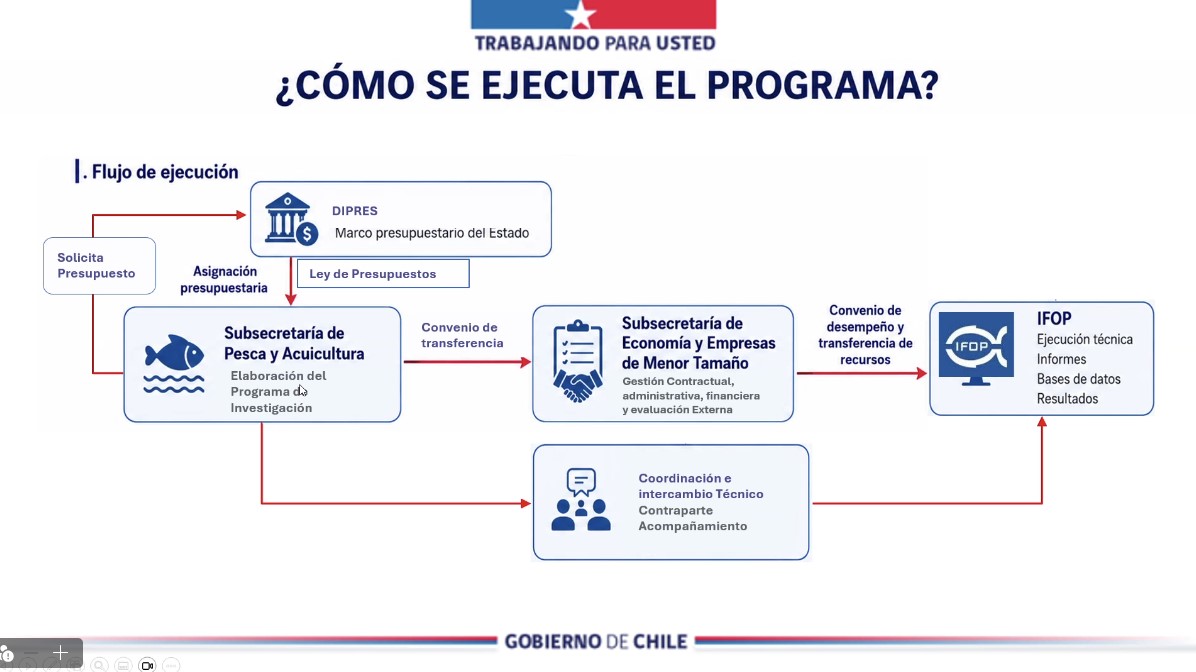 The professional noted that Article 91 of the General Law on Fisheries and Aquaculture establishes that, “the Undersecretariat will develop the necessary research program for the regulation of fisheries and aquaculture. The results of this research will serve as the basis for the management and conservation measures, and for the decision-making process for extractive fishing and aquaculture activities.”
He also highlighted that the budget for the Undersecretariat of Fisheries and Aquaculture’s basic or ongoing research program for the 2026-2027 agreement includes 13 aquaculture initiatives totaling $6.2 billion pesos, of which $752 million pesos are allocated to health research projects. These projects include monitoring the health status of wild fish, tracking bacterial resistance to antimicrobials, and monitoring the resistance of Caligus rogercresseyi to antiparasitic drugs.
Health Surveillance in Wild Fish
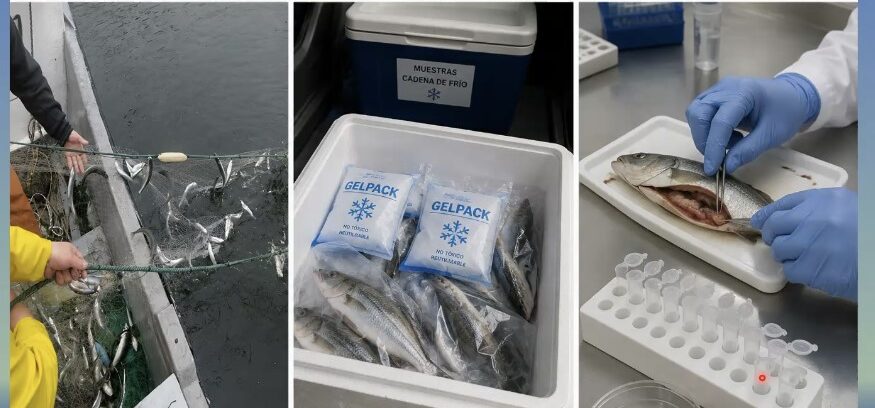
One of the main topics addressed during the workshop was the presentation “Evaluation and Surveillance of the Health Status of Wild Fish in Freshwater and Marine Environments, 2025-2026,” given by Juan Carlos Quintanilla, a researcher in the Hydrobiological Health Department of IFOP (the Fisheries Development Institute).
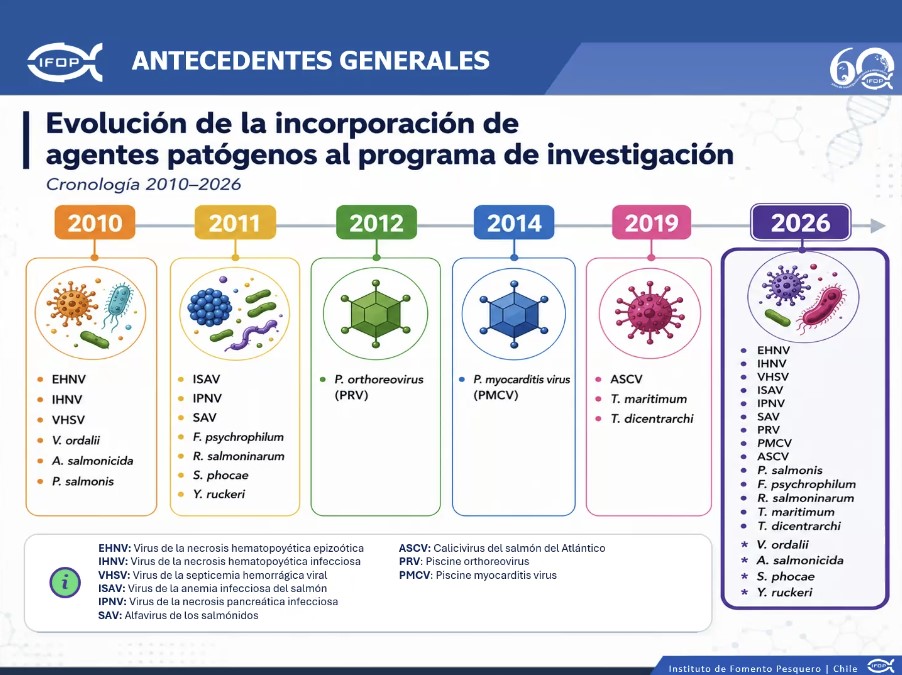 “The detection of pathogenic agents (PAs) in wild fish and free-living salmonids, with particular attention to *P. salmonis*, raises questions about the epidemiological role of native fauna as potential reservoirs and/or transmitters of diseases,” stated Juan Carlos Quintanilla.
The researcher added that “regarding the interaction and transmission of diseases between native and farmed species, further studies (experimental/field) are needed to evaluate the potential for PA transmission, given the limited existing data on this matter.”
He also emphasized that “more research is needed to identify population structures in wild fish, which will allow us to establish a foundation for understanding mobility patterns in wild fish populations in the future.”
Bacterial Resistance to Antimicrobials
The day continued with the presentation “Monitoring Bacterial Resistance to Commonly Used Antimicrobials in Chilean Salmon Farming, 2025-2026,” presented by Cristian Valenzuela, a researcher in the Hydrobiological Health Department of IFOP (the Fisheries Development Institute).
“Within the framework of Phase XII (2025-2026) of the program for monitoring bacterial resistance to commonly used antimicrobials (AMB) in Chilean salmon farming, IFOP conducted 34 samplings in the Los Lagos and Aysén regions, encompassing five salmon farming companies, 32 fish farms, and 19 Salmon Farming Concession Areas (ACS),” explained Cristian Valenzuela.
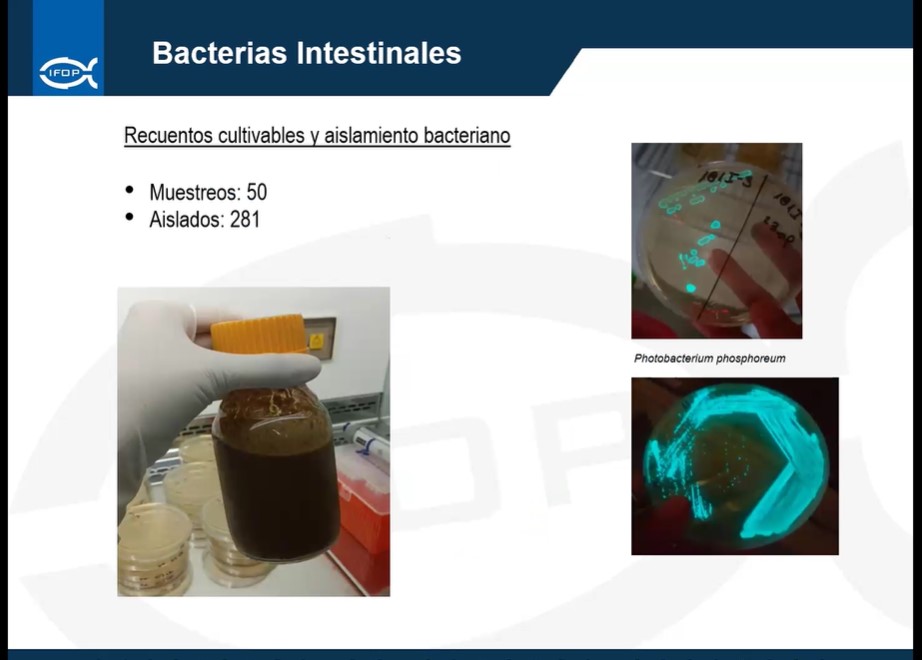 The researcher explained that “as a result of the monitoring, researchers obtained and evaluated 18 bacterial isolates, achieving a 56.25% isolation success rate.” This background information is part of the ongoing health surveillance program developed by IFOP to generate scientific information that contributes to monitoring bacterial resistance and supports decision-making regarding health and responsible use of antimicrobials in Chilean salmon farming.
Furthermore, he noted that “a trend toward decreased antimicrobial susceptibility is observed, primarily to florfenicol in pathogens during the grow-out phase and to oxytetracycline in pathogens during the freshwater phase,” adding that the program’s upcoming challenges include “the incorporation of pathogens from the genus Tenacibaculum and the updating of epidemiological cut-off values.”
The workshop concluded with a question-and-answer session that allowed for an exchange of inquiries and comments between the attendees and the presenters.
Source: AQUA