
21 October 2026
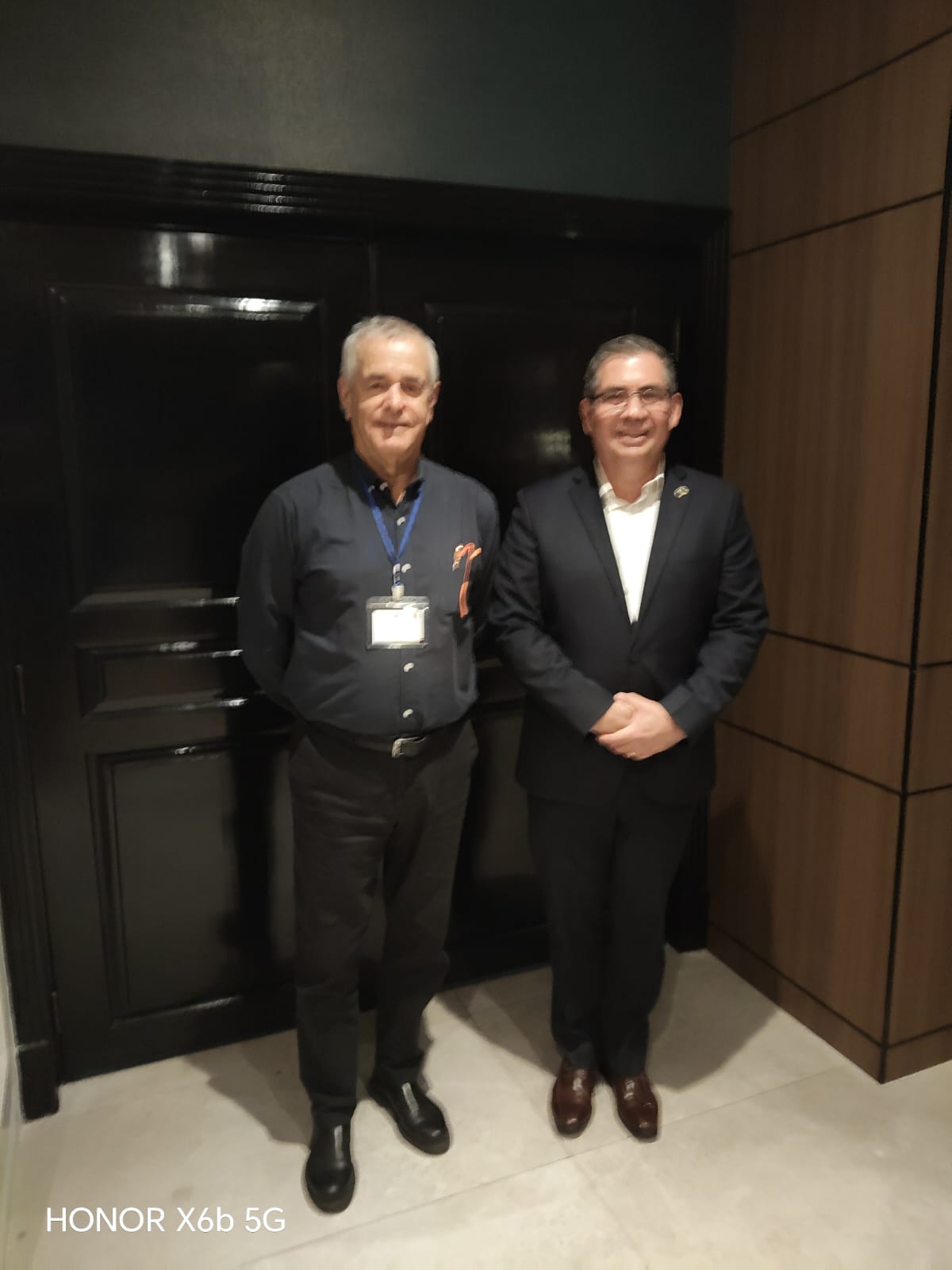 The Director of the Fisheries Development Institute (IFOP), fisheries engineer Luis Parot, and Dr. Jaime Letelier Pino, Head of the IFOP Oceanography Department, formed the national delegation representing Chile at the “High-Level Regional Conference on the Effects of El Niño and Climate Change on Marine Ecosystems in the Eastern Pacific Ocean,” held in Panama City from October 14 to 16, 2026.
The significance of this gathering for the Institute—the primary advisor to the Chilean State regarding the El Niño phenomenon and climate change within marine ecosystems—was underscored by the fact that the IFOP Director attended on behalf of the Undersecretary of Fisheries. Furthermore, Dr. Letelier participated as an expert and representative of the ERFEN-Chile committee, the national component of the “Regional Study of the El Niño Phenomenon” program under the Permanent Commission for the South Pacific (CPPS).
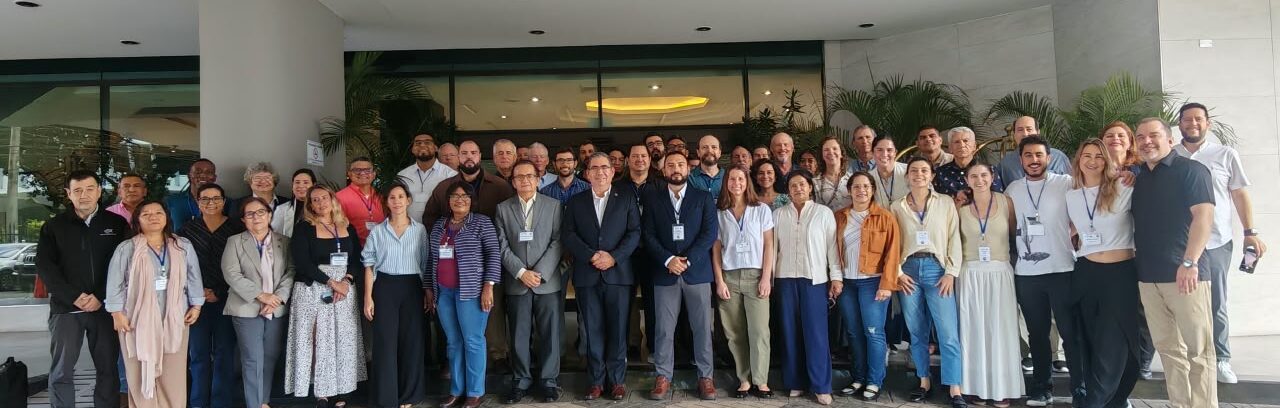
The meeting was attended by authorities and scientists from many of the nations with Pacific coastlines (Costa Rica, Panama, Colombia, Ecuador, Peru, Canada, the United States, and Chile), as well as representatives from multilateral organizations. Notable among these was a significant delegation from the Permanent Commission for the South Pacific (CPPS), led by its Scientific Director, Edwing Pinto, and a representative from the FAO, Alicia Medina.
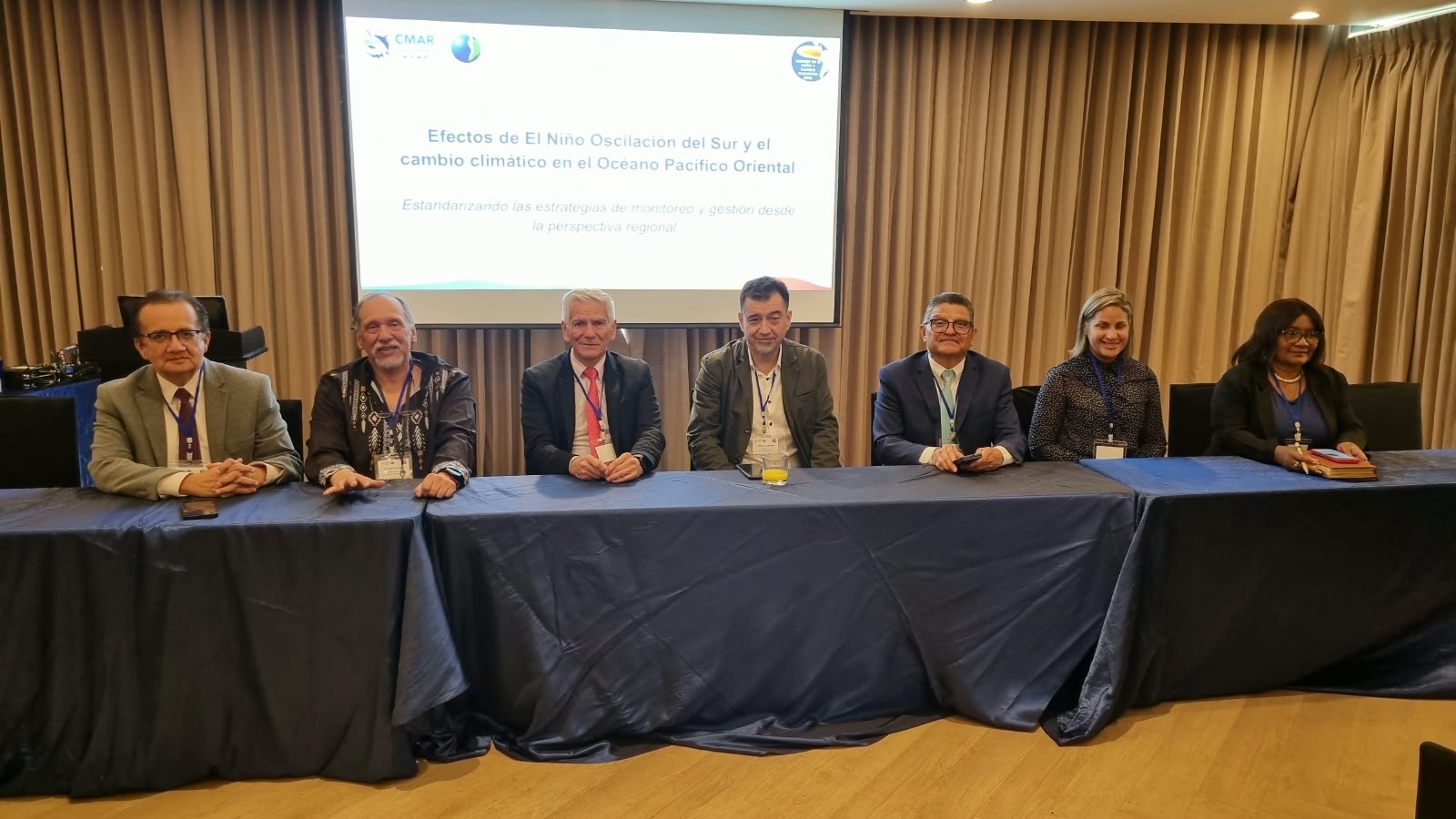 The objective of this conference was to analyze the impacts of the 2026 El Niño event on coastal ecosystems, biodiversity, and fisheries, focusing on three core themes:
Major impacts, threats, and risks.
Challenges in managing the El Niño phenomenon.
Actions currently being taken in response to extreme climate events. Among the key findings, American institutions noted that the 2026 El Niño is developing into one of the most significant events ever recorded instrumentally, and that ENSO (El Niño/La Niña) phenomena are increasing in both frequency and intensity. Observations along the American coast indicate that coastal ecosystems—both protected and unprotected—and local fishery species are even more sensitive to the initial signs of such an event than the global monitoring systems located in equatorial regions. Once an event of this magnitude becomes established, it has a profound impact on the distribution, abundance, and reproductive processes of these species.
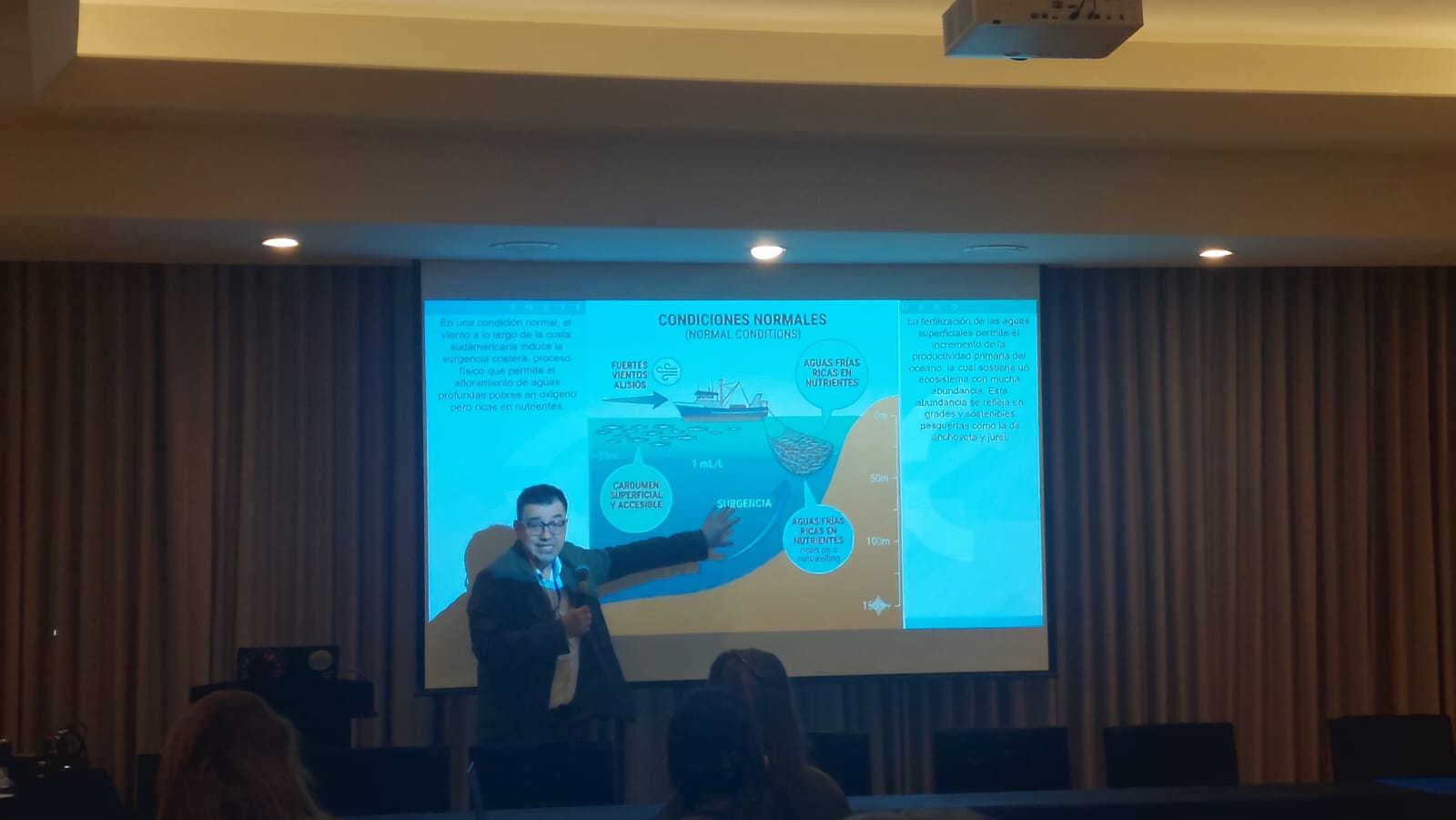 Observations and models suggest that ENSO events—particularly this extreme instance—will lead to significant alterations in habitats. This underscores an urgent need to assess habitat suitability for national fishery resources and to expand upon the analyses the Institute is already conducting on species such as swordfish.
Regarding scientific and institutional gaps, it is essential to strengthen collaboration—both between institutions and across nations—by sharing data, information, and knowledge, ideally within the framework of an organization such as the CPPS. Furthermore, to mitigate the impacts of these extreme climate events, it is a priority to prepare for future occurrences by bolstering marine monitoring and early-warning systems, advancing strategic research programs, and, crucially, raising awareness among decision-makers.