
26 October 2026
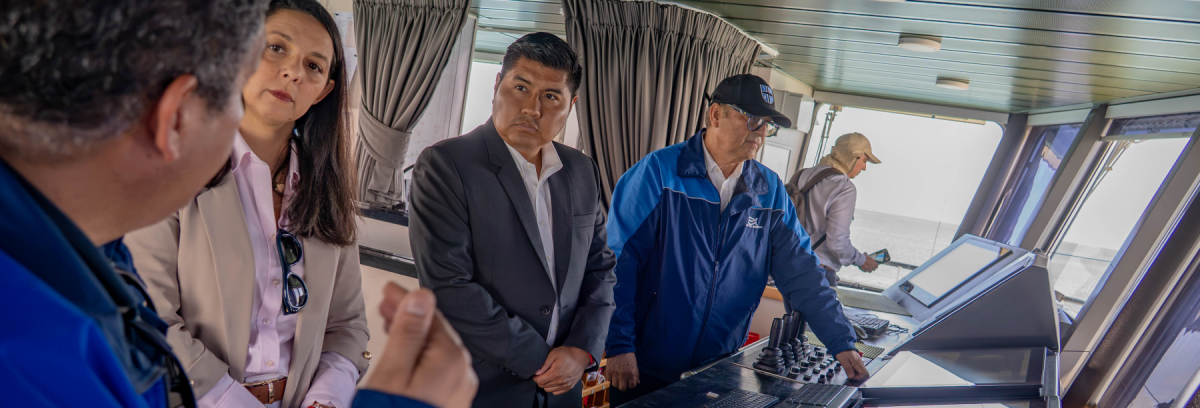
Governor Diego Paco reviewed scientific data collected by the Institute for Fisheries Development (IFOP) via its oceanographic research vessels. This data allows for the analysis of variations in marine conditions and their potential impact on anchoveta, jack mackerel, mollusks, crustaceans, and other resources that support regional fishing activities.
Warmer seas can alter the living conditions of various marine species and change the availability of fishery resources. This is one of the scenarios causing concern in the Arica y Parinacota region due to the effects of the El Niño phenomenon. The scientific findings were examined by Regional Governor Diego Paco Mamani, together with the Executive Director of the Institute for Fisheries Development (IFOP), Luis Parot Donoso, and members of his technical team.
During the meeting, IFOP Executive Director Luis Parot Donoso noted that sea temperatures off the coast of Arica y Parinacota are showing anomalies of nearly 5 degrees compared to historical averages. This data—gathered through the institute’s oceanographic research and monitoring—enables an assessment of oceanic variations and their potential consequences for marine ecosystems and the productive activities that depend on them.
Rising water temperatures can disrupt the distribution and availability of species such as anchoveta and jack mackerel, both of which have seen a sharp decline in landings. There is also concern regarding the behavior of marine fauna and benthic resources—such as mollusks and crustaceans—as well as the potential emergence of harmful algal blooms. These phenomena require ongoing monitoring to evaluate their possible environmental and economic impacts. “As a Regional Government, we are taking a proactive approach, working to ensure we have timely information so that we can make sound decisions in light of this scenario. We are concerned about what these changes might mean for our fishers, their families, and all productive activities linked to the sea. The key is to have scientific data and to prepare ourselves for the potential effects of this phenomenon,” stated Governor Diego Paco.
One of the topics discussed was the contribution of oceanographic monitoring to understanding how marine conditions evolve. Through its research vessels, the IFOP (Institute for Fisheries Development) gathers data that allows for the study of variables such as water temperature, oxygen levels, and the conditions in which various species develop.
This information is crucial for identifying ecosystem changes, assessing potential impacts on fishery resources, and providing data that supports decision-making by authorities and the productive sector.
The meeting also addressed the importance of having tools in place to respond promptly to potential shifts in the availability of species, as well as evaluating alternatives for artisanal fishers—all while safeguarding the sustainability of resources and protecting marine biodiversity.
Luis Parot Donoso, representing the IFOP, expressed the institute’s readiness to collaborate with the Regional Government on initiatives designed to deepen our understanding of marine conditions and help address and mitigate the potential impacts of the El Niño phenomenon.
The meeting provided an opportunity to review the available scientific data and underscored the importance of maintaining continuous monitoring of oceanographic conditions, given that changes in the marine environment can have direct consequences for ecosystems, the fishing industry, and the families in Arica and Parinacota who depend on this activity.
Source: https://gorearicayparinacota.cl/goreayp/site/artic/20261023/pags/20261023154739.html
Press related links: