




17 March 2026
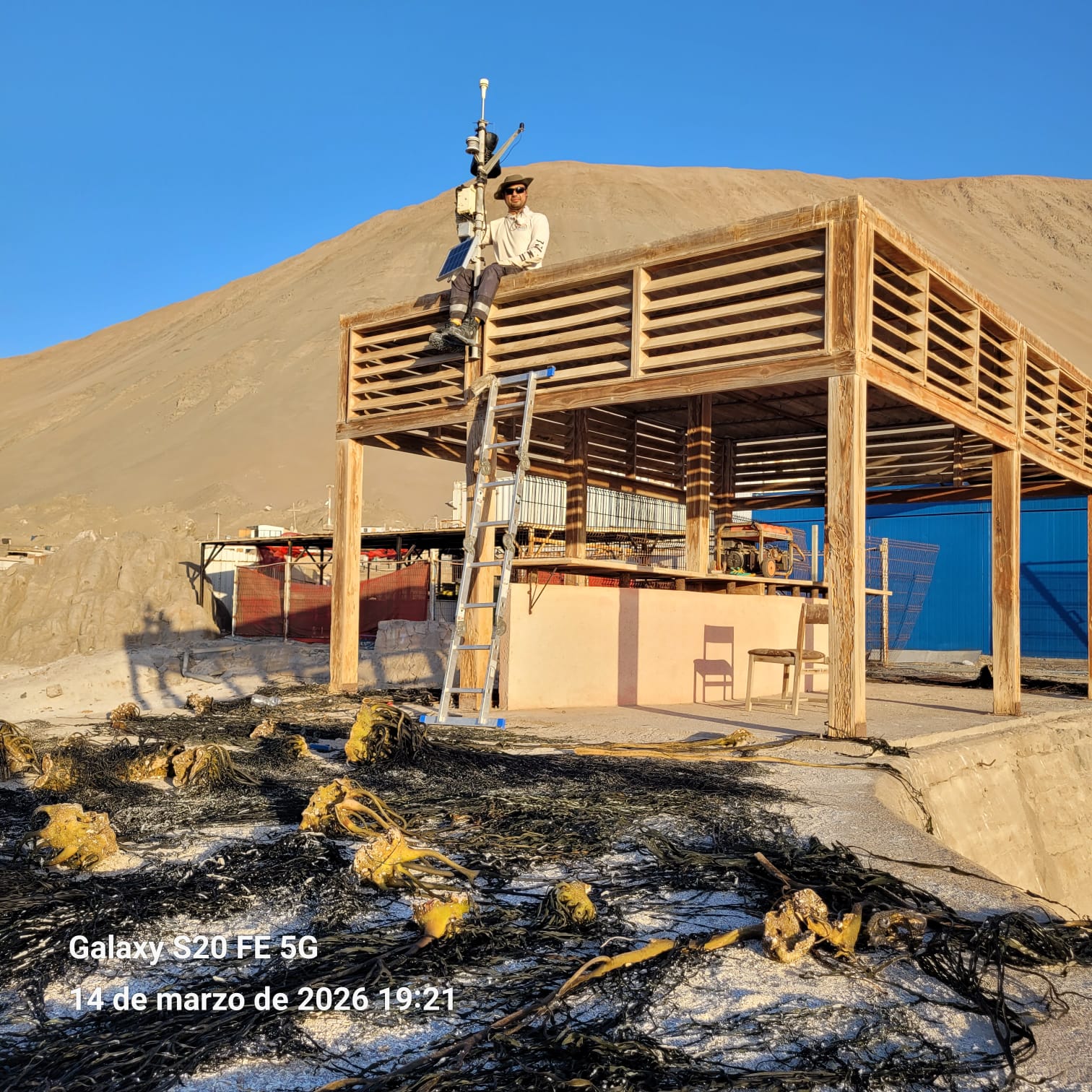 The working group of IFOP’s Department of Oceanography and Environment, led by oceanographer Andrés Varas, with the objective of expanding IFOP’s national meteorological monitoring networks, installed a new weather station in Punta Angamos. Located in the northern sector of the Mejillones Peninsula (Antofagasta Region), this installation strengthens the institute’s environmental monitoring network in northern Chile.
The installation of this station was carried out with the support of Sergeant Daniel de la Fuente, under the instruction of Captain Gonzalo Espinoza from the Chilean Navy Meteorological Service. This initiative contributes to collaborative climate monitoring and maritime safety in the region under an effective cooperation agreement between the Navy and IFOP.
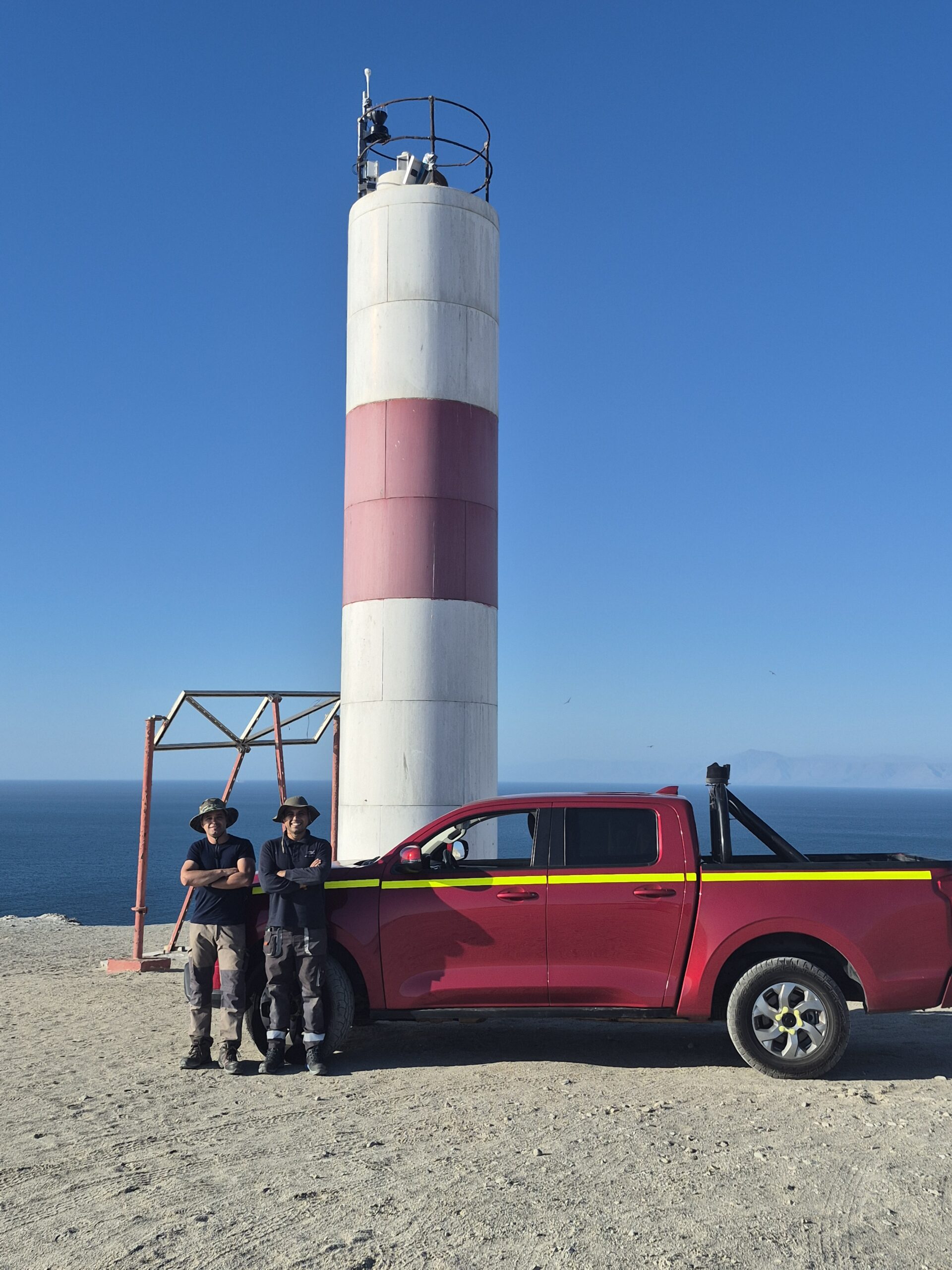 The station features an ultrasonic wind sensor, a rain gauge, temperature and humidity sensors, as well as atmospheric pressure sensors, allowing for continuous recording and real-time transmission of local meteorological conditions. The generated data is integrated into the institutional network and is available through the Alert, Prediction, and Observation System (SAPO).
This station joins existing ones, such as Punta Tetas, located in the southern sector of the Mejillones Peninsula. This allows for monitoring meteorological conditions at both ends of the peninsula and provides a better understanding of the environmental variability across the entire northern macro-zone.
 The continuous recording of wind—the primary atmospheric forcing of the water column—enables the understanding of key oceanographic processes that favor the high marine productivity of the area.
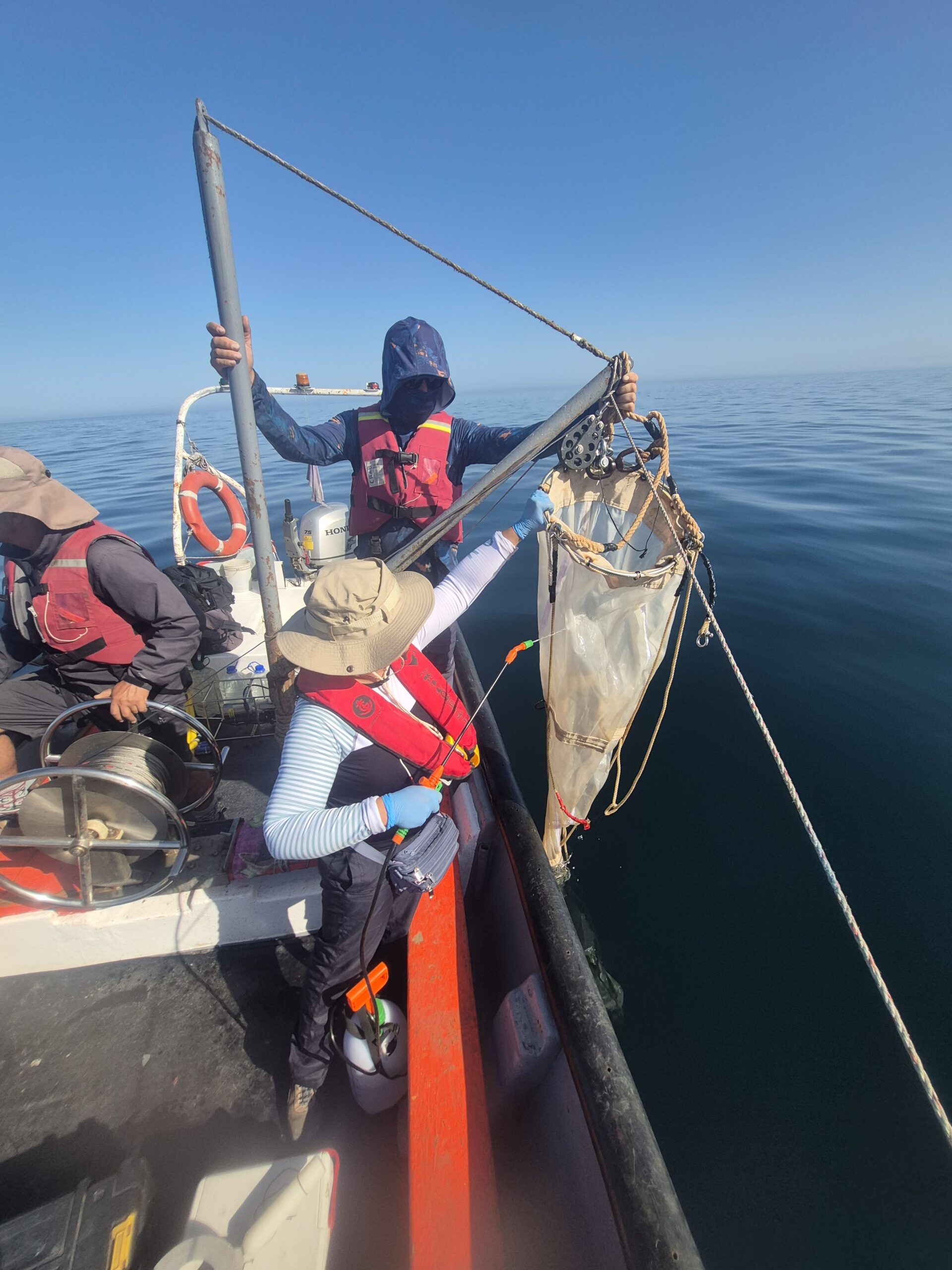
In parallel, DOMA, in conjunction with IFOP’s CREAN (Center for the Study of Harmful Algae), conducted monthly bio-oceanographic sampling in Mejillones Bay. These samplings are carried out using plankton nets and oceanographic probe measurements; samples are also extracted to test for marine biotoxins to detect possible agents associated with local red tide events.
Press related links: