

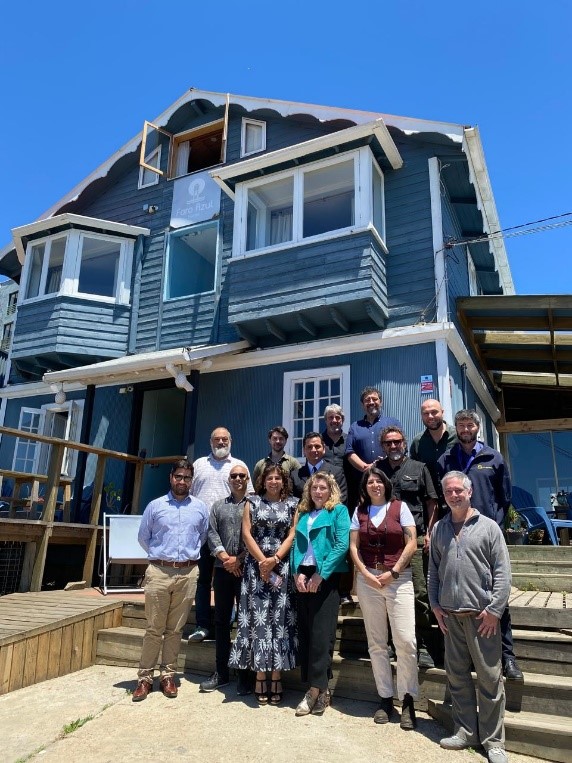
 The workshop “Seabirds and Fisheries,” organized by BirdLife International’s Marine Programme, was held at the Hotel Faro Azul, located in the Cerro Alegre neighborhood of Valparaíso. The workshop aimed to review progress and work undertaken to reduce interactions between seabirds and fishing operations, as well as the status of conservation efforts at breeding sites for key species such as the albatrosses of southern Chile. During the event, participants exchanged experiences, knowledge, and proposals, fostering a collaborative approach among public institutions, research centers, and non-governmental organizations.
Marine biodiversity is facing a rapid and alarming decline globally due to unsustainable human activities, which have caused significant damage to natural ecosystems. In Chile, seabirds are particularly threatened by climate change, the presence of invasive alien species, and bycatch associated with various fisheries.
In this context, the Fisheries Development Institute (IFOP), through its research programs on discards and bycatch, along with monitoring projects for the main national fisheries, has made significant progress in recording, analyzing, and understanding the variables that influence these impacts. These efforts have strengthened the generation of key scientific information to guide mitigation measures and support the conservation of these species.
The activity was led by the Albatross Task Force (ATF-Chile), a conservation task force belonging to BirdLife International, and included the participation of representatives from the Fisheries Development Institute (IFOP), the Undersecretariat of Fisheries and Aquaculture (SUBPESCA), the Chilean Navy (DIRECTEMAR), the National Fisheries and Aquaculture Service (SERNAPESCA), as well as researchers and organizations dedicated to marine wildlife conservation.
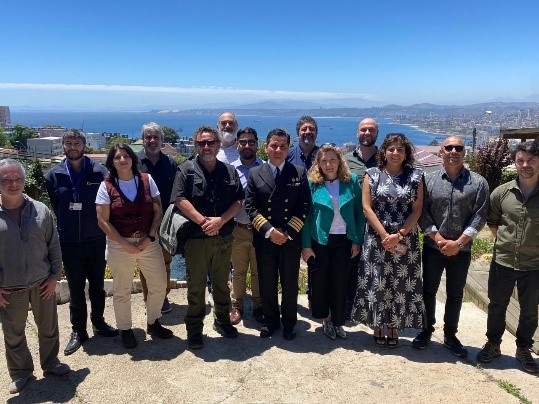 On this occasion, Luis Adasme, a researcher at IFOP and member of the Seabird Bycatch Working Group (SBWG) of the Agreement on the Conservation of Albatrosses and Petrels (ACAP), emphasized the importance of collaborative work, stating:
“Meeting to strengthen collaboration between public sector institutions and NGOs dedicated to seabird conservation in Chile is fundamental. These kinds of opportunities allow us to coordinate concrete actions and advance the ecosystem approach incorporated into the current Fisheries Law.”
Cristián G. Suazo, coordinator of the BirdLife Albatross Task Force in Chile: “Meeting to establish collaborative networks for marine conservation in our waters is fundamental. Chile is among the most important countries for oceanic seabirds such as albatrosses and petrels, which are distributed in remote areas that require multiple efforts and expertise for their protection. Both the colonies and the feeding distribution of our albatrosses require joint actions in terms of regulations and monitoring of compliance with conservation measures to support the viability of their populations.”
Marcelo García, coordinator of the Biodiversity and Ecosystem Approach Unit of the Undersecretariat of Fisheries, highlighted the regulatory advances and early involvement in mitigating bycatch in national fisheries. As a member of the Agreement on the Conservation of Albatrosses and Petrels (ACAP) since 2007, Chile’s participation has allowed it to access the best international advice on mitigation measures and best practices to reduce bycatch in fisheries. The workshop presented an advanced document on improvements to mitigation measures in trawl fisheries that considers ACAP Resolution 8.5 issued in May 2025, which declared a state of crisis in albatross conservation worldwide.