
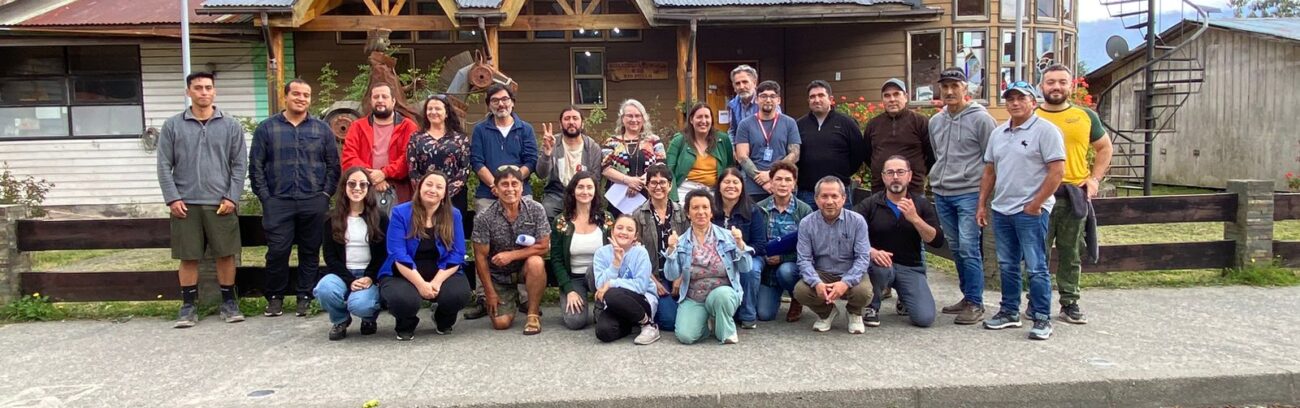
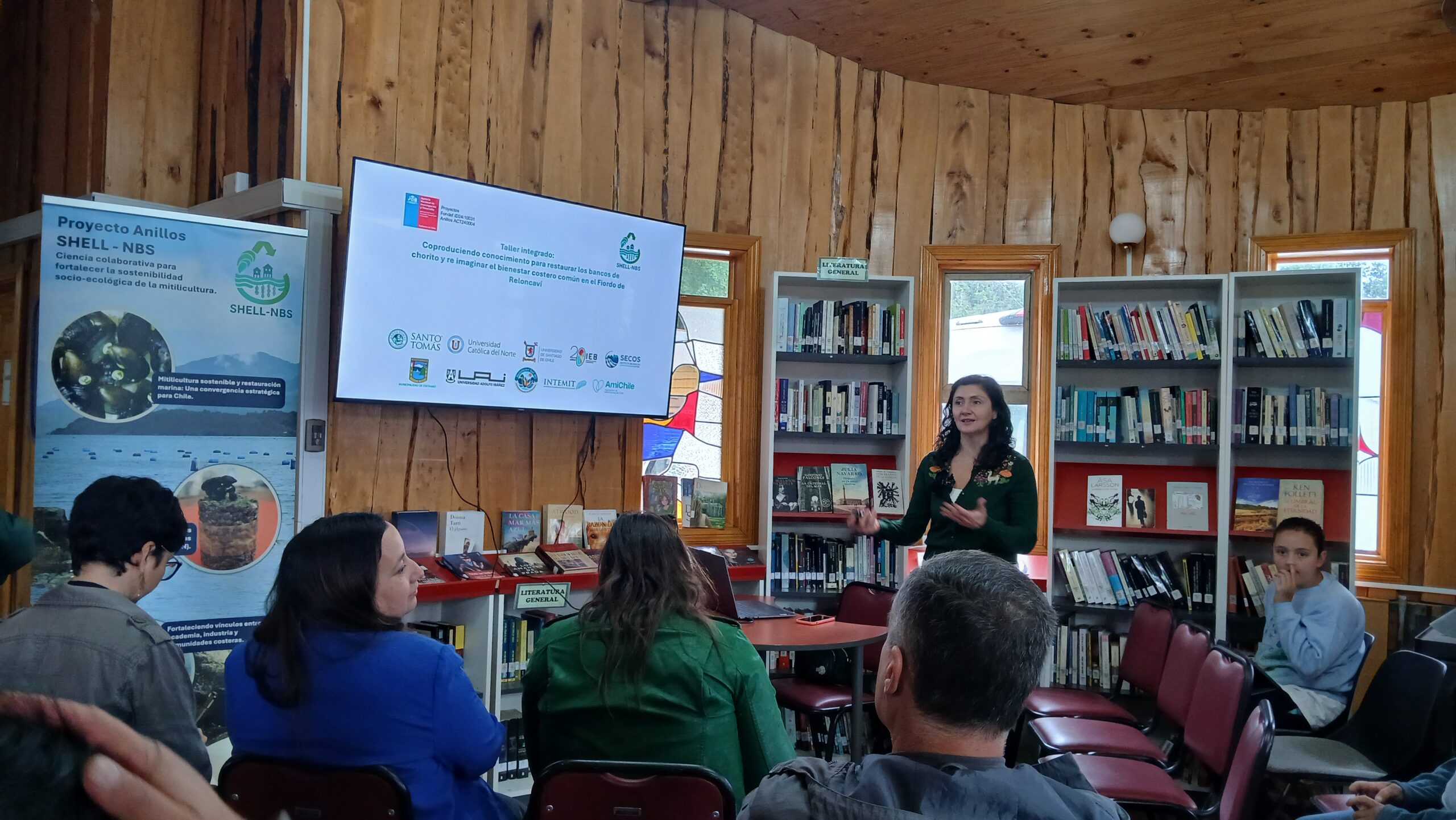
 At the Municipal Library of Río Puelo, in the commune of Cochamó, the Integrated Workshop “Co-producing knowledge to restore mussel beds and Re-imagining common coastal well-being in the Reloncaví Fjord” took place. This event brought together academics, researchers, institutional representatives, and local stakeholders to focus on ecological restoration and the strengthening of sustainable mitiliculture in the territory.
The session, held between 10:00 AM and 2:00 PM, aimed to activate a participatory process to identify key actors, priority zones, and initial agreements oriented toward the restoration of Chilean mussel beds (Mytilus chilensis) and the promotion of coastal well-being as a common good. During the morning, collaborative work was carried out using fjord cartography, addressing different thematic layers. This allowed for the development of diagnoses, challenges, and territorial projections, while strengthening the link between academia, public institutions, and the local community.
Representing the Fisheries Development Institute (IFOP), the event was attended by researcher Macarena Herrera Abaroa from the Aquaculture Research Division, who provided insights from the Department of Environment and the Mytilid Larval Monitoring Program. Also present from the Repopulation and Cultivation Department were Dr. Francisco Cárcamo, Dr. Luis Henríquez, and researcher M.Sc. (c) Sebastián Cook, who contributed significant perspectives regarding the future execution of the mussel bed repopulation proposal.
Within the framework of the SHELS-NBS Ring Project, Dr. María José Martínez presented the main pillars of the initiative, which focuses on Collaborative Science as a tool to strengthen the socio-ecological sustainability of mussel farming. Academics Nelson Lagos and Begoña Peceño presented the development of structures made from concrete and crushed shells, designed with various concentrations, grain sizes, textures, and shapes to favor the settlement of mytilid larvae. Additionally, results from studies on post-larval settlement preferences were shared, along with projections for sectors where these structures are planned to be installed under a collaborative agreement with the Municipality of Cochamó.
Among the key territorial actors participating in the meeting was Rodrigo Makalusso, representative of the Development, Fisheries, and Tourism Unit of the Municipality of Cochamó, who will serve as a fundamental coordinator in the implementation of the agreed actions. Furthermore, artisanal fishers, mussel farmers, and shore gatherers participated as strategic actors for the co-construction, validation, and sustainability of the proposed restoration model.
On behalf of the SECOS Millennium Group, researcher Fernanda Oyarzún presented muralism experiences developed in various coastal towns in Chile. These projects link art, history, culture, and coastal use to highlight local socio-economic activities and strengthen ties with children, adolescents, and educational communities.
During the workshop, an illustrated poster integrating the mussel production chain was also presented. Developed by scientific illustrators from the Millennium Group in collaboration with local stakeholders, the poster involves the community in conceptualizing activities and actions linked to the restoration model and the enhancement of coastal well-being.
The gathering allowed for a collective approach to the challenges, complexities, and opportunities of restoring natural mussel beds in the Reloncaví Fjord, consolidating collaboration networks aimed at promoting more sustainable, participatory, and integrated coastal development for the commune of Cochamó.