

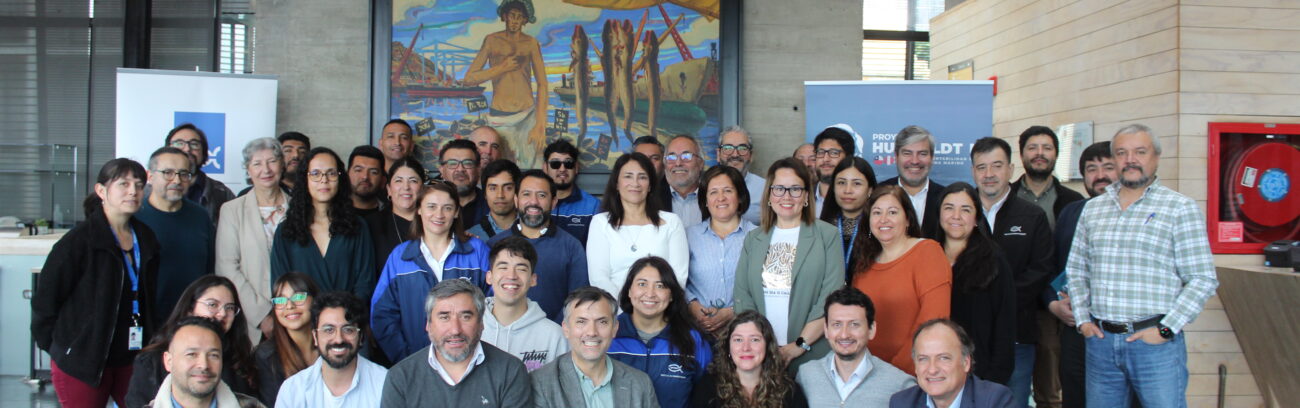
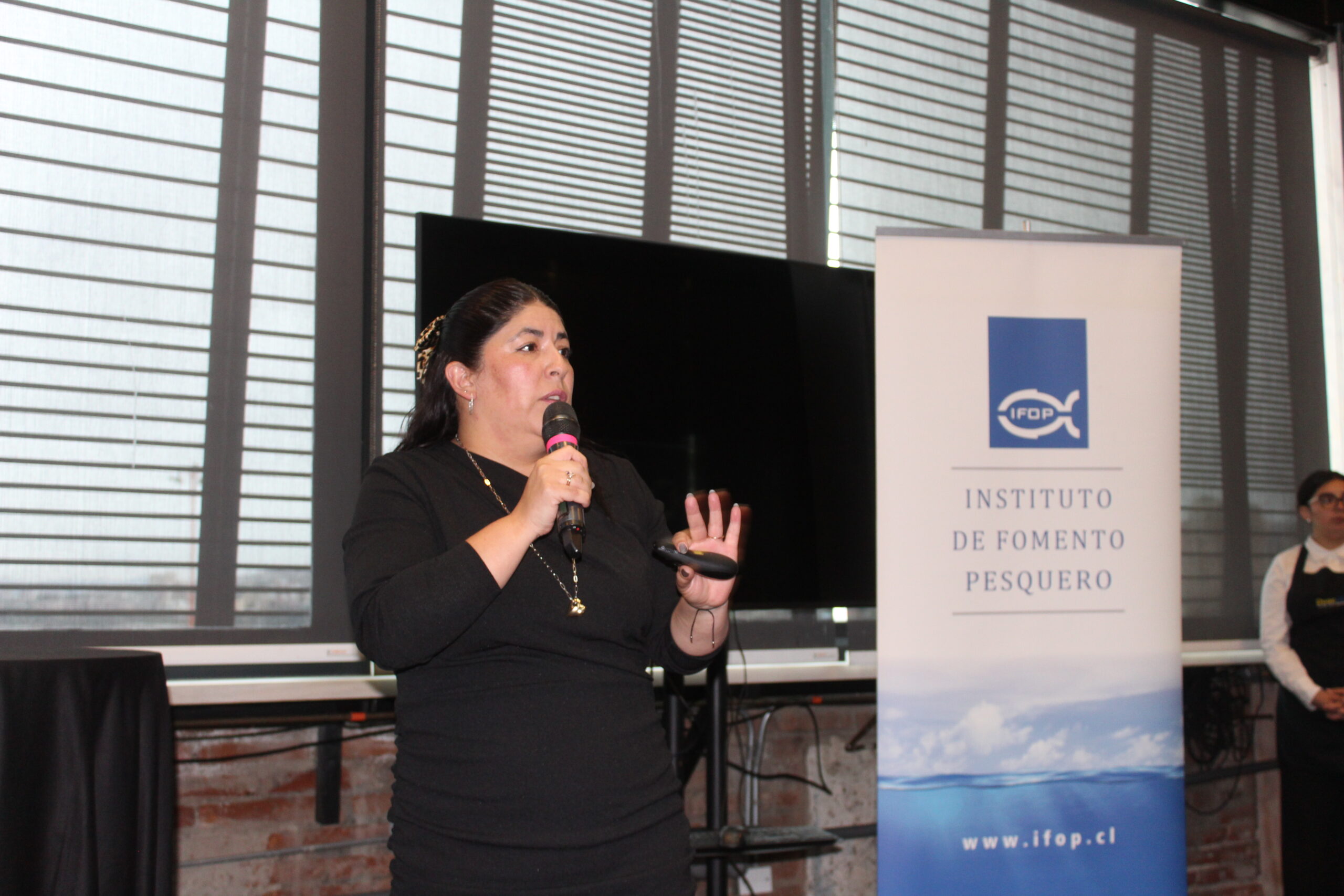
 In Valparaíso, a workshop was held to disseminate information about the BIOLOGICAL STUDY PROGRAM FOR SQUID IN AREAS OUTSIDE THE FISHING GROUNDS, WITH AN EMPHASIS ON RENEWAL AND GROWTH RATES. This program complements the studies carried out in the MONITORING PROJECT. The workshop was led by project manager Karen Belmar, who stated, “This project lasted two years and collected data from Arica to Biobío. The data obtained improves our understanding of the species, especially regarding age estimation. In terms of tagging, we successfully deployed 18 transmitters between the Atacama and Biobío regions—a groundbreaking study of its kind—and obtained valuable results regarding both horizontal and vertical movements, as well as characterizing the habitat. We hope that the implementation of this exciting project will pave the way for future research to further explore this topic.” The project aimed to increase knowledge of the giant freshwater shrimp (Dosidicus gigas) in Chile and improve fishery management.
The project’s objective was to study growth parameters, spatial distribution, reproductive biology, and migratory patterns. It was funded by the UNDP and implemented by IFOP.
Participants included professionals from the Undersecretariat of Fisheries and Aquaculture (Subpesca), IFOP, scientific observers, and representatives from the UNDP and the GEF Humboldt II project.
Juan Santibáñez, Head of the Fisheries Development Division of the Undersecretariat of Fisheries and Aquaculture (Subpesca) and National Director of the GEF Humboldt II Project, said, “The jumbo squid workshop is very relevant to Chile’s interests, considering that this is a 100% artisanal fishery with great potential. Despite regulatory changes in recent years, it has shown significant growth in exports, catches, and therefore in the number of people who benefit economically and socially from this fishery. Therefore, this workshop and all the information it provides are very important.”
Alejandro Gertosio, binational coordinator of the Humboldt II Project, explained, “We are funding the jumbo squid project. This project is very special for us because it has yielded information that greatly helps in jumbo squid management, with an emphasis on growth and migration. For us, the opportunity to incorporate technology and an innovative approach to advancing our knowledge of fisheries is a major breakthrough.”
Press related links: