
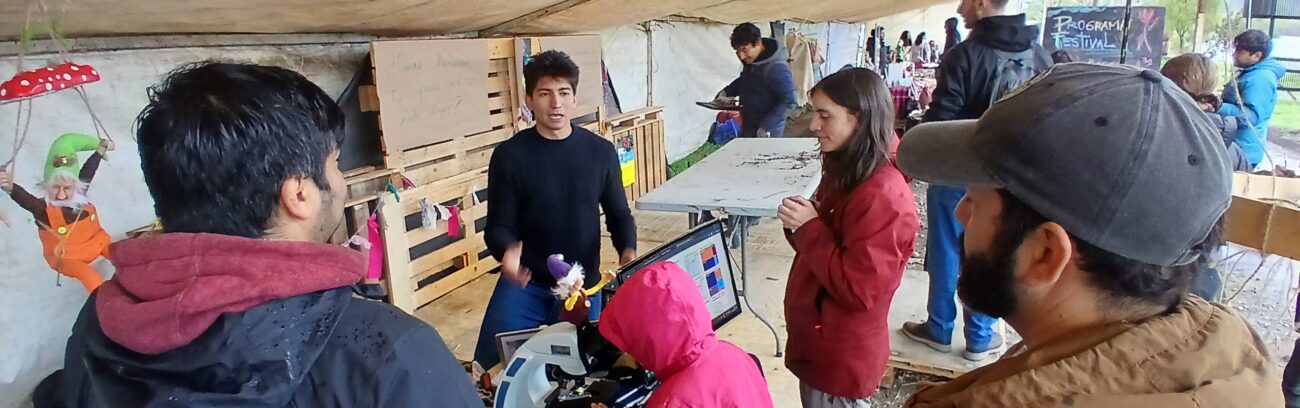
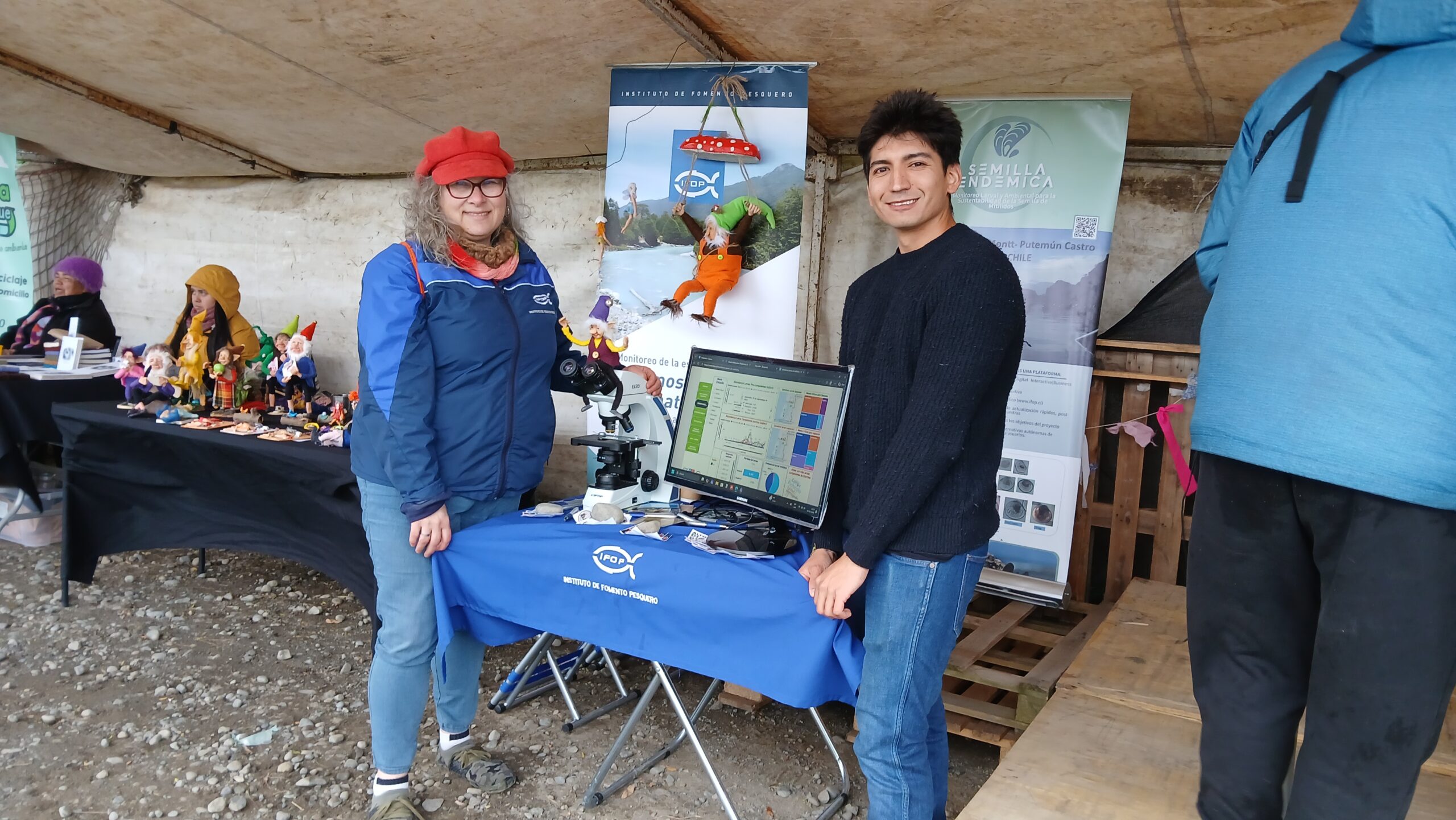
 On March 14, researchers from the Environment Department of the Aquaculture Research Division of the Fisheries Development Institute (IFOP) participated with an educational stand in the Maullín River Cultural and Environmental Festival. This activity brings the community together to value the natural, cultural, and environmental heritage of this territory. The meeting took place in the city of Llanquihue and was organized by the Fundación Legado Chile with the aim of promoting environmental education and the connection between people and one of the most emblematic fluvial ecosystems in the Los Lagos region.
During the event, Mario Ortiz and Macarena Herrera developed an educational experience aimed at children, youth, and adults, based on didactic and interactive material that allowed visitors to learn more about the invasion of the exotic microalga Didymosphenia geminata, commonly known as “Didymo” or “rock snot.” As a complement to the exhibition, a digital map was displayed detailing the geographical areas declared as Pest and Pest Risk through Exempt Resolution No. 2032-2024 (scan QR code). It is important to note that, although this invasive species is found across a wide geographical range, it has not been detected in the Maullín River.
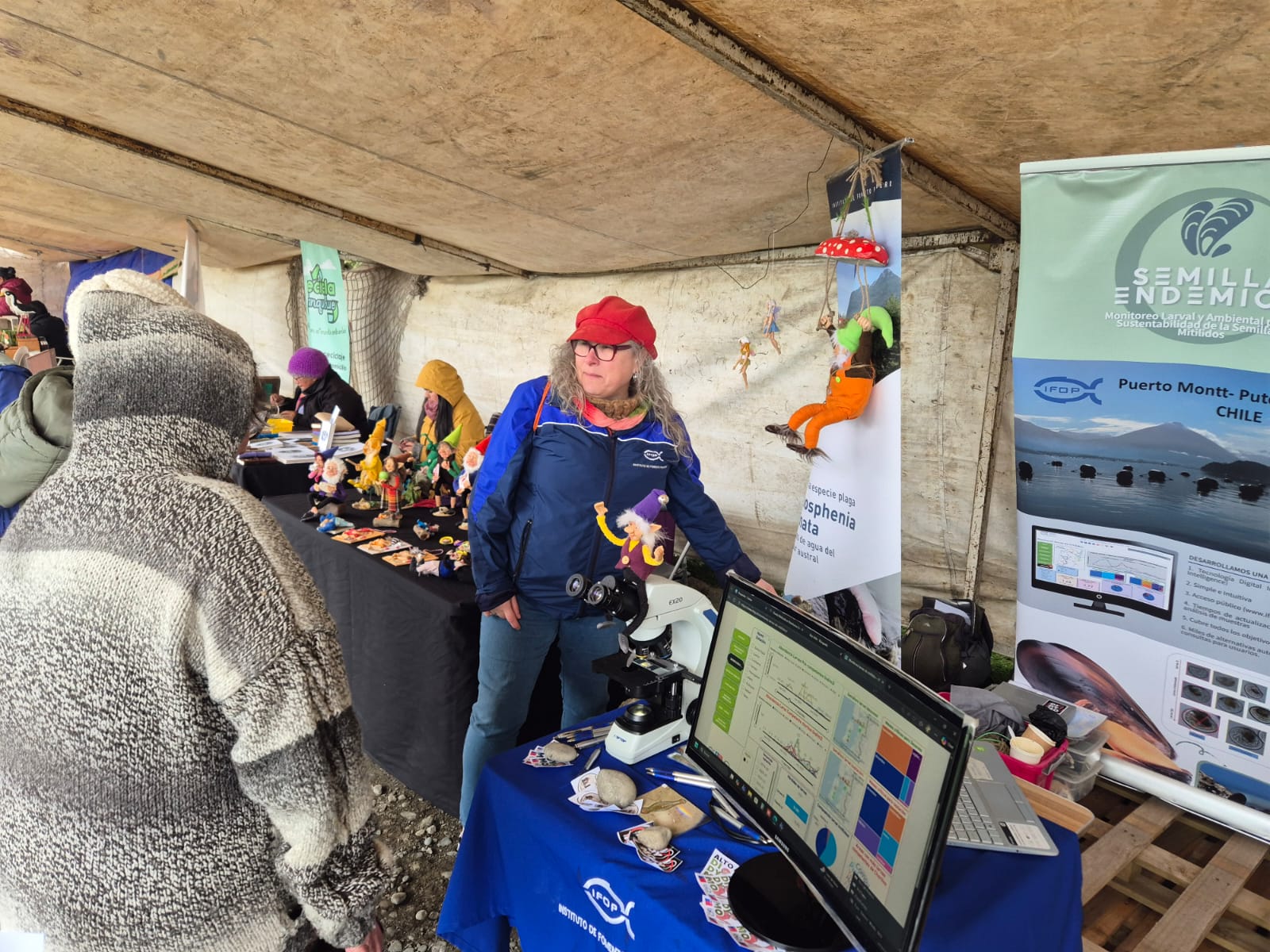 The stand provided an opportunity to explain the morphological characteristics of Didymo blooms and cells, the hypotheses regarding its arrival and expansion routes in Chile, as well as the preventive measures to avoid its spread between basins—especially through the cleaning and disinfection of equipment used in recreational and research activities in rivers and lakes.
One of the main attractions of the stand was a three-dimensional model representing a river mouth and its connection to the sea. This resource allowed for a visual explanation of how fluvial ecosystems integrate with estuaries and coastal systems, highlighting the importance of the biodiversity inhabiting these environments. From this representation, visitors were able to recognize part of the fauna present in rivers and understand how the presence of Didymo, by modifying the riverbed substrates, can alter biological communities and displace native species.
The activity also addressed the ecological connection between rivers, estuaries, and regional productive activities, such as aquaculture. In this context, the role of aquatic ecosystems in the development of mytiliculture and mussel production—an emblematic resource of southern Chile—was highlighted. Additionally, the interactive platform “Semilla Endémica” (Endemic Seed) was presented to the community, a tool that allows users to explore content related to biodiversity, aquaculture, and sustainability. Mytilid larvae monitoring – IFOP, at the service of scientific research for fisheries and aquaculture.
Participation in these types of events reinforces the commitment to environmental education and scientific outreach, promoting knowledge about aquatic ecosystems and fostering a more informed citizenship committed to the care of Chile’s aquatic environments.
Press related links: