



The generation of solid scientific knowledge is a fundamental pillar for the sustainable management of marine resources. In the case of the jumbo squid, strengthening research on its biology and population dynamics is key to supporting evidence-based decisions and reducing uncertainty in management models. Investing in technical capacities, specialized equipment, and researcher training not only improves the quality of available information but also contributes to consolidating a scientific institutional framework better prepared to face the environmental and production challenges of the fishing sector.
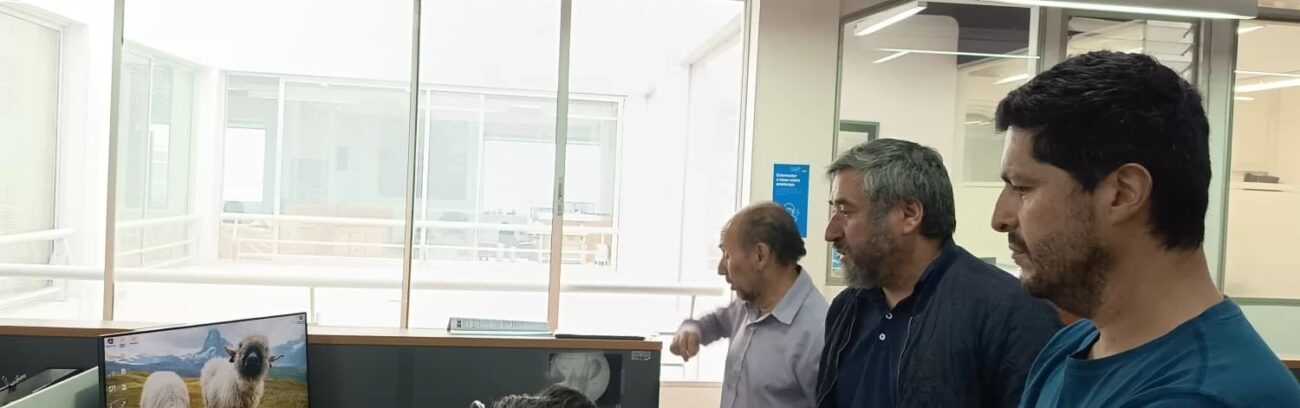
In this context, on Monday, February 2nd, the delivery and installation of a phase-contrast microscope took place. It was acquired within the framework of the “Biological Study Program of Jumbo Squid in Chile in non-fishery sectors,” an initiative that emphasizes the estimation of renewal and growth rates of the species, complementing studies developed by the monitoring project under the actions of the GEF Humboldt II Project and executed by the Fisheries Development Institute (IFOP).
The equipment was installed in the Age and Growth Section laboratory, strengthening technical capacities for the development of research aimed at determining growth parameters in cephalopods, such as jumbo squid and octopus, thus contributing to a better biological understanding of these species of ecosystemic and fisheries relevance.
The acquisition of the phase-contrast microscope strengthens the age and growth analysis capabilities at the level of daily micro-increments within IFOP’s Age and Growth Section. This technology allows for high-resolution visualization of daily micro-increments in calcified structures of key species such as jumbo squid, octopus, southern rays bream, and various hakes. By optimizing the contrast of growth bands, which are often difficult to define using conventional methods, this tool becomes essential for accurately determining the age, parameters, and growth rates of individuals, significantly reducing uncertainty in biological models.
During the installation process, the researchers participating in the project, MSc. Guillermo Moyano and MSc. Jorge Contreras, received specialized training in the use, maintenance, and operation of the microscope and its associated camera, as well as in image processing and analysis using the built-in software, ensuring an adequate transfer of capabilities for use in future scientific studies.