
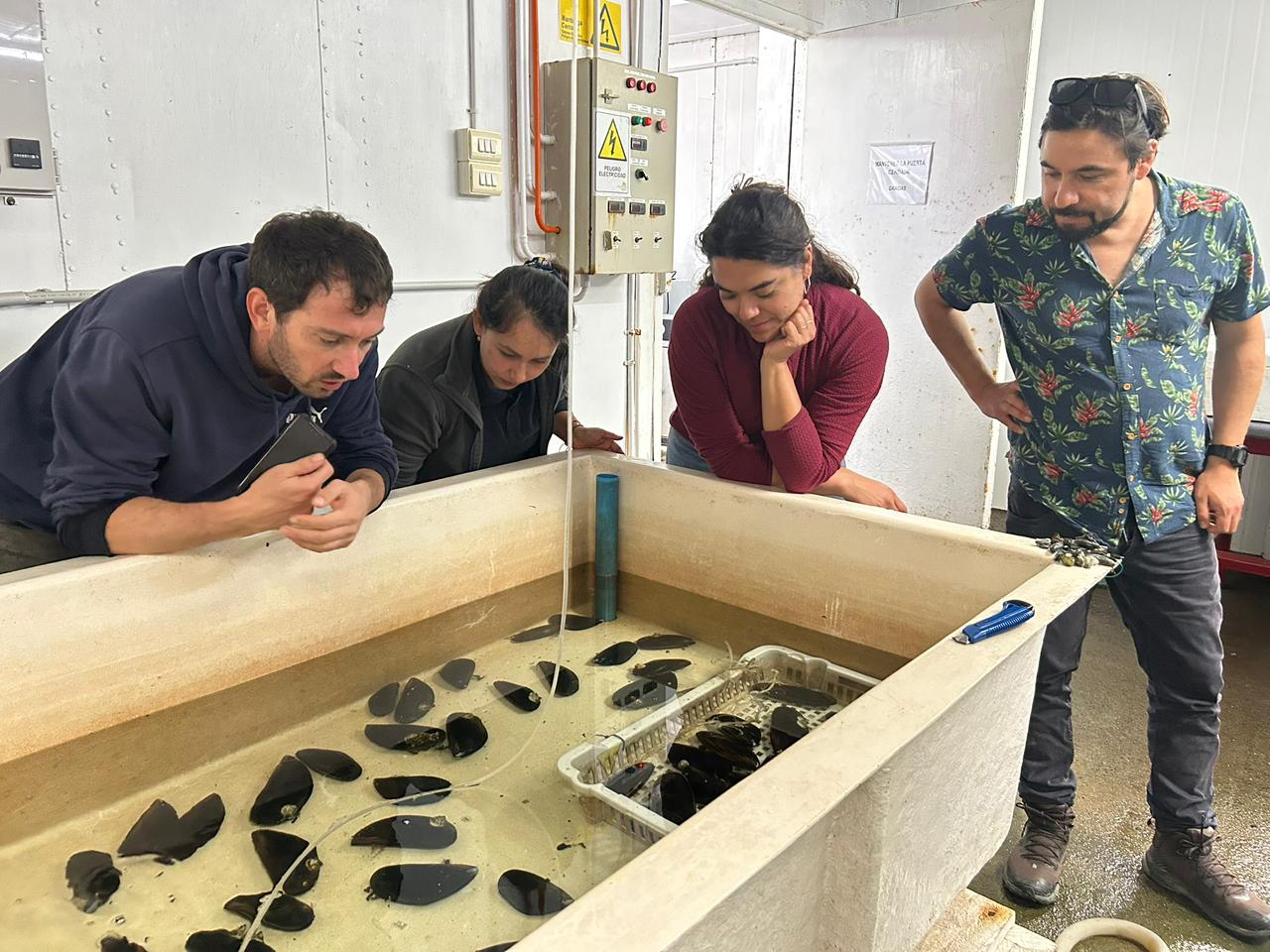
 70 broodstock traveled in a cold chain from the Huellelhue River estuary to Ancud. With them, a community attempts to restore a key species for its economy and its ecosystem.
The Fisheries Development Institute (IFOP) has joined the giant mussel (Choromytilus chorus) repopulation plan that the Huellelhue community is carrying out together with the NGO Sustainable Fishing Center and the Mehuín Fisheries Polytechnic High School. Through its Mariculture Experimental Center in Hueihue, Ancud, the institute received 70 broodstock transported via cold chain from the estuary, which are currently being conditioned for fattening and spawning.
“We were all pleasantly surprised that we were chosen to support the repopulation. The broodstock have already arrived, they are being conditioned, and everything is going full steam ahead,” says Carla Álvarez, assistant technician at the IFOP center. For her, working with this species is a new challenge: “We hadn’t done giant mussels before. It’s the first time, but we understand it’s not that complicated compared to other species and we will have seeds soon.”
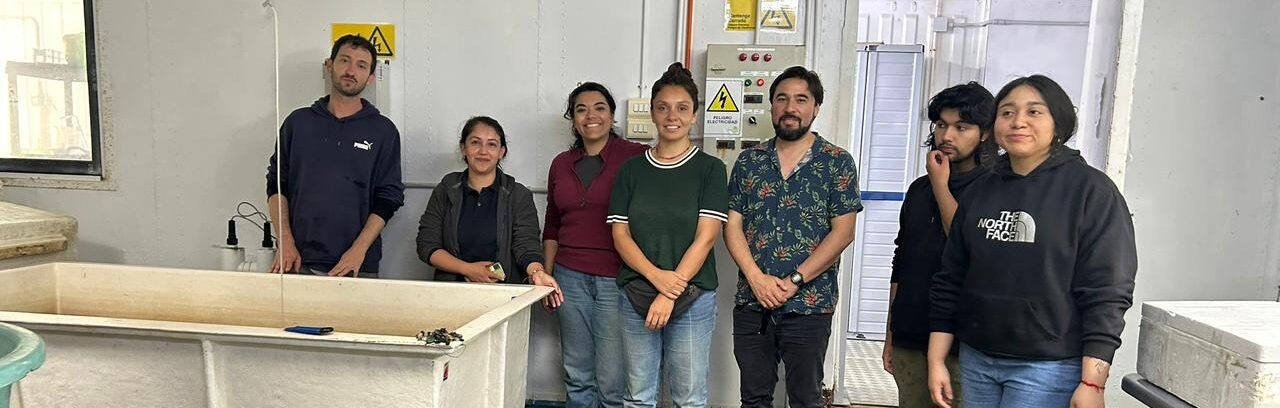
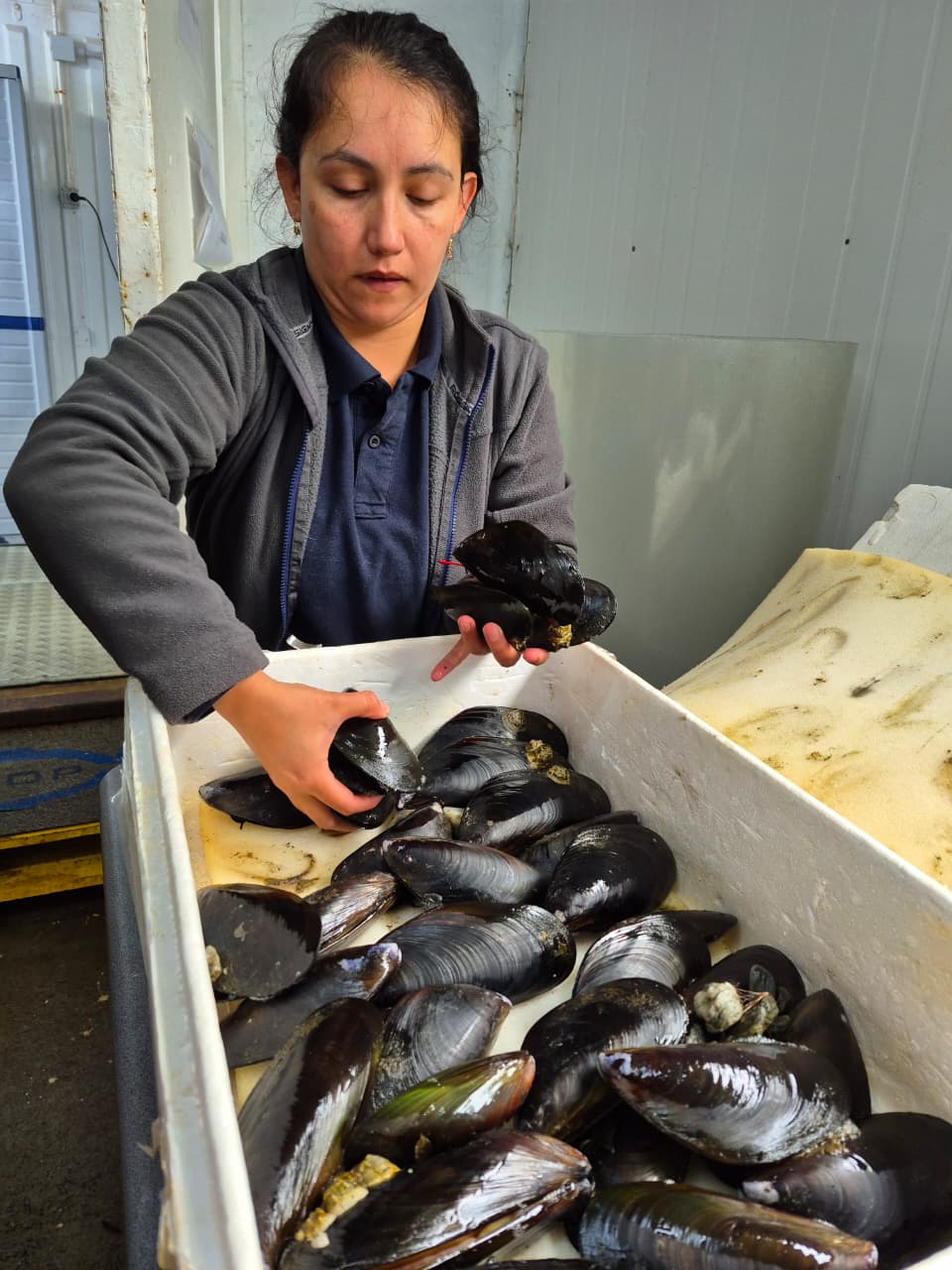 In Mehuín, the process also started from scratch. The high school has a hatchery where seeds are developed, and although the first spawning attempt in September was unsuccessful, it worked in December. “We didn’t see anything, and in the first half of January, the seeds started to appear. Now we have them in the laboratory, in two 2,600-liter tanks, controlling temperature, pH, and salinity. This had never been worked on here, so we are very happy,” says Fabiola Chomalí, production manager of the educational establishment.
For the high school, the project goes beyond the species itself. Four interns are leading the process under Chomalí’s supervision, making decisions and developing skills they didn’t have before. “We are very far from where the big decisions are made, embedded in a coastal town. This gives us visibility and proves that the establishment is doing things, applying for projects, and is attractive to other students,” she explains. In March, two of them will travel to Hueihue to see the work of the experimental center in the field.
The inclusion of IFOP not only adds technical capacity; José Valencia, Marine Coordinator of the GEF ICB project, explains that the institute participates both in the Los Lagos Regional Technical Committee—where public services are represented—and in the public-private roundtable created for the management of the giant mussel. The next step is to involve the Regional Government of Los Lagos so that these types of initiatives are also considered an opportunity for employment and income for local communities.
The GEF Project is executed by the Ministry of the Environment and implemented by the United Nations Development Programme (UNDP), with funding from the Global Environment Facility (GEF). Its objective is to improve national financing for the conservation of biodiversity and ecosystem services through the design, implementation, and optimization of economic instruments that strengthen public finances and incentivize the private sector’s economic contribution to the maintenance and recovery of ecosystems.
Press related links: