

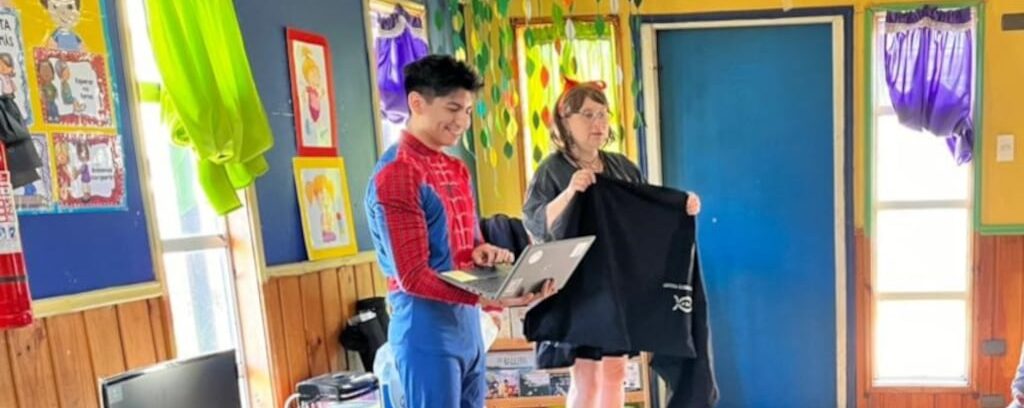
 On the morning of November 20, professionals from the Fisheries Development Institute participated in an enriching scientific outreach activity aimed at the boys and girls of the Antulem Kindergarten, located in the locality of Alerce in Puerto Montt. Mario Ortiz and Macarena Herrera attended the event, and specially characterized for the occasion, they turned the day into a magical experience focused on early learning about marine and freshwater ecosystems.
The initiative aimed to bring science closer to young children through playful dynamics that would spark their natural curiosity. Through games, the children explored basic concepts of ecology, trophic relationships, and biodiversity, achieving meaningful learning in an environment filled with surprise, participation, and discovery. The methodology used integrated sensory and narrative elements that facilitated the understanding of phenomena inherent to the aquatic world, adapted to the preschool stage.
The activity is part of coordinated efforts between the IFOP divisions, highlighting the collaboration of the administrative staff of the Aquaculture Research Division, who maintain a direct connection with the educational institution. This relationship has been built through cooperation and openness to initiatives that promote the integral development of the boys and girls belonging to the 13 families that make up the kindergarten community. In this context, the children, with great affection and creativity, have nicknamed IFOP as “their magical godparents,” a gesture that reflects the positive impact and closeness that the institution has established.
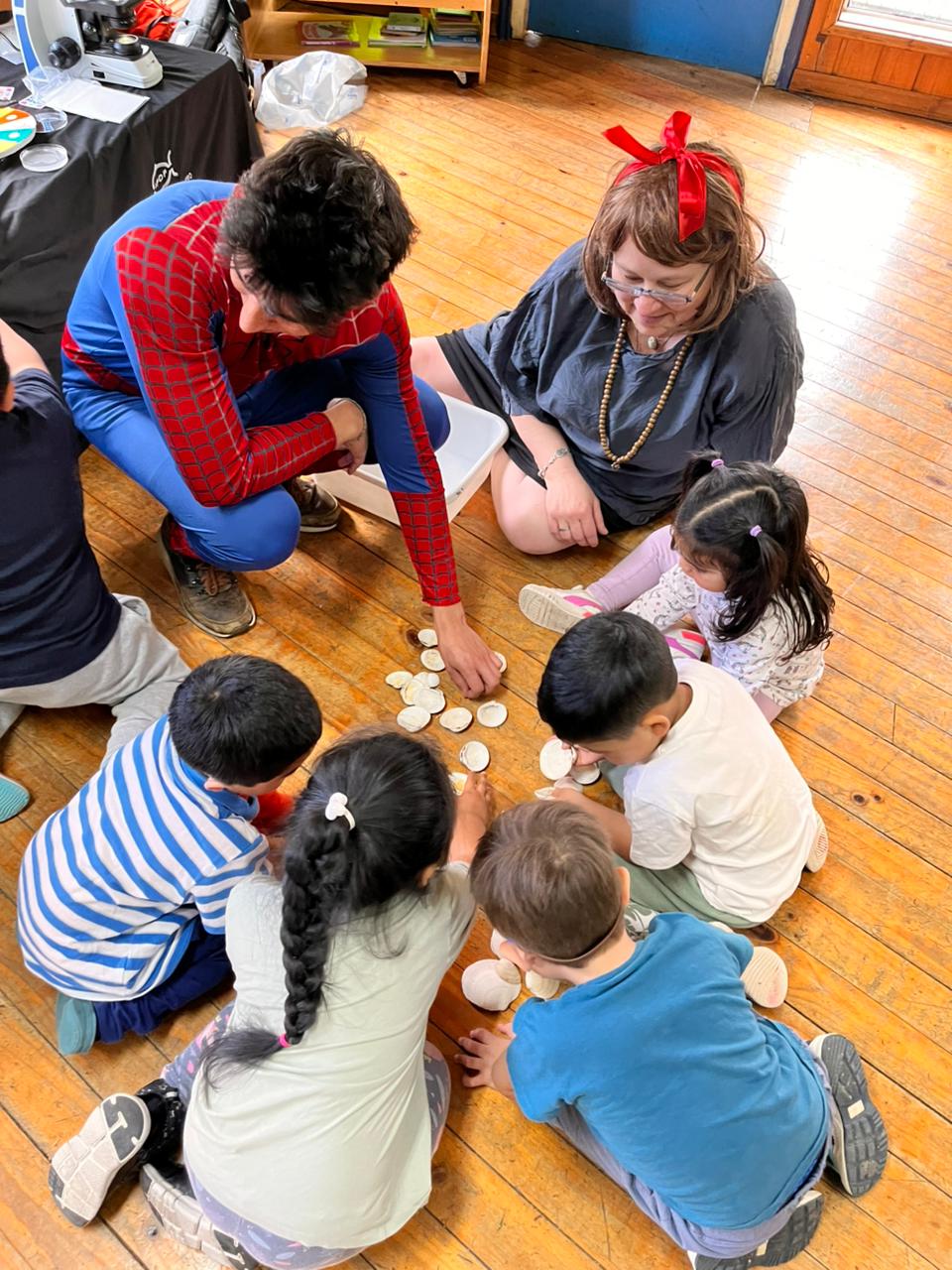
During the event, IFOP installed two aquariums — one representing a marine environment and the other a freshwater environment — allowing attendees to closely observe organisms inhabiting both ecosystems. One of the most significant moments was the introduction to the pennate microalga Didymosphenia geminata (Didymo), whose details could be appreciated through a microscope, opening the door to the fascinating microscopic world. Afterwards, the children participated in a game based on shells and bivalves, through which they learned the concept of bivalvia in a concrete and entertaining manner. The activity concluded with a guided interaction with various aquatic animals, where names, habitats, and trophic relationships were identified, fostering early understanding of wildlife.
The kindergarten surprised IFOP professionals with a gift crafted by the children themselves, an emotional gesture that reflects the enthusiasm and gratitude generated by this experience. The educators deeply valued the visit, highlighting its contribution to meaningful learning and the building of connections with institutions committed to environmental education.
For the participating professionals, the event also represented a profoundly novel experience. Accustomed to technical and research work, engaging with such a young and receptive audience posed an enriching challenge that allowed them to view their work from a different perspective. The interaction with the children not only required translating complex content into accessible language but also adapting communication to each playful moment, to the emotional rhythm, and to the natural disposition of childhood.
As the activity progressed, both Mario Ortiz and Macarena Herrera emphasized how captivating it was to become part of children’s learning processes. Observing how the children incorporated knowledge through surprise, touch, spontaneous questions, and play reaffirmed the importance of bringing science closer from an early age, using resources that connect with their world and ways of exploration.
One of the most significant aspects for the team was the opportunity to appreciate the uniqueness of each child. From those who silently observed the salt dissolution experiment and timidly approached the aquariums, to those who participated enthusiastically, touched the shells, or wanted to look through the microscope over and over again, each reaction allowed an understanding of the diversity of rhythms and socialization styles present in early childhood. This diversity enriched the interaction, reminding them of the importance of creating inclusive experiences that respect each child’s developmental path.
Likewise, the professionals highlighted how the event allowed them to strengthen skills related to scientific communication in non-formal contexts. Exploring new ways of communicating, improvising in response to the children’s unexpected questions, and adapting the complexity of science to dynamic environments reinforced the relevance of the connection between research, education, and community. The experience reaffirmed IFOP’s commitment to the social appropriation of knowledge and to educational support during early childhood.
From IFOP, the importance of strengthening direct contact with the community was emphasized, especially with young children, a stage in which the foundations of curiosity, environmental care, and appreciation of natural heritage are sown. Activities like this help connect science with everyday life in an accessible, emotional, and participatory manner, reinforcing the Institute’s role as an active promoter of knowledge and sustainability.