

 On Sunday, January 25, 2026, with a massive attendance of over 8,000 people, the traditional Giant Curanto of Calbuco took place. This activity has established itself as one of the main summer milestones in the Los Lagos Region, strengthening cultural identity, local tourism, and the commune’s historical link with the sea.
The event, held at the Rubén Cárdenas Gómez Municipal Park, was led by the commune’s mayor, Marco Andrés Silva Maldonado, who extended the invitation to authorities, institutions, and the general community, highlighting the value of the curanto as an expression of collaborative work, gastronomic heritage, and the deep maritime roots that characterize Calbuco.
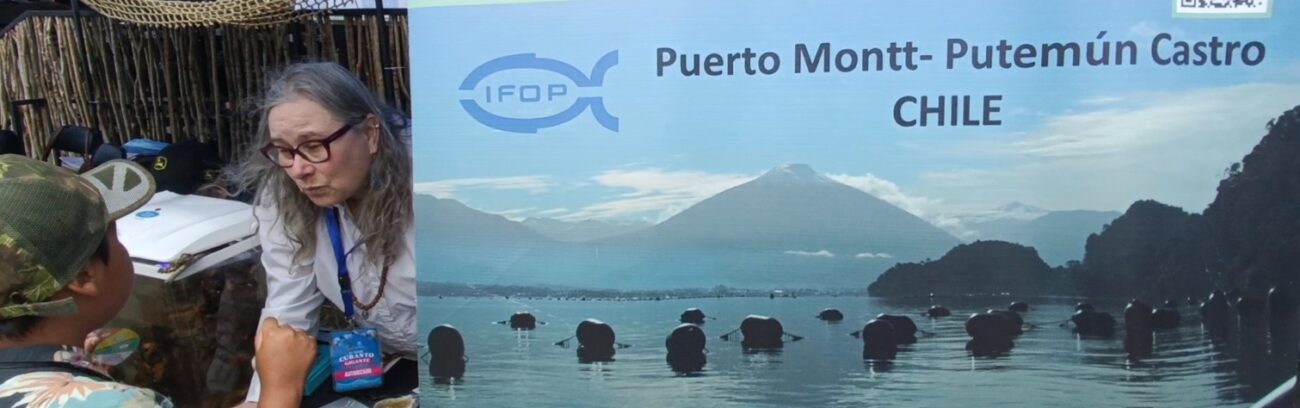
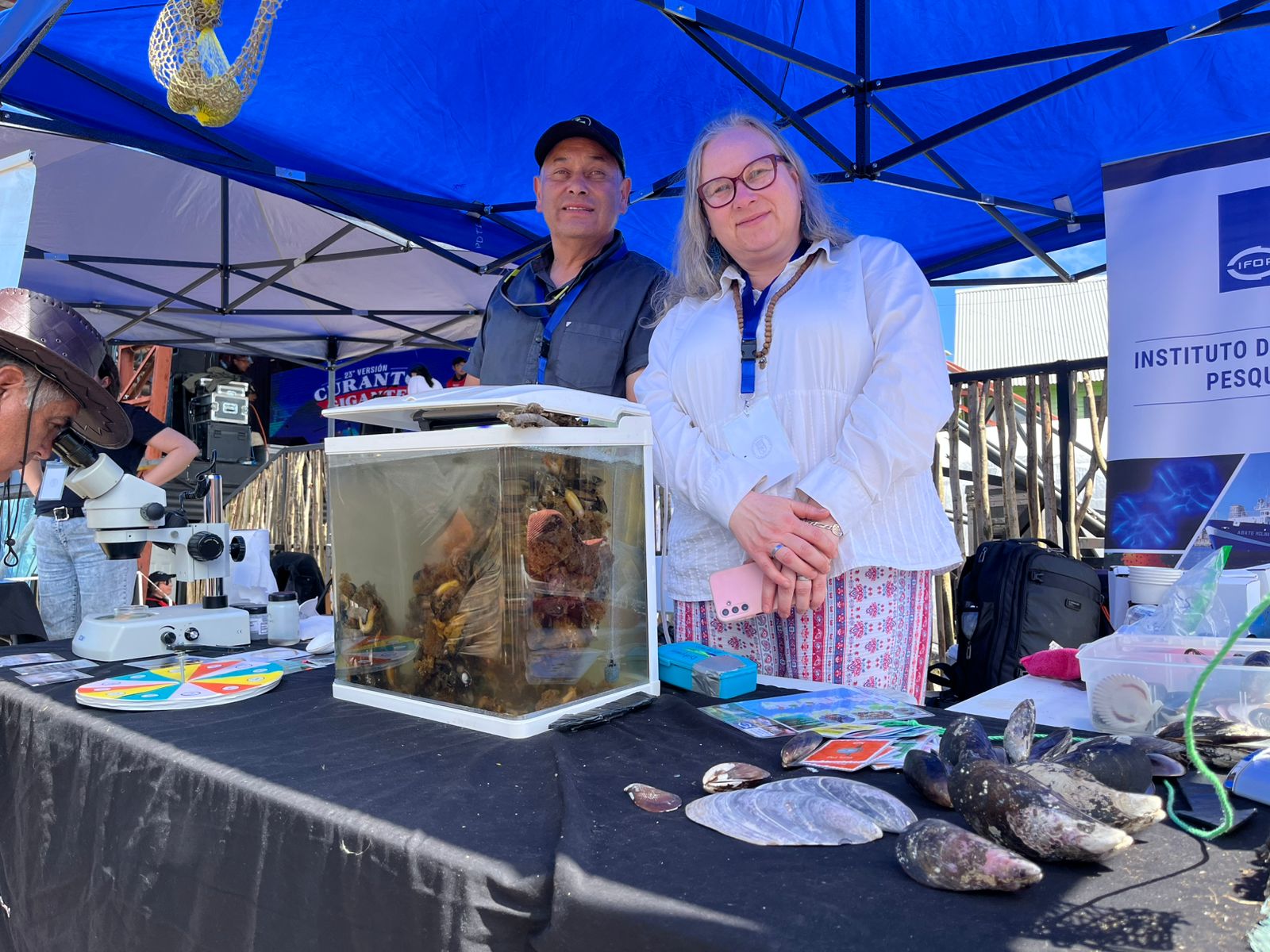
In this context, the Fisheries Development Institute (IFOP) had a prominent participation through the Aquaculture Research Division (DIA) and the Department of Environment via the Mytilid Larval Monitoring Program, represented by researcher Macarena Herrera Abaroa, along with the representative of the Calbuco Shellfish Growers Trade Association (Asociación Gremial de Cultivadores de Moluscos A.G.), Claudio Torres.
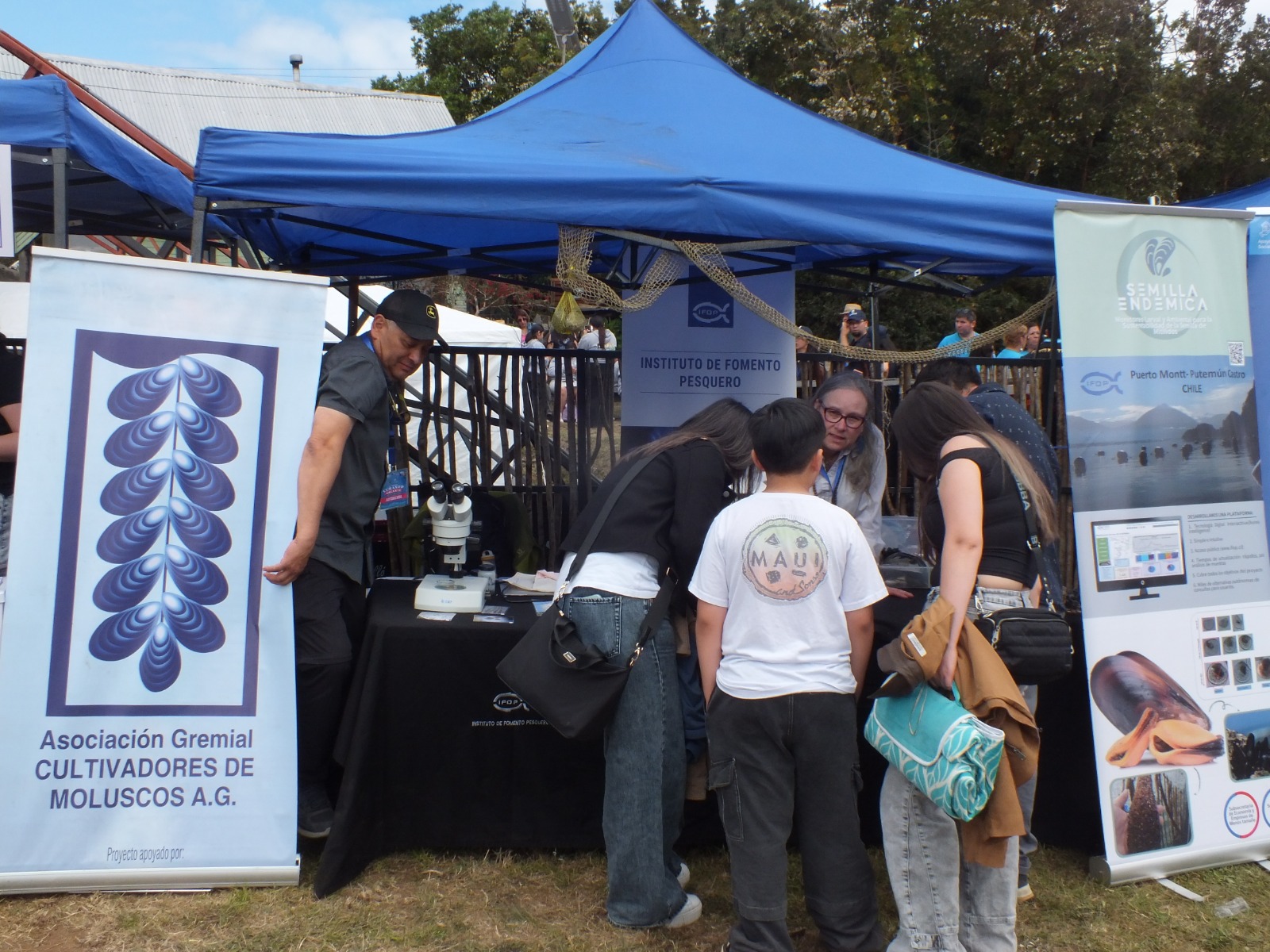 Starting at 9:00 a.m., an educational and interactive stand was set up, generating a high impact among attendees and becoming one of the most visited spaces of the day. The public showed great interest in observing mytilid larvae through magnifying glass aquariums, as well as in educational games and sensory material in 2D and 3D formats specially prepared for the occasion, bringing scientific knowledge closer to children and families.
The Giant Curanto represents much more than a culinary tradition, as its preparation brings together various benthic resources of high commercial and cultural importance for the commune and the Los Lagos Region. Notable among them are the ribbed mussel (cholga), the clam, and the iconic Chilean mussel (chorito, Mytilus chilensis), a species that constitutes the main pillar of national mitiliculture and the central focus of the Mytilid Larval Monitoring Program developed by IFOP.
This scientific program aims to understand the spatial and temporal dynamics of larval settlement, which is key information for the sustainability of the mussel farming industry. Its results are recorded and made available to the public through the “Semilla Endémica” (Endemic Seed) interactive platform, a tool that allows for online visualization of monitoring data and strengthens decision-making, transparency, and the link between science, the territory, and the productive sector.
The educational proposal developed by IFOP strengthened public understanding of the relationship between marine ecosystems, productive activity, and local culture, promoting an integrated view of the territory and highlighting the importance of moving toward the sustainable management of benthic resources.
Furthermore, the joint participation between IFOP and the Calbuco Shellfish Growers Trade Association highlighted the importance of collaborative work between the public sector, the productive sector, and the community, strengthening territorial dialogue and the transfer of applied scientific knowledge.
The Giant Curanto of Calbuco thus reaffirmed its character as an identity celebration, integrating tradition, science, and community in a day that showcased coastal-marine heritage and IFOP’s institutional commitment to sustainable development, environmental education, and the strengthening of local mitiliculture.