

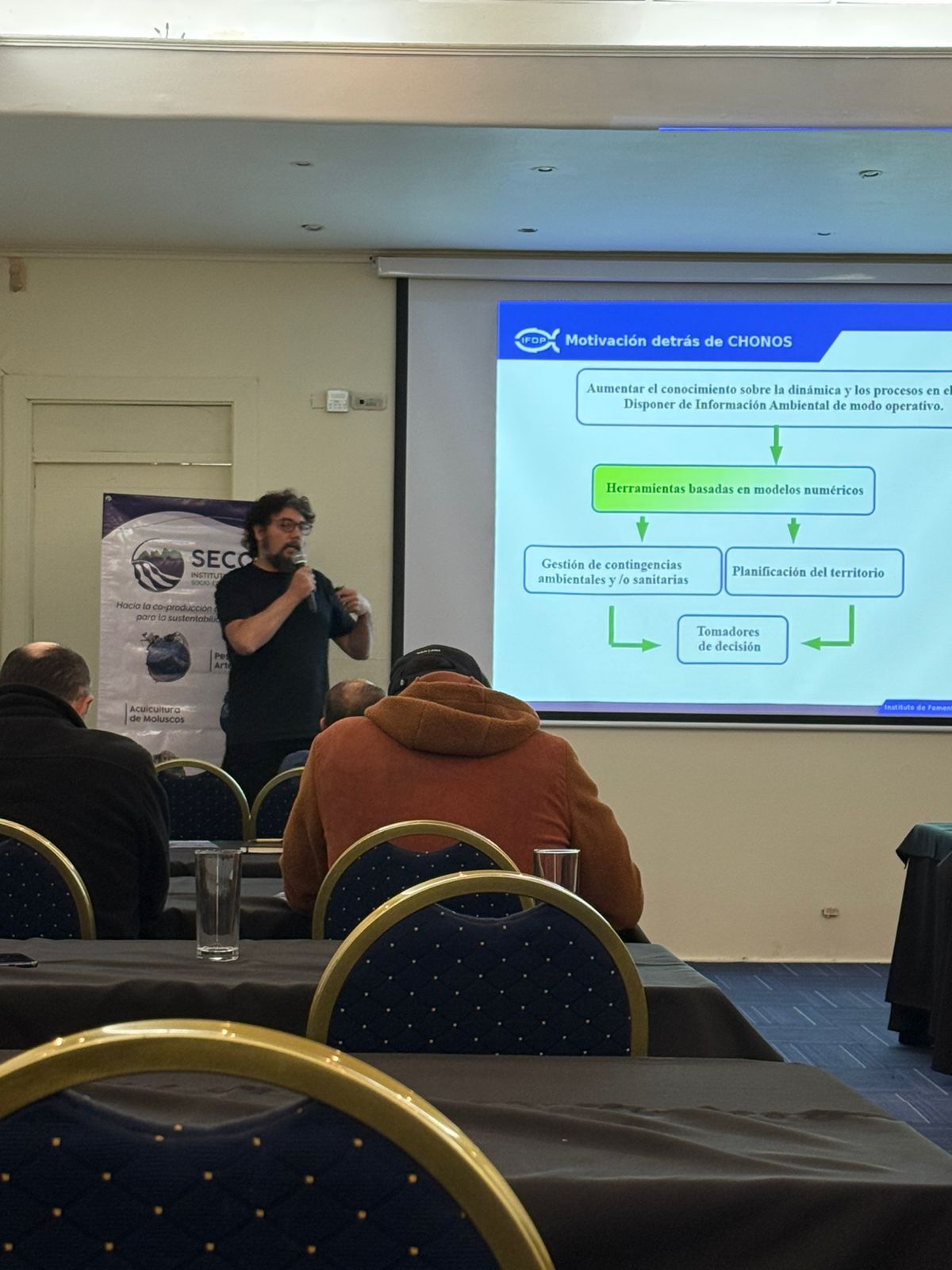
 With the full participation of the mussel larval monitoring team, researchers from the Fisheries Development Institute (IFOP) took an active role in the workshop “Oceanography for a Changing Future: Extreme Events, Mollusk Aquaculture, and Interdisciplinarity”, held on December 11 and 12 at the Hotel Vicente Costanera in Puerto Montt.
The event, organized by the Milennium Institute in Coastal Socio-Ecology (SECOS) in collaboration with AmiChile, Intemit, and Innovex SpA, brought together leading researchers, students, public sector representatives, and key stakeholders from the aquaculture industry. Its objective was to analyze how oceanography helps to understand processes, anticipate impacts, and strengthen the adaptive capacity of mollusk aquaculture in a context of increasing environmental variability and extreme events.
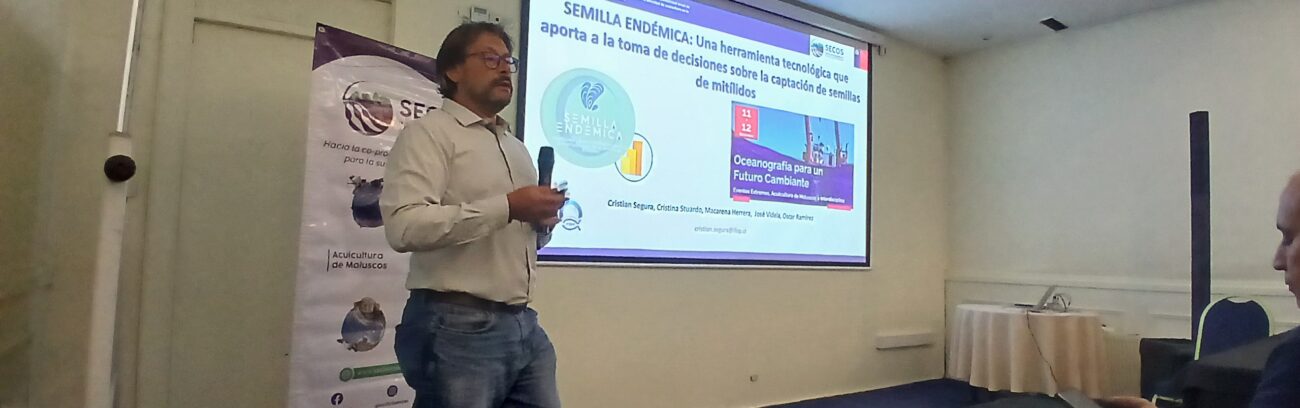
In this context, the project leader of the Mussel Larval Monitoring Program, Dr. Cristián Segura, delivered a presentation highlighting the main advances of the program and introducing participants to the Semilla Endémica platform, a technological tool designed to support decision-making in mussel seed collection by integrating relevant oceanographic and biological information for the productive sector.
The mussel team is composed of José Videla, Cristina Stuardo, Óscar Ramírez, and Macarena Herrera, and is led by Dr. Cristián Segura. They actively participated throughout the workshop, exchanging experiences with scallop and mussel farmers from Caldera, Tongoy, and Chiloé, as well as with national researchers involved in oceanographic observation applied to aquaculture.
During the first day of the workshop, presentations focused on oceanographic observation in farming areas, the integration of monitoring systems for productive management, the response of aquaculture to oceanographic variability and extreme events, and technological innovations aimed at decision-making. The second day included a participatory group workshop focused on gathering perceptions regarding current and future challenges of oceanographic research and monitoring applied to mussel farming, identifying key information gaps relevant to the sector.
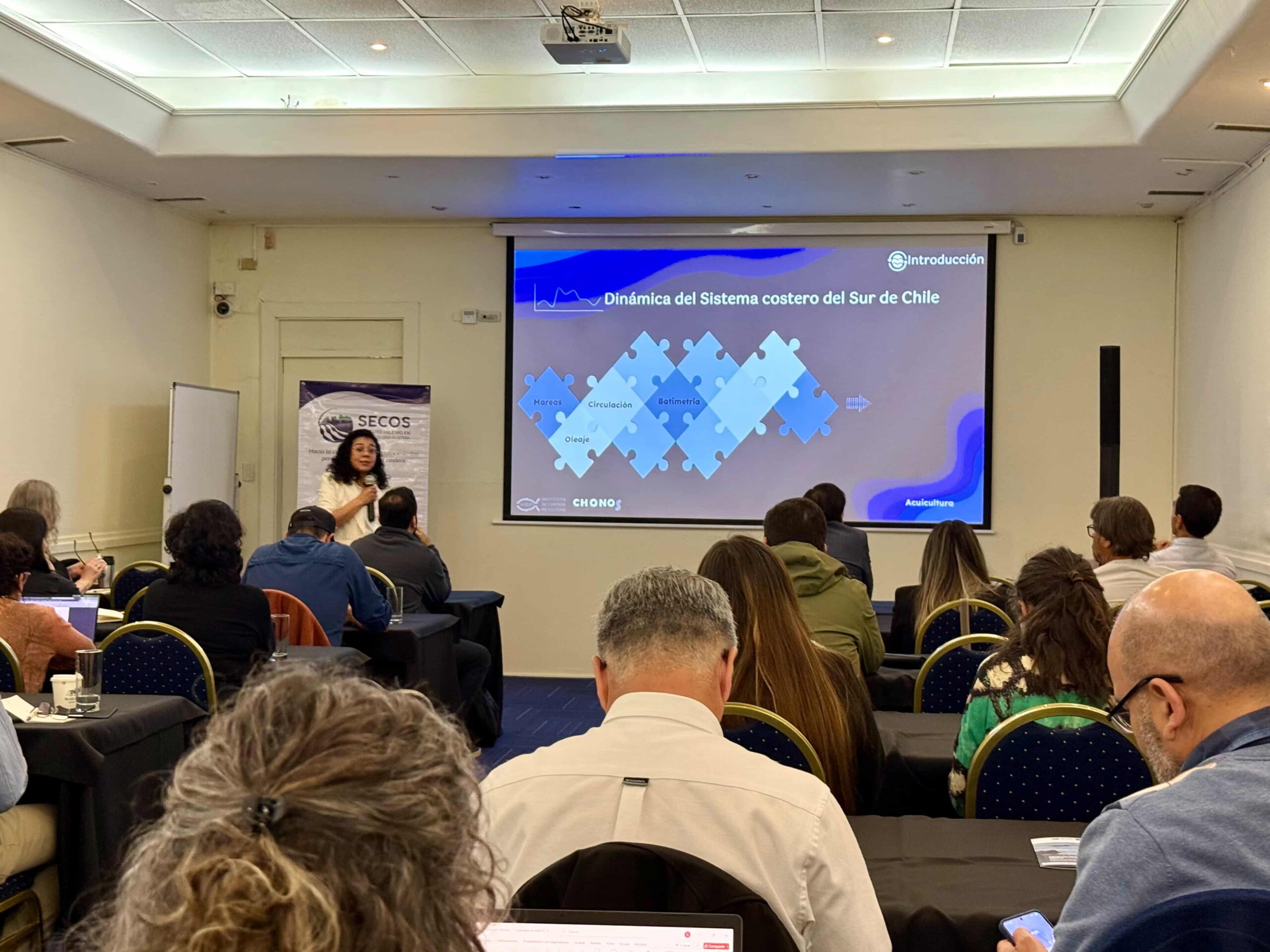 Presentations from the Fisheries Development Institute were delivered by Cristián Ruiz, who presented CHONOS: an Oceanographic Information Platform for Territorial Management, and by Dr. Jurleys Vellojin, who presented on the Environmental Data Center: coastal observation applied to aquaculture management in the face of future changes and extreme events.
The participation of the mussel larval monitoring team in this meeting reinforces the institution’s commitment to the development of scientific and technological tools that contribute to a more resilient, sustainable, and evidence-based aquaculture, promoting dialogue and collaboration between science, public management, and the productive sector.
The Mussel Larval Monitoring Program is part of the work carried out by the Environmental Department of the Aquaculture Division of the Fisheries Development Institute (IFOP), whose mission is to generate scientific and applied information for the sustainable use of aquaculture resources, considering the interaction between productive systems and the environmental context in which they operate.
From this perspective, the Environmental Department promotes initiatives aimed at understanding the effects of oceanographic variability, extreme events, and climate change on key aquaculture processes, including seed collection, larval survival, and productive planning. The larval monitoring program constitutes a strategic tool in this regard, as it integrates biological and oceanographic observations that strengthen the adaptive management of mussel farming at different territorial scales.
The participation of the Environmental Department team of the Aquaculture Division in this workshop reaffirms IFOP’s role as a key technical-scientific actor in supporting decision-making in the national aquaculture sector, promoting coordination between research, technological development, and the needs of the productive sector. Likewise, exchange spaces such as this allow for the projection of new lines of collaborative work aimed at increasing the resilience of mussel farming in the face of present and future environmental challenges.
Press related links: