Red de Instituciones de Investigación Pesquera y Acuícola de los Países Miembros de la Alianza del Pacífico

Instituto de Fomento Pesquero
Instituto Tecnológico CORFO / Instituto Tecnológico Público
OFFICIAL NAME:
“José Benito Vives de Andréis” Marine and Coastal Research Institute
HEADQUARTERS:
Santa Marta
LEGAL STATUS:
Non-profit Civil Corporation
YEAR OF ESTABLISHMENT: 1994
ProgramResearch LinesAreas of Work
Marine Biodiversity and EcosystemsInventories, Taxonomy, and Species Biology
  • Development of the national marine and coastal biodiversity inventory.
  • Strengthening national capacity in biological taxonomy and descriptive systematics.
  • Implementation of data storage and recovery systems within the Marine Biodiversity Information System – SiBM.
Organization and Ecosystem Dynamics
  • Characterization of biodiversity structure and functioning across different levels of biological organization.
  • Identification of changes in biodiversity and their relationship with natural and anthropogenic factors over time.
Biology and Conservation Strategies
  • Identification of the status of threatened or endangered species and ecosystems, as well as marine and coastal invasive exotic species.
  • Generation of inputs to establish tools for conservation, restoration, prevention, and control.
Marine Environmental QualityEnvironmental Quality Assessment and Monitoring
  • Spatial and temporal assessment of qualitative and quantitative characteristics to build environmental management tools based on national and regional monitoring systems.
Prevention and Protection of Marine and Coastal Ecosystems
  • Formulation of strategies to evaluate, manage, and mitigate potential impacts and risks of natural and anthropogenic origin in marine and coastal ecosystems.
Rehabilitation of Marine and Coastal Ecosystems
  • Formulation and implementation of strategies to assist in the recovery of environmental quality and ecosystem services in marine and coastal environments that have been degraded or altered.
Marine GeosciencesMarine and Coastal Geology
  • Study of physical processes related to the soil and subsoil environment of the coastal zone, including both continental and insular emerged areas, down to the submerged zones of Colombia’s seas.
Oceanography and Climate
  • Study of the ocean and its complex connections with the atmosphere, the coastal zone, ice, seabeds, and the biotic and chemical components; as well as its influence on the productive activities of the country’s marine and coastal zones.
Valuation and Use of Marine and Coastal ResourcesEconomic Valuation
  • Integral valuation of biodiversity and its ecosystem services.
  • Characterization of the livelihoods of marine-coastal communities.
  • Proposal of economic mechanisms for management.
Sustainable Use and Production
  • Fisheries ecology.
  • Dynamics of exploited populations.
  • Bioeconomic modeling and fisheries management.
Marine Bioprospecting
  • Obtaining and characterization of extracts, fractions, and molecules.
  • Evaluation of the potential use of substances obtained in bioassays.
  • Isolation, culture, and potential evaluation of microalgae and microorganisms.
  • Development of antimicrobial assays in live marine organisms and cell cultures.
Coordination of Research and Information for Marine and Coastal Management
 
In addition to the departments, it is in charge of the Coordination of the Regional Training Center for Latin America of the OTGA
Information Analysis for Planning
  • Design, formulation, and execution of national and international projects and technical concepts for marine and coastal land-use planning and management.
  • Coordination of the integrated coastal zone management network RedCostera.
Global Change and Marine Policy
  • Impact assessment of policies on the integrated management of coastal zones and their natural resources.
  • Provision of technical bases for the establishment of standards, provisions, and regulations for the ordering, planning, and management of marine and coastal territory.
  • Collaboration in studies on global change and activities for decision-making in the development of national and international marine policy.
  • Technical secretariat of the marine research centers network defined in Law 99/1993 and Resolution 2175/2007.
Information Services Laboratory
  • Coordination of the Environmental Information System (SIAM) regarding marine and coastal aspects.
  • Safeguarding information assets generated in INVEMAR’s missional processes.
  • Research, development, and use of new information technologies for capture, processing, management, and publication of information in the SIAM.
    • Geographic information systems, remote sensing, and databases.
    • Represent INVEMAR as an Associated Data Unit in the Intergovernmental Oceanographic Commission.
    • UNESCO Intergovernmental Oceanographic Commission
  • Manages the Caribbean Marine Atlas and serves as the Ocean Info Hub node for Latin America.
Documentation Center
  • Guaranteeing access to the information and documentation necessary to enable the development of marine and coastal research in Colombia.
  • Articulating the link between users and various specialized information sources in the field of marine and coastal sciences and related disciplines, providing free access to information to facilitate research development.
  • In charge of representing Colombia as an information node before the IODE and the Intergovernmental Oceanographic Commission of UNESCO.
Scientific Communication
  • Providing available marine and coastal information, improving the national and international visibility of scientific research results.
  • Represents INVEMAR on the Communications Advisory Committee of the United Nations Decade of Ocean Science for Sustainable Development 2021 – 2030.
Scientific Services CoordinationBaseline studies, Environmental diagnostics, Monitoring studies, and Laboratory analysis.
FacilitiesDescription
Museum of Marine Natural History of Colombia (MHNMC) – Makuriwa (Curator: Catalina Arteaga-Flórez)

http://museomakuriwa.invemar.org.co/

  • Includes two large areas for dry and wet biological collections (specimens preserved in various solutions); and cryopreserved collections.
  • Features three laboratories: (I) Molecular biology, equipped for DNA extraction and amplification; (II) Optical laboratory with equipment (microscopes, stereoscopes) for morphological analysis and imaging; and (III) Wet laboratory, which has a gas extraction hood for chemical reagent work.
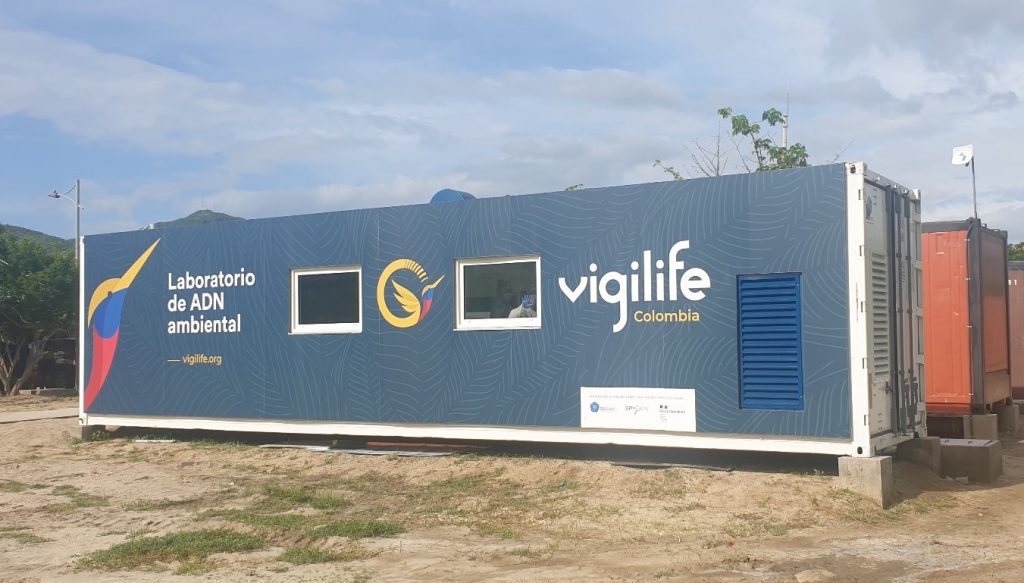
Environmental DNA Laboratory
  • Laboratory for the extraction of environmental DNA (eDNA) from aquatic samples. This lab includes a real-time thermal cycler for detecting species of interest using quantitative PCR.
Marine Environmental Quality Laboratory Unit (LABCAM)
  • Institutional operational unit supporting marine environmental quality research. Accredited under ISO/IEC 17025 standards for nearly 400 environmental variables in marine and continental water, as well as marine and continental sediment matrices.
  • Equipped with techniques for physicochemical analysis via Gas Chromatography-Mass Spectrometry (GC-MS), Triple Quadrupole Liquid Chromatography-Mass Spectrometry (LC-MS/MS), Spectrophotometry, Spectrofluorometry, Alpha, Beta, and Gamma detection spectrometry, Atomic Absorption Spectrometry, gravimetric analysis with high-precision balances, and microbiological analysis via multiple tubes and membrane filtration.
Marine Instrumentation Laboratory
(LabIMA)
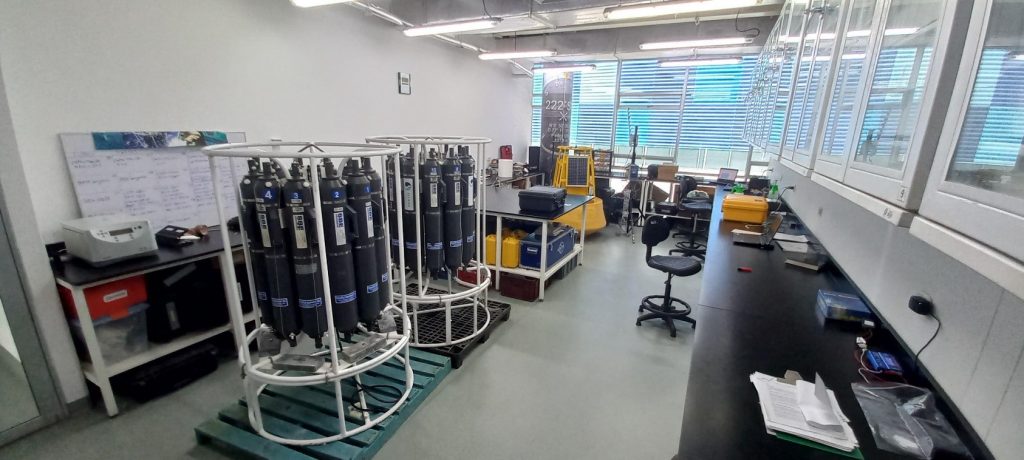
  • Supports the Marine Geosciences Program and various INVEMAR research programs in sampling and collecting oceanographic, meteorological, geophysical, and coastal topography data for baseline studies, environmental impact assessments, and monitoring of marine-coastal environments.
  • Equipped with multiparameter probes, ADCP current and wave profilers, flow profilers, tide gauges, oceanographic buoys, oceanographic Rosettes, side-scan sonar, sub-bottom profilers, global positioning equipment, topographic stations, laser scanner systems, drones with RGB and multi-spectral cameras, and sediment samplers (multicorer and piston corer).
Marine Bioprospecting Laboratory (LabBIM)
  • Part of the Valuation and Use of Marine and Coastal Resources (VAR) program. It conducts research focused on finding the bioactive potential of substances and molecules from marine organisms, especially microorganisms.
  • Equipped for isolation, maintenance, strain conservation, phenotypic characterization, and bio-guided assays. It also features a molecular biology area for genotypic characterization.
  • Capable of extracting and purifying bioactive substances and molecules, and performs histological sectioning and tissue staining for marine animal and plant samples.
VEHICLE TYPES
  • 25-passenger bus
  • Minibuses (8 passengers each)
  • 4×4 double cabin pickup trucks
  • 4×4 double cabin stake trucks
  • Closed SUV/off-road vehicles
  • Tractor for boat towing
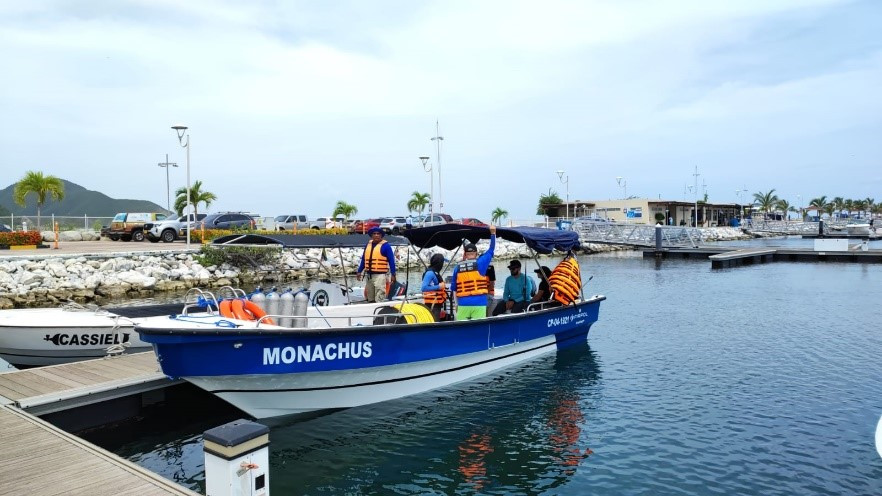
  • 25-foot length boat
  • 20-foot length catamaran-type boat
  • 18-foot length boat
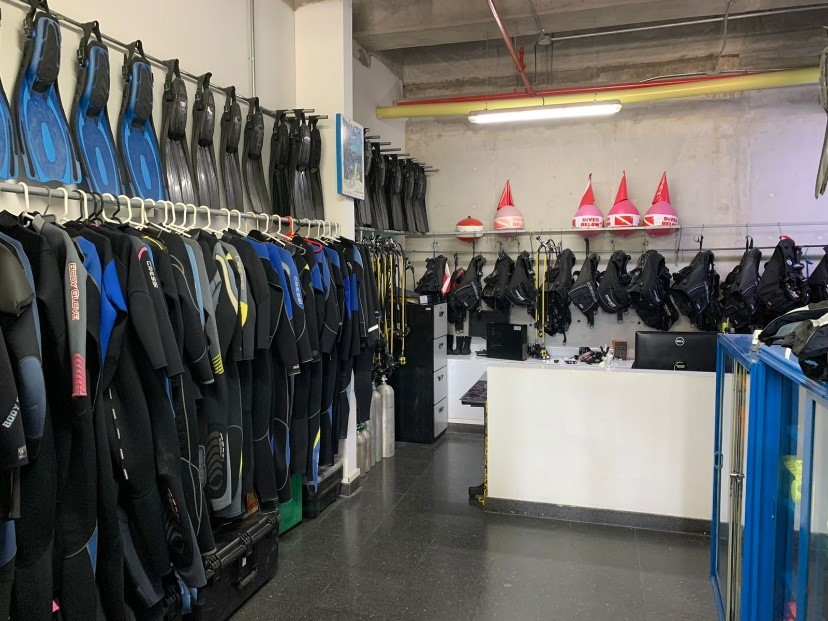
  • Diving equipment and safety elements/accessories for the activity
Ultima modificación: Wednesday March 18th, 2026
Instituto de Fomento Pequero

Siguenos a través de redes sociales:

Edificio central IFOP: Almirante Blanco Encalada 839, Valparaiso. Chile.

© IFOP, CHILE. 2026. Todos los derechos reservados. Prohibida la reproducción total o parcial sin autorización escrita del propietario.